2026 Best Metal Dinner Plates for Wholesale Buyers?
Wholesale demand is reshaping how buyers evaluate Metal Dinner Plates in 2026. The choice is no longer based on appearance alone. Buyers now compare durability, replacement cost, food-contact performance, packaging efficiency, and guest experience.
Grand View Research estimated the global tableware market at approximately USD 41.5 billion in 2023. Its report also projects continued growth through 2030, supported by hospitality, catering, and foodservice expansion. Allied Market Research reported similar momentum, forecasting the broader tableware market to reach about USD 63.9 billion by 2032. These figures cover multiple materials, not metal plates specifically. That distinction matters.
Metal remains attractive for busy dining rooms. Stainless steel plates resist chipping, stack neatly, and tolerate repeated commercial washing. However, thickness, alloy grade, surface finish, and edge construction can change the real buying cost. A low-price plate may dent beside a banquet kitchen sink. It may also scratch faster than expected.
Foodservice tableware consultant Michael D. Johnson observes, “A plate earns its value through repeated service, not showroom shine.” That principle guides this wholesale review. The following selection considers plate diameter, nesting height, material specifications, finish consistency, minimum order quantities, and supplier reliability. We also examine where each product may disappoint. No shortlist is perfect. Some buyers may prefer lightweight 18/0 stainless steel, while premium venues may need heavier 18/10 construction. The right decision depends on daily volume, washing conditions, storage space, and replacement planning.
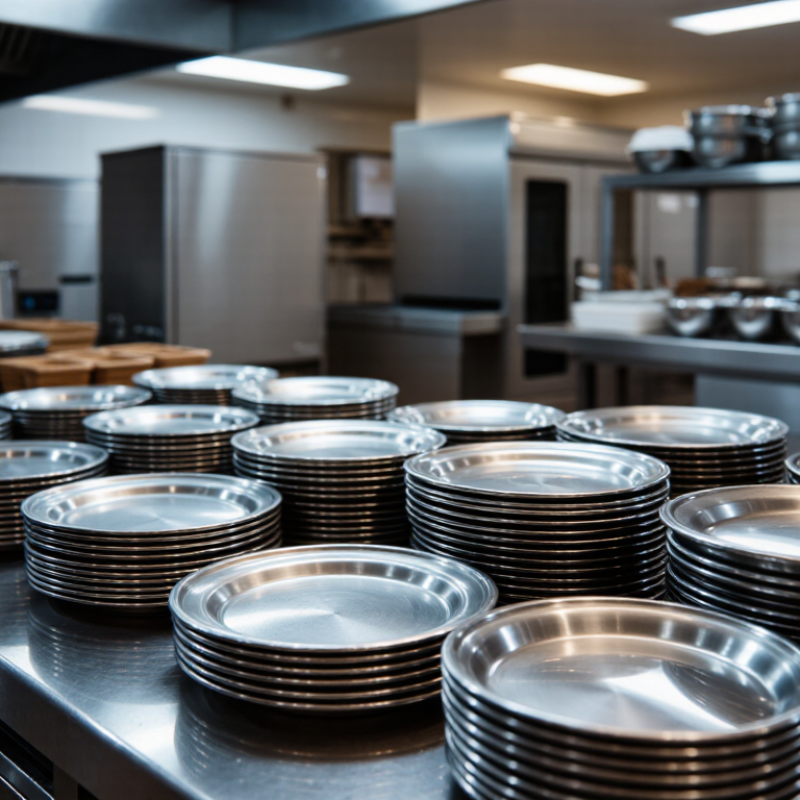
Metal Dinner Plates: Materials, Designs, and Commercial Applications
2026 Best Metal Dinner Plates for Wholesale Buyers?
Metal Dinner Plates: Materials, Designs, and Commercial Applications
Metal dinner plates balance durability, presentation, and long-term operating costs. For wholesale buyers, material selection should match the serving environment. Stainless steel remains a dependable option for hotels, catering teams, schools, and institutional dining. Food-grade 304 stainless steel offers strong corrosion resistance and a clean appearance. In harsher coastal or humid settings, 316 stainless steel may deserve consideration. Aluminum plates are lighter and easier to transport. However, they can dent more easily under repeated commercial use.
Design affects daily efficiency. Raised rims help contain sauces and reduce spills during busy service. Rolled edges improve handling and reduce sharp contact points. Smooth, brushed finishes hide minor marks better than mirror polishing. Mirror finishes look refined, but fingerprints appear quickly. Stackable shapes save valuable storage space. Mixed sizes also support main courses, desserts, and shared dishes.
Commercial buyers should inspect plate weight, thickness, nesting performance, and surface consistency. Request food-contact documentation and test records for the intended market. Sample testing matters more than attractive catalog photos. I have seen plates that looked strong but warped after uneven heating. No plate is perfect. Consider washing methods, transport distance, and replacement rates before placing a large order. Small details, such as stable stacking and readable packaging labels, can influence labor costs over time.
Food Safety, Durability, and Maintenance Requirements
For 2026 wholesale purchasing, metal dinner plates should be judged by food safety before appearance. Choose food-contact materials with clear composition records and supplier testing documents. Stainless steel usually offers strong corrosion resistance and stable daily performance. Aluminum can be lighter, but its coating and surface condition require closer inspection. Local food-contact requirements still matter.
A safe plate should have a smooth surface, rounded edges, and no exposed flakes or sharp burrs. Tiny scratches can trap grease and food residue. Deep dents may also weaken cleaning performance. Ask suppliers about migration testing, surface treatment, and dishwasher compatibility. Request production samples before approving large quantities. Test them with real detergents, heat cycles, stacking pressure, and repeated handling.
Durability affects more than replacement costs. Plates should resist staining, warping, and corrosion during transport and service. Check whether rims remain stable after frequent washing. Small details matter. Maintenance instructions must be simple enough for busy kitchen staff to follow. Avoid abrasive pads when the finish is vulnerable, and inspect plates regularly for pitting or peeling. I would not trust a shiny sample alone. Some defects appear only after weeks of washing. Even a careful specification can miss actual workplace conditions, so buyers should record test results and review damaged samples before expanding the order.
Supplier Evaluation, Customization, and Quality Control
A reliable metal dinner plate supplier should provide more than attractive samples. Wholesale buyers need clear material specifications, production records, and repeatable inspection results. Ask whether the plate uses food-contact stainless steel or another approved metal. Request material certificates before placing a large order. A polished surface can still hide uneven thickness or weak edges.
Customization needs practical limits. Confirm diameter, rim height, weight, finish, stacking space, and logo placement in a signed drawing. Laser marking, embossing, and colored coatings may require different tooling and testing. Approve a pre-production sample, not only a digital image. Small changes can affect balance, cleaning, and shipping damage.
We once underestimated carton movement during transport. The plates arrived usable, but several surfaces showed fine rubbing marks.
Quality control should cover incoming materials, forming, polishing, washing, packing, and final sampling. Inspect flatness on a level table. Run edge checks with a cloth and fingertip. Measure coating adhesion where finishes are applied. Batch photos and retained samples improve traceability. Independent laboratory testing can verify food-contact performance when required by the destination market. Supplier audits should also review worker training, calibration records, complaint handling, and corrective actions. A factory may pass one inspection and still need closer monitoring. Recheck critical dimensions during production, not just before shipment. Humidity, tooling wear, and rushed packing can change results. That inconvenient detail deserves attention.
Pricing, Order Quantities, and Procurement Planning
For 2026 wholesale planning, metal dinner plate pricing should be built from material grade, thickness, finish, packing, and freight. Stainless steel usually costs more than coated carbon steel, but it can reduce replacement rates in high-turnover catering. The World Steel Association reported global crude steel production near 1.9 billion tonnes in 2024. That figure signals supply scale, not a direct plate quotation. Metal prices still move with energy, scrap, and regional demand.
Use landed cost, not factory price. A practical quotation should separate plate cost, polishing, cartons, inspection, duty, and transport. UN Comtrade’s HS 7323 category covers iron or steel tableware, but it combines several products. Its data helps compare trade flows, yet it cannot provide an exact dinner-plate benchmark. That limitation matters.
Order quantities need testing. A first purchase of 500 to 1,000 pieces can check nesting, edge comfort, scratches, and carton strength. Larger orders may lower unit pricing, but excess inventory can freeze cash for months. Ask suppliers for price breaks at three volumes, such as 1,000, 3,000, and 10,000 pieces. Also request a written validity period. Thirty days may be too short during volatile steel markets.
Leave room for mistakes. A sample that looks excellent under showroom lighting may show fingerprints in a restaurant. Procurement teams should inspect production samples under stronger, practical lighting before approving a full shipment.