
2026 Best Toys Storage Boxes for Wholesale Buyers?
The 2026 wholesale market for Toys Storage Boxes is becoming more practical, design-focused, and demanding. Buyers now expect storage products to protect toys, simplify retail displays, and support everyday family routines. A box may look attractive in a product photo, yet fail when its lid bends, its handles split, or its corners waste shelf space.
Marie Kondo, a widely recognized organizing expert, says, “The objective of cleaning is not just to clean, but to feel happiness living within that environment.” Her idea applies strongly to Toys Storage Boxes. A well-designed box should make sorting feel natural, not create another household task. For wholesale buyers, this means examining fabric strength, stitching quality, odor control, foldability, capacity, and cleaning performance before placing large orders.
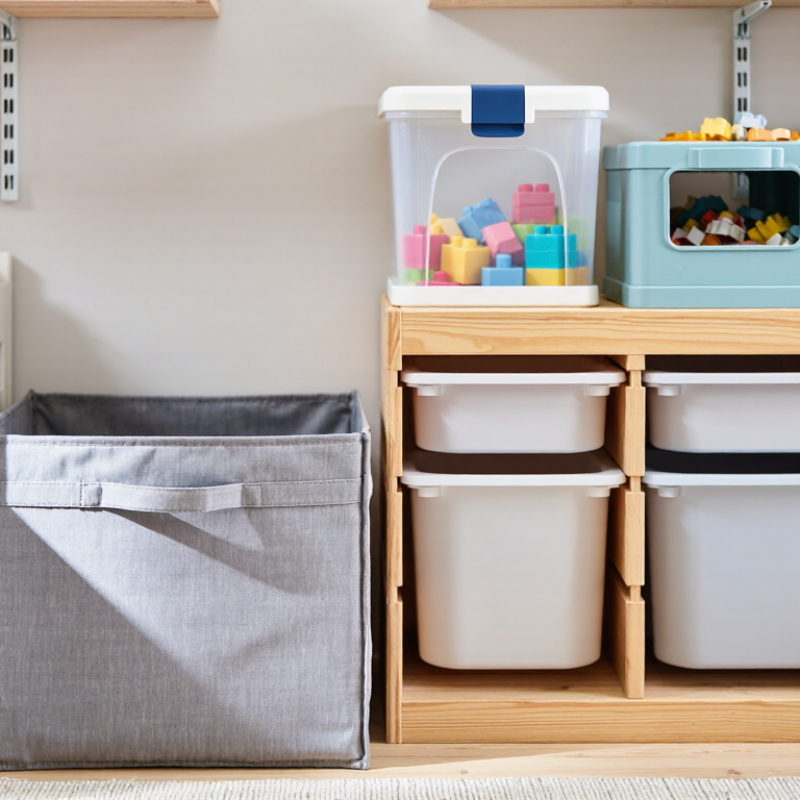
Details matter. A reinforced cotton bin should keep its shape beside a child’s bed. A plastic container should stack evenly without sharp edges. A transparent front can help children find building blocks quickly. Small features sell.
But not every popular feature deserves attention. Some printed designs look impressive online but fade after repeated cleaning. Some “large-capacity” boxes become difficult to carry when filled. That weakness is easy to overlook.
This guide examines the best Toys Storage Boxes for wholesale buyers in 2026. It considers product durability, storage efficiency, visual appeal, packaging, customization, and realistic retail demand. The strongest option may not be the cheapest one. It should be dependable in warehouses, attractive on shelves, and genuinely useful in homes.
Types of Toy Storage Boxes Wholesale Buyers Should Compare in 2026
Wholesale buyers should compare toy storage boxes by use, not appearance alone. Circana’s 2024 global toy industry data reported renewed growth in several markets, increasing pressure on warehouses to handle wider product ranges. A small nursery bin will not suit large construction sets. Measure the biggest toy first, then allow extra space for seasonal stock.
Foldable fabric boxes suit lightweight toys and reduce shipping volume. Plastic stackable bins offer better moisture resistance and clearer inventory control. Wooden crates provide strength and a warmer retail display, but they weigh more. According to Grand View Research, organized storage demand is supported by expanding e-commerce and home-organization spending. That suggests packaging efficiency matters almost as much as durability.
Consider lids, handles, label panels, and carton dimensions. A transparent front can reduce picking time, though scratches may appear after repeated handling. Test hinge strength before placing a large order. I once underestimated corner damage during pallet movement; the box looked strong but failed at the seam. That mistake still matters. Buyers should request sample units, compare empty and loaded weight, and check whether stacked boxes remain stable after vibration testing. Statista’s household organization reports also indicate continuing consumer interest in space-saving products, making collapsible designs commercially attractive. Yet “space-saving” can become unstable if the base is too thin. Balance storage capacity, safety, replacement rates, and freight cost before selecting a wholesale type.
2026 Best Toys Storage Boxes for Wholesale Buyers? - Types of Toy Storage Boxes Wholesale Buyers Should Compare in 2026
Comparison guide for wholesale buyers evaluating common toy storage formats. Dimensions, capacities, weights, and packaging details are typical planning ranges and should be confirmed with the selected supplier before ordering.
| Storage Type | Typical Material | Common Size Range (W × D × H) | Approx. Usable Capacity | Typical Unit Weight | Key Advantages | Limitations to Check | Best Wholesale Use | Packaging and Logistics | Important Quality Checks |
|---|---|---|---|---|---|---|---|---|---|
| Stackable Plastic Storage Bins | Polypropylene or high-density polyethylene | 30 × 20 × 15 cm to 60 × 40 × 35 cm | 8–70 L | 0.35–2.20 kg | Durable Wipe-clean Stackable Moisture-resistant | Rigid construction can increase shipping volume; plastic odor, lid fit, and brittle hinges should be checked. | High-volume household, nursery, classroom, and retail storage programs. | Usually nested or stacked. Efficient for warehouse handling, but empty-bin volume can be significant. | Corner strength, lid locking force, wall thickness, load stability, odor, color consistency, and material compliance. |
| Fabric Foldable Storage Cubes | Polyester or cotton-blend fabric with cardboard or polypropylene reinforcement | 30 × 30 × 30 cm to 33 × 33 × 33 cm | 22–36 L | 0.45–1.10 kg | Foldable Lightweight Shelf-friendly Color options | Lower moisture resistance; may collapse under uneven loading; handles and seams can wear during repeated use. | Open shelving, bedroom organization, daycare rooms, and gift-oriented retail sets. | Ships flat, reducing carton volume. Folding instructions and crease recovery should be considered. | Fabric GSM, seam strength, handle reinforcement, insert thickness, odor, colorfastness, and dimensional recovery after folding. |
| Wooden Toy Crates | Solid pine, plywood, or engineered wood | 30 × 20 × 15 cm to 60 × 40 × 30 cm | 9–65 L | 1.20–5.00 kg | Rigid Long service life Decorative Repairable | Heavier than fabric or plastic; vulnerable to moisture; rough edges, splinters, and coating quality require close inspection. | Premium home organization, educational settings, boutique retail, and furniture-style storage collections. | Often nested or shipped assembled. Protective corner packaging may be needed to prevent surface damage. | Moisture content, sanding quality, joint strength, coating safety, load-bearing performance, odor, and exposed fasteners. |
| Rolling Toy Storage Carts | Plastic, powder-coated steel, wood, or mixed materials | 45 × 30 × 65 cm to 90 × 40 × 90 cm | 25–100 L | 2.00–8.00 kg | Easy access Mobile Large capacity Multi-room use | Higher shipping cost; wheels may fail on thick carpet; tipping resistance and pinch points must be reviewed. | Playrooms, schools, libraries, activity centers, and larger retail storage displays. | Usually requires partial assembly. Carton size is affected by wheel assemblies, handles, and frame design. | Wheel durability, brake function, frame stability, handle attachment, pinch-point protection, and maximum load. |
| Modular Plastic Drawer Organizers | Polypropylene, ABS, or molded polystyrene | 25 × 18 × 15 cm to 50 × 35 × 90 cm | 5–80 L total system capacity | 0.50–4.50 kg | Small-part sorting Modular Visible contents Space-efficient | Individual drawers may have limited capacity; runners can wear; transparent parts may scratch or discolor. | Puzzles, building pieces, craft toys, action figures, learning aids, and small accessories. | Nested components can improve carton efficiency. Protect transparent drawers from abrasion during transit. | Drawer alignment, pull strength, runner durability, anti-tip design, transparency, edge safety, and stack stability. |
| Wire or Metal Basket Storage | Powder-coated steel or plated metal wire | 25 × 20 × 15 cm to 60 × 40 × 30 cm | 7–55 L | 0.60–2.80 kg | Ventilated Rigid Visible contents Easy to clean | Open design does not contain dust; wire ends, coating chips, rust resistance, and noise should be checked. | Retail shelving, classrooms, playrooms, toy libraries, and quick-access storage areas. | May nest efficiently, but protective separators can be required to prevent scratching and coating damage. | Wire diameter, weld quality, coating adhesion, edge finishing, corrosion resistance, base stability, and deformation under load. |
| Transparent Lidded Toy Boxes | Clear polypropylene or clear polycarbonate-style plastic | 20 × 15 × 10 cm to 55 × 35 × 30 cm | 3–55 L | 0.25–2.00 kg | Contents visible Dust protection Easy identification Stackable | Clear surfaces can scratch; lids may warp if thin; direct sunlight can affect some plastic formulations. | Small toys, collectibles, puzzles, educational parts, and organized retail assortments. | Nested packaging is common. Use protective film or dividers when surface appearance is a key selling point. | Clarity, scratch resistance, lid fit, hinge cycles, stack load, odor, wall thickness, and drop-test performance. |
| Under-Bed Toy Storage Boxes | Low-profile polypropylene, fabric, or laminated board | 60 × 40 × 15 cm to 100 × 50 × 20 cm | 30–90 L | 0.80–3.50 kg | Uses unused space Large capacity Low profile Easy seasonal storage | Requires accurate clearance measurements; access may be difficult without wheels, handles, or pull tabs. | Seasonal toys, dress-up items, soft toys, bedrooms, and compact living spaces. | Large footprint can raise carton dimensional weight. Flat-pack fabric versions are generally more transport-efficient. | Actual external height, base rigidity, wheel or handle strength, lid clearance, ventilation, and dust protection. |
Wholesale comparison priorities for 2026: compare usable capacity rather than external volume, confirm carton dimensions and container loading efficiency, review safety and material documentation, test hinges and handles for repeated use, and verify whether the product is supplied assembled, nested, or flat-packed.




Stay Connected
Sign up today to keep up with the newest information from one of the Southeast’s leading suppliers of fluid handling equipment!