

2026 Top Organic Panko Types for Global Buyers

Global buyers are entering a more selective Organic Panko market in 2026. They want clean labels, consistent crumb size, and dependable certification. A golden, crisp flake must also survive frying, freezing, and long-distance shipping.

The demand rests on a wider organic food economy. FiBL and IFOAM Organics International reported global organic retail sales of approximately €135 billion in 2022. Their 2024 World of Organic Agriculture also recorded nearly 97 million hectares under organic management. These figures show scale, but they do not measure Organic Panko directly. The market is not perfectly mapped.

Grand View Research identifies rising demand for organic and minimally processed foods as a major food industry trend. Meanwhile, the Research Institute of Organic Agriculture highlights certification, traceability, and supply-chain transparency as critical buyer concerns. These points matter when comparing Japanese-style breadcrumbs from different regions. A product may look identical in a sample tray. Its wheat origin, yeast source, oil content, and audit history may differ sharply.

Texture remains practical. Fine crumbs suit delicate seafood, while larger flakes create stronger visual crunch on chicken or vegetables. Moisture control also affects shelf life and frying performance. Buyers should request laboratory specifications, allergen statements, organic certificates, and batch records before approving suppliers.

Small details matter.

This guide reviews the leading Organic Panko types for global procurement in 2026. It considers particle size, ingredient design, packaging, certification, and application performance. Some conclusions remain provisional because public panko-specific data is limited. That uncertainty deserves attention, not concealment. Reliable purchasing requires testing the crumb in real kitchens, not trusting attractive claims alone.
2026 Top Organic Panko Types for Global Buyers

Organic Panko Defined: USDA and EU Rules Require at Least 95% Organic Ingredients

Organic panko is more than a coarse, airy breadcrumb. For products labeled organic, USDA and EU rules generally require at least 95% organic agricultural ingredients. Water and salt are typically excluded from this calculation. The remaining ingredients must meet strict permitted-substance requirements.

For global buyers, the percentage needs careful verification. Wheat flour, yeast, sugar, and cooking oil may all affect the organic calculation. A supplier should provide current organic certificates, ingredient statements, lot records, and transaction documents. These records help confirm both agricultural origin and supply-chain control. Certification alone is not enough. Check the certificate scope.

Texture also matters. Quality organic panko should look pale, dry, and visibly flaky, with a crisp bite after frying or baking. Uneven flakes may create inconsistent coating coverage. That is easy to overlook during a paperwork review. Moisture testing and sample cooking can reveal problems before shipment. A small kitchen trial often tells more than a polished product sheet.

Requirements can differ between markets, especially for labeling language, additives, and imported goods. Buyers should verify the destination country’s current rules with an accredited certifier or qualified regulatory specialist. I have found that clear documentation prevents more disputes than promising specifications. Still, even careful checks can miss a weak supplier audit or seasonal ingredient change. Build room for rechecking.


2026 Top Organic Panko Types for Global Buyers

Organic panko is a coarse, flake-style breadcrumb made from bread ingredients produced under an approved organic standard. For a finished panko product to use the main organic claim, USDA and EU rules generally require at least 95% organic agricultural ingredients by weight, subject to approved exceptions and labeling conditions.

Regulatory references: USDA 7 CFR §205.301 and EU Regulation (EU) 2018/848, Article 30(5)(a). The 70% category is the USDA “Made with organic” labeling threshold and is not equivalent to the principal “organic” claim.

2026 Market Context: Global Organic Food Sales Reached €134.8 Billion in 2022

Global organic food sales reached €134.8 billion in 2022, showing strong demand for cleaner ingredients. This growth is influencing breading purchases across retail and foodservice markets. Organic panko now appears in frozen meals, seafood coatings, vegetable products, and restaurant kitchens. Buyers often compare flake size, color, texture, and certification before discussing price.

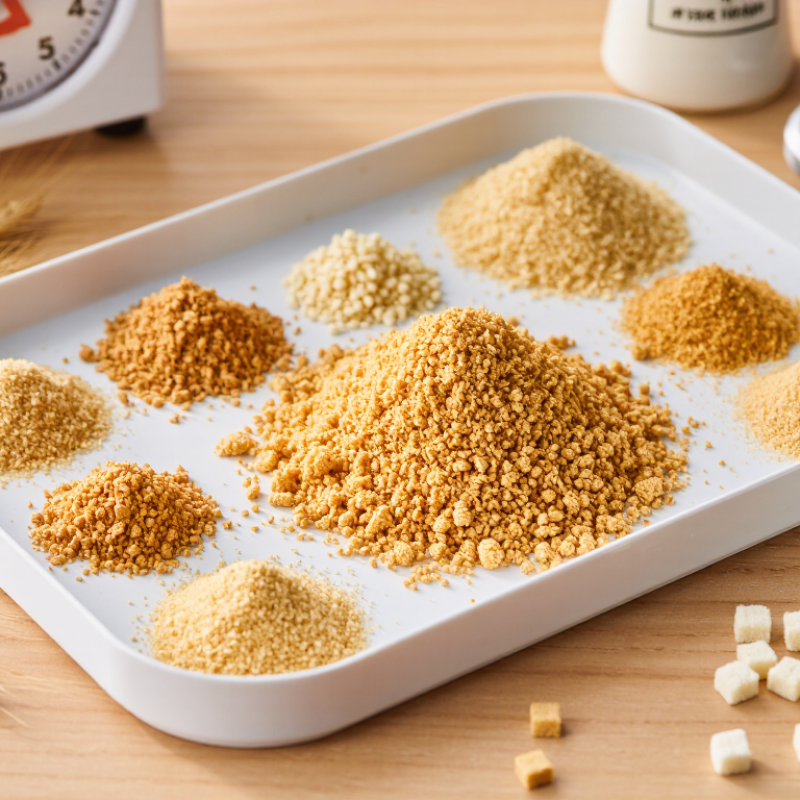
Fine white panko creates a light, crisp coating for shrimp, tofu, and thin cutlets. Medium flakes offer balanced coverage and work well in prepared foods. Larger flakes produce a rougher, more visible crust.

Whole-wheat organic panko adds a darker color and mild grain flavor. Gluten-free versions may serve specialized diets, but buyers must confirm separate certification and allergen controls.

Details matter.

Reliable sourcing requires more than an organic logo. Importers should request current certificates, ingredient specifications, moisture limits, microbiological results, and packaging details. Country requirements can differ, so documentation needs careful review. Samples should be tested after frying, not only when dry. Some flakes brown too quickly. Others lose their crunch during delivery or reheating.

The market is growing, but quality is not perfectly uniform. Organic grain supply can vary by season, affecting color and particle size. Buyers may need flexible specifications without weakening safety standards. A practical purchase plan includes trial batches, traceable lots, and clear shelf-life records. This approach supports consistent performance while recognizing the category’s real limitations.

Organic Panko Types: White, Whole-Wheat, Gluten-Free, and Seasoned Varieties

For global buyers, organic panko selection should match the finished product, not only the package label. White organic panko offers a light color, crisp texture, and mild flavor. It suits seafood, vegetables, and prepared meals where appearance matters. Whole-wheat panko creates a darker crust and a nuttier taste. Its texture can feel slightly heavier, especially after extended frying.

Organic gluten-free panko supports recipes designed for wheat-free consumers. Buyers should verify the raw material, allergen controls, and cross-contact testing before approval. Rice-based crumbs often produce a clean, delicate crunch, but they may absorb oil differently. Seasoned organic panko adds convenience through herbs, spices, or salt. However, seasoning can reduce recipe flexibility and complicate regional taste adjustments. No type wins every application. Small pilot trials remain necessary.

Tips: Request particle-size ranges, moisture data, ingredient details, and current organic documentation. Test each sample in the real cooking process, including oven baking and deep frying. Check crust color after ten minutes, not only when fresh. I have found that attractive samples sometimes soften too quickly in humid kitchens. That weakness is easy to miss. Also review packaging strength, storage temperature, and shelf-life evidence before placing larger orders. Supplier communication matters, but independent testing offers stronger confidence.

Buyer Quality Metrics: FDA Gluten-Free Threshold Set at Below 20 ppm

For 2026, organic panko buyers should treat gluten-free control as a measurable specification, not a marketing phrase. The FDA defines “gluten-free” as containing less than 20 parts per million of gluten. This limit applies to finished food, ingredients, and cross-contact controls under the FDA’s 2013 labeling rule. The Codex Standard for Foods for Special Dietary Use also uses 20 mg/kg as its benchmark (Codex STAN 118-1979, revised 2008). The number is small. The risk is not.

Organic status does not automatically mean gluten-free status. Rice, corn, and tapioca panko may begin with suitable raw materials, but shared mills, conveyors, and packing rooms can change the result. Buyers should request lot-specific certificates of analysis, laboratory method details, and sampling plans. ELISA testing is widely used for gluten detection, but uneven sampling can miss contamination. FDA compliance guidance also emphasizes controls across processing, storage, and labeling, rather than one final test alone. In procurement audits, a clean report is useful. It is not perfect. Questions remain about test frequency, laboratory competence, and borderline results. A practical purchasing file should record the measured ppm value, production date, organic certificate, allergen statement, and corrective action history. That evidence supports defensible decisions across different markets.

2026 Top Organic Panko Types for Global Buyers - Buyer Quality Metrics: FDA Gluten-Free Threshold Set at Below 20 ppm
Indicative buyer specification benchmarks for organic panko procurement. Final acceptance limits should be confirmed by contract, product specification, certificate review, and lot testing.
Organic Panko Type Primary Base Material Typical Particle Profile Typical Color & Appearance Typical Moisture Target Texture & Application Gluten-Free Buyer Metric Key Quality Checks Common Buyer Documentation
Organic White Wheat Panko Organic refined wheat flour, yeast, water, and salt; formulation varies by specification. Light, irregular flakes; commonly about 2–6 mm, with low fines preferred for visible coating applications. White to pale cream; clean appearance with no dark particles or visible foreign matter. Typically 3–8% at packing; buyer should set a lot-specific limit. Light, crisp coating for breaded seafood, vegetables, poultry, and prepared foods. Not gluten-free
Wheat-based panko naturally contains gluten and should not be marketed as gluten-free.
Organic status, moisture, particle-size distribution, bulk density, sensory crispness, yeast activity, foreign material, and microbiological compliance. Organic certificate, product specification, ingredient statement, allergen declaration, certificate of analysis, and traceability records.
Organic Whole-Wheat Panko Organic whole-wheat flour or meal, with water, yeast, and salt as applicable. Medium to coarse flakes; bran particles may create a slightly less uniform profile than refined wheat panko. Tan to light brown, with naturally occurring bran specks. Typically 4–9% at packing; whole-grain formulations may require tighter control of storage conditions. More pronounced grain flavor and darker visual finish; suitable for premium or whole-grain recipes. Not gluten-free
Wheat-derived and unsuitable for gluten-free claims.
Bran distribution, rancidity indicators, moisture, particle uniformity, odor, color consistency, and foreign-material control. Organic certificate, whole-grain ingredient verification, allergen-control plan, product specification, and lot-level test records.
Organic Gluten-Free Rice Panko Organic rice flour or rice-based dough; may include tapioca or other permitted starches depending on the formulation. Light, porous flakes; commonly about 2–6 mm, with low powder content preferred. White to off-white; generally lighter and more neutral in flavor than whole-grain varieties. Typically 4–8% at packing. Crisp, light coating for seafood, vegetables, plant-based foods, and gluten-free prepared meals. FDA gluten-free target: <20 ppm
Finished product, ingredients, and shared-equipment controls should support a gluten level below 20 ppm.
Gluten test result, moisture, particle size, crispness after frying or baking, rice identity, foreign material, and cross-contact controls. Organic certificate, gluten-free control plan, validated gluten test report, allergen statement, ingredient specifications, and traceability documents.
Organic Rice-Corn Panko Organic rice and corn flours or grits; the exact ratio should be stated in the ingredient specification. Medium flakes with a relatively open structure; particle-size consistency is important for automated coating lines. Pale cream to light yellow, depending on the corn ingredient and processing conditions. Typically 4–9% at packing. Good adhesion and visible flake structure; suited to fried, baked, and air-fried products. FDA gluten-free target: <20 ppm
Buyer should require finished-lot verification below 20 ppm and documented prevention of wheat cross-contact.
Gluten level, particle-size distribution, corn and rice authenticity, color, moisture, oil pickup performance, and sensory neutrality. Organic certificate, gluten-free declaration or certification evidence, allergen-control records, product specification, and certificate of analysis.
Organic Rice-Cassava Panko Organic rice flour combined with organic cassava or tapioca starch, subject to formulation requirements. Light, airy flakes; generally medium-sized with a low level of fines for a clean coating appearance. White to pale cream; typically neutral in aroma. Typically 4–8% at packing. Delivers a light crunch and is suitable for gluten-free, grain-diverse, and plant-based product concepts. FDA gluten-free target: <20 ppm
Finished product should test below 20 ppm under an appropriate validated method.
Gluten testing, moisture, flake integrity, cassava or tapioca identity, odor, microbial specifications, and coating adhesion. Organic certificate, gluten-free verification, ingredient-origin records, allergen statement, certificate of analysis, and lot traceability.
Organic Seasoned Panko Organic wheat or gluten-free base panko with seasonings such as salt, herbs, spices, or approved flavor ingredients. Flake size should match the base panko; seasoning should be evenly distributed without excessive powder or clumping. Color varies from white or cream to herb-speckled or lightly golden, depending on the seasoning blend. Typically 4–9% at packing; seasoning ingredients may affect the final moisture target. Convenient ready-to-use coating for retail, foodservice, and prepared-food applications. Wheat base: not gluten-free
Gluten-free base: target <20 ppm
The gluten status of the complete seasoned formulation must be verified, not inferred from the base ingredient alone.
Seasoning uniformity, salt level, moisture, flavor consistency, allergen cross-contact, gluten result where applicable, and sensory stability. Organic certificate, complete ingredient and allergen statement, seasoning specifications, gluten-control evidence where applicable, and certificate of analysis.
Buyer note: Under U.S. FDA labeling requirements, a food labeled “gluten-free” must contain less than 20 parts per million (ppm) of gluten. Organic certification and gluten-free status are separate requirements; an organic product is not automatically gluten-free.

Global Sourcing Checklist: Certification, Shelf Life, Packaging, and Trade Terms

2026 Top Organic Panko Types for Global Buyers

Global buyers should assess organic panko by particle size, color, texture, and approved ingredient sources. Fine crumbs suit coatings for seafood and vegetables. Larger flakes create a lighter, crunchier finish. Request the organic certificate before discussing volume. Check its issuing body, validity period, covered facility, and product scope. The certificate must match the actual manufacturing site, not only the exporter’s office. Ask for current allergen, microbiological, and pesticide-control documents. Paperwork alone is not enough.

Shelf life deserves practical testing. Request production dates, best-before dates, storage conditions, and retained-sample results. A sealed sample should remain dry, crisp, and free from stale odors. Confirm moisture limits and packaging performance through documented testing. Some suppliers provide generous shelf-life claims. Verify them under realistic warehouse conditions. A warm container or humid port can expose weak controls quickly. This is where buyers often underestimate risk.

Packaging should protect against oxygen, moisture, pests, and crushing. Review food-contact compliance, inner-bag seals, carton strength, pallet patterns, and recycling requirements. Specify net weight tolerance and lot coding before production. Trade terms must define responsibility clearly. Compare FOB, CIF, and other suitable Incoterms with freight, insurance, inspection, and delivery points stated in writing. Include loading photos, a certificate of analysis, and an independent inspection option. Small omissions become expensive. I would also review the checklist after the first shipment, because assumptions rarely survive real logistics.

Stay Connected

Sign up today to keep up with the newest information from one of the Southeast’s leading suppliers of fluid handling equipment!