

Wall-Mounted Display Racks are fixtures secured to a wall to present products without taking up valuable floor space. They can hold packaged goods, books, accessories, tools, or small homewares. Common designs include shelves, slatwall systems, pegboards, and rails with adjustable brackets. The right choice depends on the products, the wall surface, and how often displays need to change.
Retail anthropologist Paco Underhill, author of Why We Buy, is often associated with the phrase, “Retail is detail.” Applied to wall displays, that idea is practical: shelf height, product spacing, and visibility can shape how shoppers notice and reach merchandise. Picture a row of jars at eye level, with clear labels facing the aisle. Small choices matter.
A good rack should suit both the merchandise and the room. Check its stated load capacity, mounting method, and compatibility with the wall before installation. A rack that looks sturdy may still be unsuitable for a particular surface. That part deserves care. In a real shop, displays also collect dust, shift during restocking, and sometimes look crowded by Friday. Planning for those ordinary details makes a display more useful—and easier to maintain.
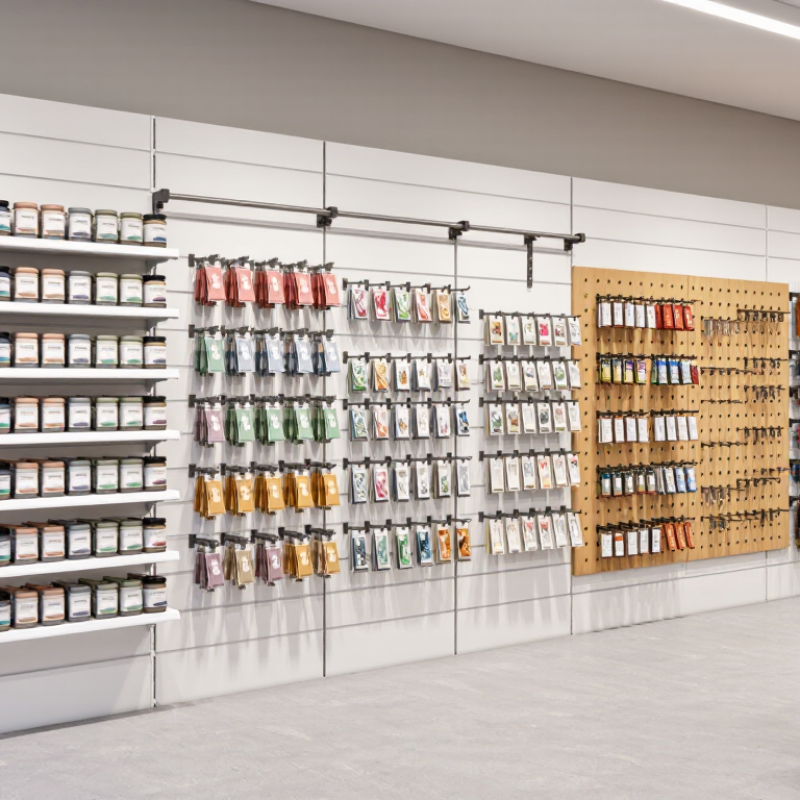
Wall-mounted display racks are fixtures secured to a wall to present products while keeping floor space open. They may use shelves, rails, hooks, or a mix of these parts. A rack’s defining feature is its direct connection to the wall, not a particular shape or material. Metal is common for heavier loads, while wood or clear panels can suit lighter displays.
Core characteristics include capacity, mounting method, and how easily the layout can change. Check the rack’s stated load limit and the wall’s structure before installation. A shelf holding jars needs different support from one carrying folded shirts. Fasteners must match the wall material; a strong-looking rack can still pull loose if its anchors are unsuitable. Small detail. Adjustable slots or movable hooks help staff change a display without replacing the whole fixture, though frequent changes can leave the arrangement uneven.
Good placement keeps items visible and reachable. Eye-level positioning often works for small products, while lower shelves can hold heavier stock. Leave enough space for customers to see labels and lift items without knocking nearby goods. Wall-mounted racks can make a compact shop feel less crowded, but they are not suitable for every wall or product. Even a neat display needs occasional checking for loose fittings and sagging shelves. That step is easy to forget.

Wall-mounted display racks attach to a wall to present merchandise or other items while keeping floor space open. Shelf depth varies with the intended use; the figures below are illustrative planning ranges, not universal standards.
Core characteristics: wall-fixed support, horizontal display surfaces, and a depth selected for the items on show. Check the rack’s specifications, wall construction, and rated load before installation.
Wall-mounted display racks usually combine a backplate or vertical rail, support brackets, and shelves, hooks, or other attachments. The backplate transfers the display’s weight to the wall. Brackets hold each shelf away from the wall and resist bending. Simple parts. Their fit matters.
Shelf depth, bracket spacing, and material thickness affect stability. A deep shelf creates more leverage, so it may need stronger or more closely spaced supports. Metal rails often allow adjustable placement, while fixed wooden panels can provide a cleaner, less flexible layout. Fasteners must suit the wall construction; the same screw is not right for every surface. A small front lip can help keep objects from sliding, but it does not make an overloaded shelf safe.
A well-designed rack spreads weight across its supports instead of concentrating it at one point. Installation should follow the rack’s instructions, with the wall checked for suitable anchoring before loading. Keep heavier items near the supports and lighter pieces toward the outer edge. That detail is easy to overlook. Even careful layouts deserve a second look: real displays change, and a shelf that feels secure when empty may behave differently once filled.
Wall-mounted display racks hold products, books, tools, or small decorative objects above floor level. Common types include fixed shelves, adjustable rail systems, slatwall panels, and compact wire racks. Fixed shelves give a clean, steady look, but their spacing cannot change easily. Adjustable systems suit changing displays because brackets can move along rails. Slatwall panels offer flexible placement, while wire racks allow air and light to pass through. Simple, but not universal.
Material affects strength, appearance, cleaning, and upkeep. Steel racks can support heavier items when properly mounted, though scratches may expose areas prone to rust. Aluminum is lighter and often easier to handle, but may flex under concentrated weight. Solid wood adds warmth and can be refinished; it may also expand or contract with humidity. Plastic racks resist moisture and are easy to wipe, yet some designs feel less rigid. There is no perfect material. The lightest option may feel less reassuring.
Tips: Match rack capacity to the actual load, not just the displayed objects. Check wall construction and use suitable anchors; drywall alone may not support a heavily loaded rack. Keep frequently handled items within comfortable reach. Before installation, measure the space with the door open and nearby furniture in place. Small details matter.
Wall-mounted display racks hold products, tools, or information against a wall, keeping floor space open for customers and staff. In a small grocery shop, adjustable shelves can present jars at eye level while leaving room for baskets below. A hardware store may use slotted panels for hooks, making hand tools easier to see and return. Placement matters: heavy items belong on sturdy lower shelves, not above a busy walkway. Check the wall and fixings before loading.
Applications vary by setting. Clothing shops can use rails and shelves together for folded shirts, bags, or accessories near fitting rooms. In pharmacies, carefully arranged racks can make everyday personal-care goods easier to locate, though staff should keep restricted or sensitive products under appropriate supervision. Offices use wall racks for brochures, sample folders, and shared supplies; in a reception area, clear labels reduce repeated questions. Workshops often mount racks near workbenches, where small parts are within reach but not scattered across the surface. Keep it accessible.
A rack can also create problems. Poor spacing hides products, and glare from overhead lights makes labels hard to read. I have seen displays look neat when empty, then become awkward once customers reach for the back row. Review the setup during normal use, and adjust shelf height, load, and access as needed.
Wall-mounted display racks attach directly to a wall, keeping products visible while freeing floor space. Their safe installation starts with the wall itself. Drywall, masonry, and timber framing each require suitable fasteners. Check the rack’s loaded weight, not just its empty weight, and confirm that the fixing points match the wall structure. A level, tape measure, and careful marking help prevent a crooked display. Small details matter. Leave enough clearance for doors, nearby shelves, and hands reaching for items.
Display height affects both visibility and comfort. Place frequently handled products within easy reach, and keep heavier items lower where practical. Before drilling, mark the planned layout with removable tape and view it from the entrance. This simple check can reveal awkward spacing. Lighting also deserves attention: strong reflections may hide labels, while shadows can make lower shelves look crowded. Plan cable routes for any powered lighting, and avoid pinching wires behind the rack. A layout can look neat on paper but feel cramped in a real room; adjust spacing after testing it with sample products.
Sign up today to keep up with the newest information from one of the Southeast’s leading suppliers of fluid handling equipment!