
Choosing the right Soap Dish Holder Custom China supplier requires more than comparing catalog prices. A reliable partner should combine material knowledge, stable production, responsive communication, and consistent quality control. The best supplier may produce ceramic, bamboo, stainless steel, or recycled plastic holders, depending on your market and brand position.
Zhang Wei, a China-based bathroom accessories sourcing consultant, explains, “A good soap dish is not only attractive; it must drain well, resist moisture, and remain reliable after repeated use.” This practical view matters. Water should leave through clean drainage slots, not collect beneath the soap. Edges should feel smooth. Glaze should look even under direct light. Metal parts should resist early rust during normal bathroom use.
Supplier evaluation should include prototype quality, mold ownership, minimum order quantity, packaging strength, and inspection procedures. Ask for a physical sample before approving a large order. Check its dimensions with a ruler. Press the drainage area gently. Small details reveal production discipline.
However, a polished website proves little.
An attractive sample can still hide inconsistent batches, weak cartons, or delayed replies. Our first assumption may be wrong. That is why buyers should compare factory records, sample revisions, material specifications, and pre-shipment inspection results. Clear drawings and written tolerances also reduce misunderstandings. This guide examines how to identify the best supplier for Soap Dish Holder Custom China, while recognizing that the cheapest quotation is rarely the safest long-term choice. Reliability grows through evidence, communication, and repeated performance—not promises alone.
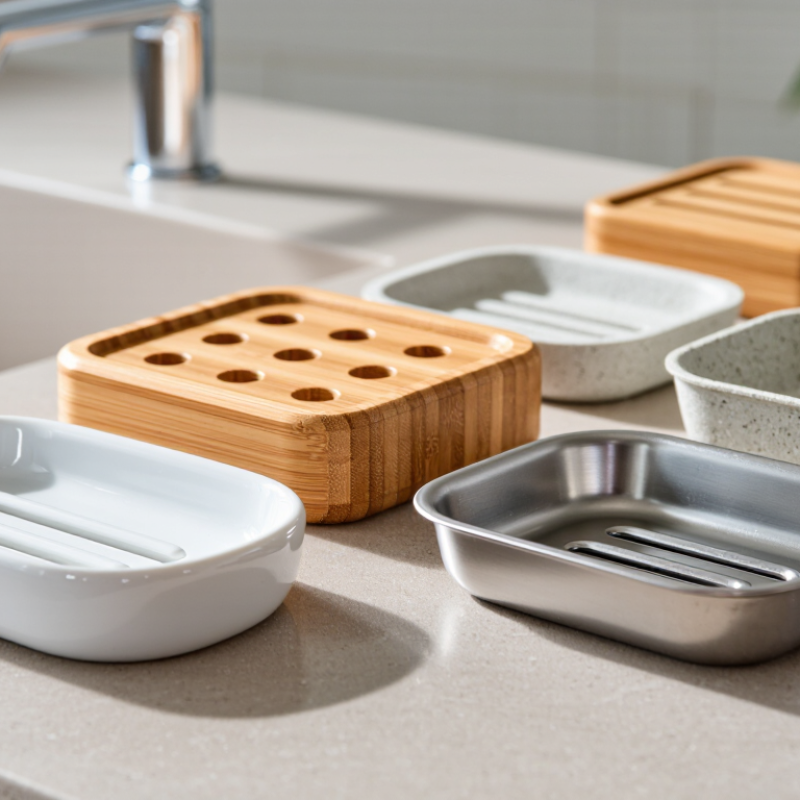
What makes a custom soap dish holder supplier the best in China? The answer is more than a low quotation. A strong supplier combines practical design experience, stable production, and clear communication. They should understand drainage, balance, surface finish, and bathroom humidity. A well-designed holder needs slotted channels that remove water quickly. It should also remain steady on a wet countertop. Experienced suppliers can recommend suitable materials, such as ceramic, stainless steel, bamboo, or durable resin.
Professional suppliers usually provide accurate drawings, 3D samples, and small prototype runs. They explain mold costs, minimum order quantities, production times, and packaging details before payment. Factory audits, material records, and inspection photos add useful evidence. Reliable quality control should check dimensions, glaze consistency, sharp edges, stains, and packaging damage. One weak inspection can affect an entire shipment. That risk deserves honest discussion. No supplier is perfect, and even a good factory may need design revisions after testing. A supplier willing to admit problems is often more dependable than one promising everything.
Tips: Request a physical sample before mass production. Test water drainage, weight, cleaning, and surface durability. Compare the approved sample with random finished units. Ask how defects are handled and whether replacement terms are written clearly. Check export experience, carton protection, and response speed. A thoughtful supplier asks questions about your market instead of copying a generic design. Small details matter.

When choosing a custom soap dish holder supplier in China, material selection should match the bathroom environment. Ceramic offers a smooth, premium surface and accepts detailed glazing. However, its edges can chip during shipping. Stainless steel resists moisture and rust when properly finished. It suits hotels and minimalist bathrooms. Bamboo feels warm and natural, but it needs sealed surfaces and careful moisture testing. Recycled plastic can reduce weight and production costs, although its texture may feel less refined.
Design affects daily use more than decoration. A raised drainage grid keeps soap above standing water. Sloped channels guide water toward a removable tray. Rounded corners simplify cleaning and reduce sharp contact points. For wall-mounted models, I check the adhesive area and load-bearing design carefully. A beautiful holder is useless if it slips after repeated exposure to steam. Custom colors should be tested under bathroom lighting, not only viewed on a digital screen.
From practical sampling, reliable suppliers usually provide material specifications, mold drawings, and measurable tolerances. Ask for several samples, not one perfect piece. Test them with wet soap, warm water, and repeated cleaning. I once preferred a glossy finish, but it showed water marks too easily. That choice needed reconsideration. Suppliers should also explain production limits honestly, including minimum order quantities, packaging protection, and inspection procedures. Small details reveal manufacturing discipline.
A polished catalog proves little. Evaluate the factory through samples, records, and direct questions. Request a working sample with your preferred size, color, logo, and drainage design. Inspect its surface closely. Look for uneven edges, weak suction, poor glaze, or water trapped beneath the dish. These details reveal production discipline.
Ask which material is used, such as ceramic, stainless steel, silicone, or ABS plastic. The supplier should explain material grades, temperature limits, cleaning performance, and expected service life. Request test reports and quality-control procedures. Verify whether inspections occur before packing, not only after production. Factory photos help, but a live video tour offers stronger evidence. It may still be imperfect.
I once accepted a sample because its appearance looked excellent. After several days, water stains appeared around the drainage holes. That small failure changed my evaluation process. Now, I test samples in a wet bathroom and check packaging after simulated transport. A reliable manufacturer should provide clear drawings, accurate dimensions, realistic lead times, and transparent minimum order quantities. Confirm communication speed and correction procedures before placing a large order. Written approval samples reduce misunderstandings. Supplier experience with export documentation, carton testing, and consistent batch production also matters. A low quotation can hide thinner material, unstable color, or expensive revisions.
What Is the Best Custom Soap Dish Holder Supplier in China?
The best supplier combines customization, quality control, and stable production capacity. Grand View Research valued the global soap market at about USD 55.3 billion in 2023. This growth increases demand for practical, attractive bathroom accessories. A capable Chinese supplier should convert sketches into production-ready drawings. They should also advise on drainage holes, wall thickness, glaze selection, and packaging strength.
Ask for physical samples before approving mass production. Check whether water drains within seconds, edges feel smooth, and the holder remains stable on a wet counter. Quality control should cover raw materials, dimensions, surface defects, color consistency, and carton protection. ISO 2859-1 provides a recognized sampling framework for acceptance inspection. However, sampling alone cannot replace factory experience. I have seen attractive samples fail during packing because thin ceramic walls cracked under vibration. That weakness deserves honest discussion.
Tips: Request a pilot order and a documented inspection report. Confirm mold ownership, allowable color variation, and replacement procedures. Review production records, not only showroom photos. A supplier with ISO 9001-based processes may offer better traceability, but certification should be verified independently. Ask for batch photos, drop-test evidence, and drainage testing videos. Small details matter. One overlooked hole can create standing water, customer complaints, and unnecessary rework.
Key supplier evaluation dimensions for customization, quality control, and production capabilities
The indicative weighting reflects common procurement priorities: product customization and consistent quality are usually more important than production scale alone. Buyers should verify these capabilities through samples, inspection records, material documentation, and production audits.
What Is the Best Custom Soap Dish Holder Supplier in China?
Pricing depends on material, mold design, finish, packaging, and order volume. Ceramic and stainless steel holders usually receive different quotes. A basic design may cost less, but a drainage channel, matte glaze, or custom logo increases tooling and production fees. Request a separated quote for samples, molds, unit prices, packaging, and shipping. Hidden costs create unpleasant surprises.
Minimum order quantities deserve careful discussion. Some suppliers accept 100 to 300 pieces for standard shapes, while custom molds may require 500 pieces or more. Ask whether the mold fee is refundable after a larger order. Also confirm sample charges and lead times. A supplier promising everything immediately may not understand production limits. That is a warning sign.
Communication quality often predicts delivery performance. Send a simple drawing with dimensions, drain-hole positions, color references, and packaging needs. Ask for a pre-production sample and photos of the inner surface, edges, and drainage area. Keep all revisions in writing. Short replies are convenient. They are not always clear. Time-zone delays can also affect approvals, so agree on response times and inspection points. I would also test one small batch before committing to a large order, even when the factory appears experienced. Mistakes can still happen with color matching, glaze consistency, or carton strength.
| Supplier Profile | Common Material Options | Typical Customization Capability | Indicative Unit Price at 1,000–5,000 Pieces | Typical MOQ | Sample Cost and Timing | Mass-Production Lead Time | Recommended Buyer Type | Communication Considerations | Overall Fit |
|---|---|---|---|---|---|---|---|---|---|
| Ceramic and Porcelain Specialist | Stoneware, porcelain, glazed ceramic | Custom shape, glaze color, embossed logo, decal printing, gift packaging | US$1.20–US$3.80 per piece | 500–2,000 pieces | US$50–US$180; approximately 7–15 days | 25–45 days after sample approval | Homeware brands seeking a premium appearance | Confirm glaze color references, dimensional tolerances, edge finishing, breakage standards, and packaging strength in writing. | Excellent for premium designs |
| Bamboo and Wood Workshop | Bamboo, rubber wood, acacia, beech | Laser engraving, routed drainage slots, oil or water-based coating, custom dimensions | US$0.80–US$2.60 per piece | 300–1,000 pieces | US$30–US$120; approximately 5–12 days | 20–35 days after sample approval | Eco-focused retailers and hospitality projects | Request moisture content limits, coating specifications, treatment details, wood-grade confirmation, and photographs of drainage testing. | Excellent for natural styling |
| Injection-Molded Plastic Manufacturer | PP, ABS, PET, recycled plastic blends | Custom mold, color matching, textured surface, drainage design, in-mold or pad printing | US$0.25–US$1.20 per piece, excluding mold charges | 1,000–5,000 pieces | US$80–US$600 for mold and samples; approximately 15–30 days | 25–50 days after mold approval | Large-volume buyers prioritizing low cost and consistency | Clarify mold ownership, maintenance responsibility, resin grade, recycled-content percentage, color tolerance, and quality inspection method. | Excellent for high-volume orders |
| Metal Fabrication Supplier | Stainless steel, aluminum, brass, zinc alloy | Stamping, wire forming, CNC work, powder coating, plating, laser engraving | US$0.90–US$4.50 per piece | 500–2,000 pieces | US$60–US$250; approximately 7–18 days | 25–45 days after sample approval | Modern bathroom and commercial interior projects | Specify metal grade, thickness, corrosion-resistance requirements, plating or coating thickness, weld quality, and load testing. | Excellent for durability |
| Cement and Stoneware Producer | Concrete, terrazzo, marble powder composite, gypsum-based stoneware | Custom mold, pigment color, terrazzo aggregate, sealing, logo engraving | US$1.50–US$5.50 per piece | 200–800 pieces | US$40–US$160; approximately 10–20 days | 30–50 days after sample approval | Boutique brands and interior design projects | Confirm sealing performance, water absorption, surface uniformity, weight tolerance, corner protection, and carton drop-test results. | Excellent for handcrafted appeal |
| Silicone and Flexible-Material Supplier | Food-grade or general-purpose silicone, TPE | Custom color, flexible drainage structure, embossed logo, folding or stackable design | US$0.60–US$2.20 per piece | 1,000–3,000 pieces | US$50–US$220; approximately 10–20 days | 25–40 days after sample approval | Travel, family, and non-breakable bathroom product lines | Ask for material certificates, odor testing, compression recovery data, color stability information, and confirmation of mold ownership. | Excellent for safety and flexibility |
| Trading and Multi-Material Sourcing Company | Ceramic, wood, plastic, metal, silicone, or mixed materials | Wide product selection, packaging coordination, logo application, supplier consolidation | US$0.50–US$4.80 per piece | 100–500 pieces for standard items; 500–2,000 for custom items | Usually US$20–US$100; approximately 5–15 days for standard samples | 20–45 days depending on the production partner | Small businesses testing several designs or combining product categories | Request the actual factory address, production photos, material documents, inspection records, and a clear breakdown of sourcing and service fees. | Excellent for flexible sourcing |
Pricing note: The figures shown are indicative China-market ranges for custom or semi-custom soap dish holders. Actual quotations vary according to material, dimensions, mold complexity, surface treatment, packaging, testing, order quantity, shipping terms, and exchange-rate changes. Always obtain a dated quotation and approve a physical sample before placing a production order.
Sign up today to keep up with the newest information from one of the Southeast’s leading suppliers of fluid handling equipment!