
10 Best Turf Brushes for Artificial Grass in 2026?

Artificial grass looks low-maintenance, but its fibers still need care. Shoes flatten blades, leaves collect between them, and infill can shift under regular use. A suitable Turf Brush helps lift fibers and spread infill more evenly. The right choice depends on pile height, lawn size, and how much effort you want to spend.

The Synthetic Turf Council estimates that North America has more than 12,000 synthetic turf sports fields. That figure concerns sports fields, not residential lawns, but it shows how widely the surface is used. The Council’s maintenance guidance recommends routine grooming to help preserve turf appearance and performance. FIFA’s Quality Programme for Football Turf also treats maintenance as part of managing field quality. Neither source means every lawn needs the same brush. That matters.

This guide compares 10 options for different surfaces and budgets. We look at brush width, bristle stiffness, handle design, and whether each model suits small patches or larger lawns. A stiff brush may work well on resilient turf, yet it can be too aggressive for delicate fibers. Product specifications help, but they do not replace careful testing on your own lawn. Start gently. Check the manufacturer’s care instructions, then compare the brush’s real performance against your turf’s needs. Even a well-reviewed tool may not be a perfect fit.
10 Best Turf Brushes for Artificial Grass in 2026?

What a Turf Brush Does for Artificial Grass

An artificial-grass brush does more than make a lawn look tidy. Its bristles lift flattened blades and help restore a more upright, even surface. This is especially useful along walkways, under patio chairs, and wherever pets repeatedly cross the turf. A brush can also loosen dry leaves and small bits of debris that settle between the fibers. That matters. It helps keep the surface from looking matted, though brushing cannot fix damaged backing or replace missing infill.

Choose bristle stiffness to suit the turf, and check the grass maker’s care instructions before using a powered brush. Move in several directions rather than pushing hard in one spot. Too much force may disturb infill or stress the fibers, particularly on older turf. A simple test in a hidden corner is sensible. Not every week. Brush when the pile looks flattened or debris has collected; frequent, aggressive grooming is rarely a substitute for sensible care. After brushing, inspect low areas and seams, since a neat surface can hide uneven infill or wear. One small drawback: brushing can stir up dust and pet hair, so dry, still weather is not always ideal.

10 Best Turf Brushes for Artificial Grass in 2026? — What a Turf Brush Does for Artificial Grass

Example artificial turf pile heights commonly seen in product specifications—not a universal standard or a brush ranking. Brushing can lift flattened fibers, help redistribute loose infill where applicable, and clear light debris. Choose suitable, non-metal bristles and follow the turf manufacturer's care instructions.

How Brushing Restores Turf Pile and Clears Debris

A turf brush does more than make artificial grass look tidy. Its bristles lift flattened fibers, loosen leaves, and help redistribute infill that has shifted under foot traffic. Use steady, overlapping passes, then brush against the pile’s natural lean. Small details matter. A stiff, aggressive brush can roughen the backing or pull fibers, so test a hidden patch first. Avoid brushing wet, compacted debris deeper into the surface.

FIFA’s Handbook of Test Methods for Football Turf treats pile height and infill depth as separate measurable properties. That matters: an upright-looking surface may still have uneven infill. The Synthetic Turf Council’s maintenance guidance also identifies brushing as a way to keep fibers upright and spread infill. After brushing, check high-use paths, goal areas, and the edges where grit collects. A soft rake can lift larger leaves before brushing; fine debris may need a gentle vacuum. Not magic. Brush more often where people play or walk, but follow the turf maker’s care instructions because fiber types differ. I’ve found that brushing too quickly misses compacted corners. The surface can look improved while those spots remain.

Main Types of Turf Brushes and Their Uses

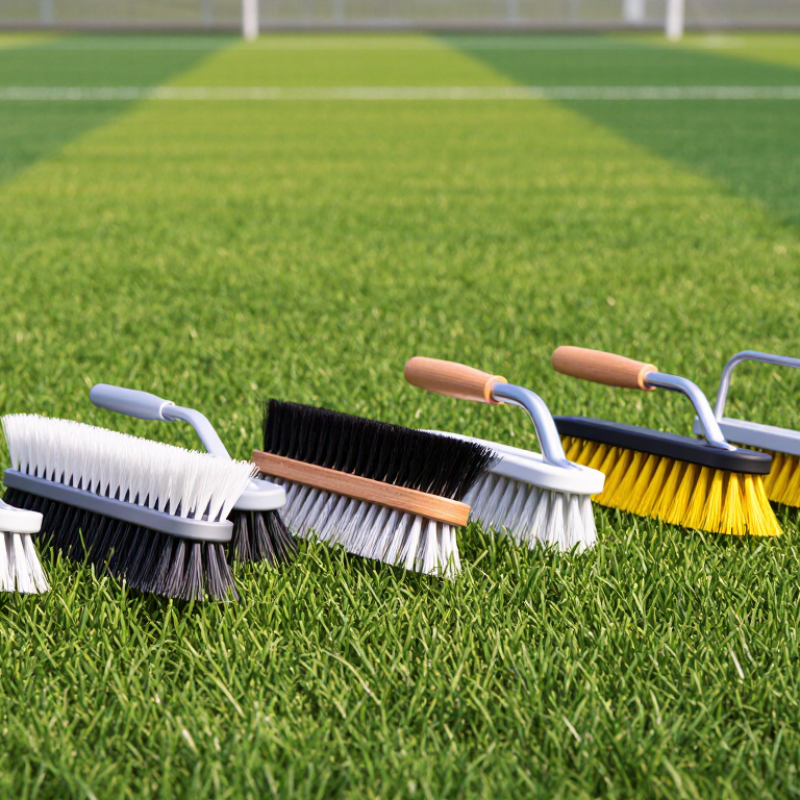
Artificial turf brushes come in three useful forms: hand brushes, drag brushes, and powered rotary brushes. A hand brush with flexible nylon bristles suits steps, corners, and small lawns. It can lift flattened blades without disturbing much infill. Small lawns benefit most. A wide drag brush covers open areas evenly, especially after foot traffic or light debris has been cleared. Powered brushes save effort on larger lawns, but their rotating action can be too aggressive for delicate turf.

Match the brush to the pile and the job. Softer bristles are generally gentler; avoid metal bristles, which may damage turf fibers. Use light, overlapping strokes against the direction of flattened blades, then check whether they stand upright. It is easy to over-brush while chasing a perfectly uniform look. Stop if fibers fray or infill shifts noticeably, and follow the turf maker’s care guidance when available.

Tips: Test a small, hidden patch first. Brush dry turf when possible, and clear leaves before grooming. Less pressure is safer. If blades remain flat, use a few gentle passes rather than pressing harder.

How to Choose a Brush for Your Artificial Grass

Choosing a brush for artificial grass starts with the pile, not the price. Short, dense fibers usually need softer bristles and lighter pressure. Taller, looser blades may benefit from a firmer synthetic brush that can lift flattened grass. Check the product’s care instructions, too; some surfaces have delicate coatings or infill that can shift under aggressive brushing. A brush that works well on one lawn may disappoint on another.

Tips: Brush against the grain in small sections. Use a few gentle passes, then check whether the blades stand up. Avoid metal bristles and stiff, sharp edges, which can cut fibers or disturb the backing. Test an inconspicuous patch first. It takes a minute.

Handle shape matters more than it seems. A long handle can reduce bending across a wide yard, while a compact brush gives better control near steps and borders. After rain, wait until the surface is not slick, and remove leaves before brushing so grit does not scrape the fibers. If the grass still looks flat, pause rather than pressing harder; I’ve found that repeated force can make a small patch look worse. Recheck the maker’s maintenance guidance before changing tools or technique.

10 Best Turf Brushes for Artificial Grass in 2026

In 2026, the best turf brush is the one suited to your grass pile, yard size, and cleanup routine. A practical shortlist includes soft-bristle brooms, medium-bristle brushes, stiff nylon brushes, compact hand brushes, wide push brushes, adjustable-handle brushes, turf rakes, powered sweepers, battery-powered brushes, and tow-behind brushes. Each serves a different task; powered models may save effort on larger areas, while hand brushes help reach corners and edges.

Check the turf manufacturer’s care instructions before choosing stiff bristles or powered equipment. Too much pressure can flatten fibers or disturb infill, especially on older grass. Brush against the pile gently, then inspect the surface in daylight. One detail is easy to misjudge: a freshly lifted lawn can look better immediately, yet brushing too often may create unnecessary wear. There is no universal schedule; foot traffic, pets, and debris all matter. Compare weight, handle comfort, cleaning needs, and replacement-part availability, not just advertised coverage.

Tips: Test a small, hidden patch first. Use light, even passes, and remove leaves before brushing. If infill shifts or fibers snag, stop and reassess the brush and technique. Don’t force it.

Stay Connected

Sign up today to keep up with the newest information from one of the Southeast’s leading suppliers of fluid handling equipment!