

China Top Stainless Carriage Bolts Supplier Manufacturer?
Choosing a China Top Stainless Carriage Bolts Supplier Manufacturer requires more than comparing prices or polished factory photos. Buyers need evidence of material control, forming accuracy, thread consistency, and dependable delivery. A carriage bolt may look simple, yet its square neck must seat firmly inside timber, metal, or a prepared slot. Small errors can cause spinning during tightening. That detail matters on a real jobsite.
John H. Bickford, a respected fastening-engineering author, offers a useful reminder: “A bolt is a spring, not simply a piece of hardware.” This principle helps explain why Stainless Carriage Bolts must be selected by grade, diameter, length, and service environment. A capable Chinese manufacturer should identify stainless grades clearly, such as 304 or 316, and provide inspection records when required. Thread gauges, salt-spray testing, dimensional checks, and batch traceability can reveal more than a sales promise.
Experience still exposes uncomfortable gaps. Some suppliers describe every product as “premium,” although their documentation remains thin. That should invite questions. Are the heads uniform? Does the square neck match the stated dimensions? Are washers and nuts compatible? Is packaging strong enough for ocean transport? These points seem ordinary. They prevent expensive surprises.
This guide examines supplier capability, factory quality systems, customization, export experience, and after-sales communication. It also considers where a manufacturer may fall short. No supplier is perfect. A reliable choice is one that answers difficult questions clearly, corrects mistakes quickly, and supports consistent Stainless Carriage Bolts performance from production to installation.
Stainless Steel Carriage Bolts: Definition and Key Features
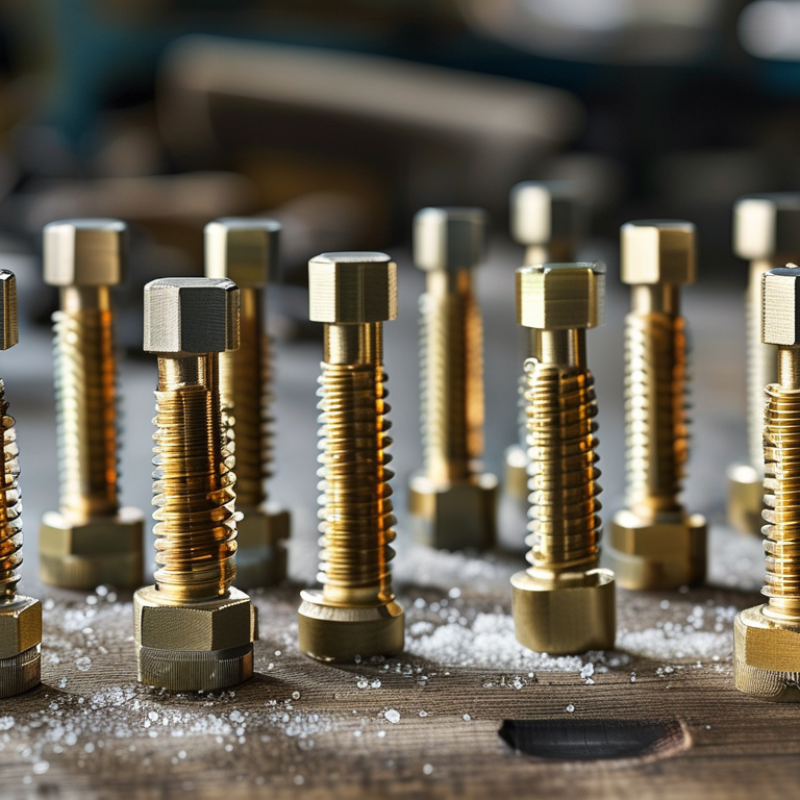
Stainless steel carriage bolts are fasteners with a rounded, low-profile head and a square neck beneath it. The neck locks into a pre-drilled hole, preventing the bolt from turning while the nut is tightened. This design suits timber frames, outdoor equipment, sheet assemblies, and visible architectural connections. It also creates a cleaner surface than a hex-head bolt.
Common grades include 304 stainless steel for general moisture exposure and 316 stainless steel for saltwater or chemical environments. Their chromium content forms a passive oxide layer, which supports corrosion resistance. However, stainless steel is not corrosion-proof. Poor drainage, iron contamination, and trapped dirt can still cause staining. A small detail matters: the square neck must fit the hole correctly.
The International Stainless Steel Forum reported global stainless crude steel production of about 58.4 million tonnes in 2023. This scale supports broad material availability, but it does not guarantee consistent bolt quality. During supplier evaluation, check material certificates, dimensional inspection records, thread accuracy, and head-to-shank alignment. ASTM and ASME fastener requirements can guide testing, while salt-spray results may reveal surface weaknesses. In practice, the strongest-looking bolt is not always the best choice. Torque control, washer selection, and installation conditions deserve equal attention. Suppliers should explain these limits clearly.
| Category | Data Dimension | Typical or Standard-Based Data |
|---|---|---|
| Product Definition | Fastener type | A stainless steel carriage bolt is a threaded fastener with a domed or rounded head and a square section directly beneath the head. The square section helps prevent the bolt from turning during nut tightening. |
| Applicable Standards | Dimensional standard | ASME B18.5 covers round head square neck bolts, including common carriage-bolt configurations. |
| Applicable Standards | Material and mechanical requirements | ASTM F593 covers stainless steel bolts, screws, studs, and other externally threaded fasteners. ASTM F594 covers compatible stainless steel nuts. |
| Common Stainless Grades | Austenitic grades | 304 stainless steel is widely used for general corrosion resistance. 316 stainless steel provides improved resistance in chloride-containing and marine environments because of its molybdenum content. 316L is the low-carbon version of 316. |
| Property Class | ISO 3506 designation | A2-70 commonly represents an austenitic stainless steel fastener with a minimum nominal tensile strength of 700 MPa. A4-80 commonly represents a minimum nominal tensile strength of 800 MPa. |
| Minimum Tensile Strength | A2-70 / A4-80 | Approximately 700 MPa for A2-70 and 800 MPa for A4-80, subject to the applicable standard, product size, manufacturing condition, and test requirements. |
| Available Diameter Range | Typical nominal sizes | Common metric sizes include M5, M6, M8, M10, M12, and M16. Common inch sizes include 1/4, 5/16, 3/8, 1/2, and 5/8 inch. Actual availability depends on the selected standard and tooling. |
| Available Length Range | Under-head length | Lengths are selected according to the joint thickness and nut engagement requirement. Short, medium, and long configurations are available in standard and made-to-order dimensions. |
| Thread Configuration | Thread system | Metric coarse threads are commonly supplied to ISO metric thread requirements. Inch versions may use UNC or UNF threads. Fully threaded and partially threaded configurations can be specified where permitted by the product standard. |
| Head Design | Head and neck geometry | The smooth rounded head provides a clean exposed surface, while the square neck seats into a prepared hole and resists rotation during installation. |
| Corrosion Resistance | Environmental suitability | 304 is suitable for many indoor, architectural, food-processing, and general outdoor applications. 316 or 316L is generally preferred for coastal, marine, chemical, and chloride-exposed environments. |
| Magnetic Characteristics | Material behavior | Annealed austenitic stainless steel is generally non-magnetic or weakly magnetic. Cold working during forming or threading may increase magnetic response without changing the product grade. |
| Surface Finish | Standard appearance | Typical finishes include bright cold-finished, polished, or passivated surfaces. Passivation removes free iron and supports the natural corrosion resistance of stainless steel; it is not a decorative coating. |
| Installation Method | Assembly process | Insert the bolt through aligned holes, seat the square neck against the material, and tighten the compatible stainless steel nut from the opposite side. A washer may be used to distribute load and protect the mating surface. |
| Typical Applications | End-use areas | Common applications include timber and metal framing, fencing, decks, outdoor furniture, agricultural equipment, trailers, playground structures, and general maintenance assemblies. |
| Compatibility | Recommended mating components | Use a nut with the same nominal diameter, thread system, and compatible stainless steel grade. Avoid mixing incompatible thread standards or forcing a nut onto a damaged or mismatched thread. |
| Quality Inspection | Recommended checks | Verify material identification, nominal diameter, length, thread gauge, head and neck dimensions, surface condition, mechanical properties, and certificate requirements against the purchase specification. |
| Selection Considerations | Key purchasing dimensions | Specify stainless grade, nominal diameter, length, thread type, head and neck standard, mechanical property class, surface finish, quantity, packaging, and required inspection documentation. |
| Data should be confirmed against the applicable drawing, purchase specification, and current fastener standard before production or structural use. | ||




Stay Connected
Sign up today to keep up with the newest information from one of the Southeast’s leading suppliers of fluid handling equipment!