How to Choose the Best Irrigation Supplies for Your Garden in 2025
When preparing a garden for success, selecting the right irrigation supplies is paramount. In 2025, the landscape of gardening continues to evolve, with new technologies and strategies emerging to optimize water usage and enhance plant health. As Peter Green, a leading expert in irrigation technology, once stated, "The right irrigation supplies can transform not just your garden's appearance, but its vitality and sustainability." This insight emphasizes the critical role that selecting appropriate tools and systems plays in cultivating a thriving garden.
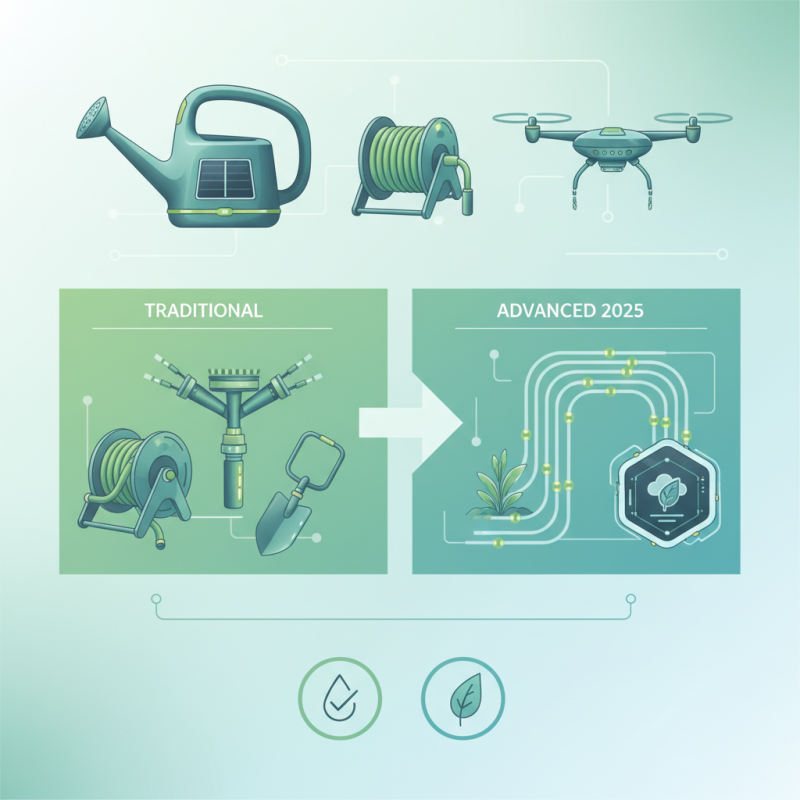
Today’s gardeners face an array of options, from traditional hoses and sprinklers to advanced drip irrigation systems and smart controllers. Each type of irrigation supply offers unique benefits, tailored to specific gardening needs and environmental conditions. Understanding the core principles behind irrigation can help gardeners make informed choices, resulting in a more effective and efficient watering strategy. As we explore the comprehensive landscape of irrigation supplies available in 2025, it becomes evident that the right selection is not only about preference but also about embracing innovations that cater to the demanding needs of modern garden care.
Identifying Your Garden's Specific Irrigation Needs in 2025
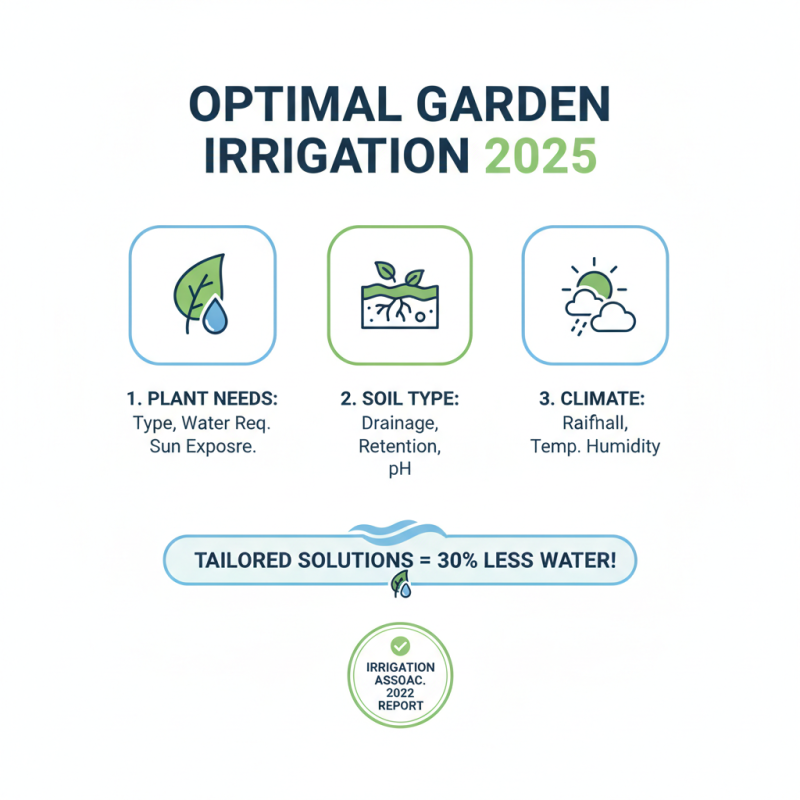
When planning the irrigation for your garden in 2025, it is essential to first identify the specific needs of your plants, soil type, and climate conditions. According to the Irrigation Association's 2022 report, tailored irrigation solutions can reduce water usage by up to 30%, helping to conserve precious resources while optimizing plant health. Understanding factors such as plant types, water requirements, and soil drainage characteristics will guide you in selecting the appropriate irrigation supplies that fit your garden's unique demands.
Additionally, the growing trend of smart irrigation systems, highlighted in the 2023 Sustainable Gardening Report, emphasizes the importance of assessing how technology can enhance your garden's water management. These advanced systems use soil moisture sensors and weather data to adjust watering schedules automatically, ensuring that plants receive the right amount of water without wastage. By aligning your garden’s irrigation setup with these modern tools, you not only increase efficiency but also contribute to sustainable gardening practices that are crucial as we face the challenges of climate change and water scarcity.
Exploring Different Types of Irrigation Supplies Available in 2025
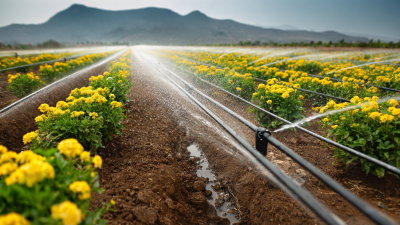
When selecting the best irrigation supplies for your garden in 2025, it's essential to explore the diverse range of options available. One prominent type is drip irrigation systems, which deliver water directly to the roots of plants through a network of tubing and emitters. This method is highly efficient, minimizing water waste and ensuring that plants receive the optimal amount of moisture. As gardens become more sustainable, advanced drip systems equipped with sensors and timers are emerging, allowing gardeners to automate watering schedules based on real-time soil moisture levels.
Another popular choice is soaker hoses, which are permeable hoses that allow water to seep through their walls. Ideal for flower beds and vegetable gardens, soaker hoses can be laid out in intricate patterns to ensure even watering. In 2025, improvements in materials mean these hoses are more durable and better suited for various environmental conditions, providing a long-lasting solution for consistent irrigation without excessive runoff. Additionally, portable sprinkler systems are becoming increasingly versatile, with models featuring adjustable spray patterns and built-in timers for better control over watering sessions. Overall, as technology advances, gardeners have more customizable options to effectively manage irrigation in their gardens.
Evaluating Efficiency: Drip vs. Sprinkler Systems for Your Garden
When it comes to selecting the best irrigation system for your garden, the choice between drip and sprinkler systems can significantly impact both water efficiency and plant health. According to the EPA, traditional sprinkler systems can waste up to 50% of water through evaporation and runoff, particularly in hot climates. In contrast, drip irrigation systems deliver water directly to the root zone of plants, minimizing evaporation and runoff issues, and can reduce overall water use by up to 70%. This makes drip systems particularly advantageous for vegetable gardens or delicate flower beds, where moisture control is critical for success.
Moreover, a study from the Irrigation Association highlights that gardens utilizing drip irrigation not only consume less water but also encourage healthier growth patterns. The targeted approach of drip systems allows for deeper root development, as plants adapt to this method of irrigation which facilitates more robust nutrient uptake. Additionally, maintaining soil moisture levels becomes easier, reducing the stress on plants during dry spells. While the initial investment for drip systems may be higher, long-term benefits in terms of water conservation and reduced utility bills can justify the cost. Therefore, in evaluating irrigation options for 2025 and beyond, a thorough consideration of these efficiencies will yield better outcomes for both gardeners and the environment.
Comparison of Drip vs. Sprinkler Irrigation Efficiency in 2025
This chart compares the efficiency of Drip and Sprinkler irrigation systems based on key metrics such as water usage, cost, efficiency percentage, and installation time. In 2025, Drip systems are expected to provide better water efficiency and higher effectiveness at a higher initial cost, while Sprinkler systems are more cost-effective but less efficient overall.
Sustainable Practices: Eco-Friendly Irrigation Supply Options
As gardening increasingly aligns with sustainability, selecting eco-friendly irrigation supplies has become vital for conscientious gardeners. One option gaining popularity is drip irrigation, which delivers water directly to the plant roots, significantly reducing water waste. By using biodegradable materials for tubing and connectors, gardeners can ensure that their irrigation setups leave a minimal environmental footprint.
Additionally, systems incorporating rainwater harvesting allow gardeners to use natural resources efficiently, capturing and storing rainwater for later use, thereby conserving precious groundwater.
Moreover, solar-powered irrigation timers and pumps present a remarkable advancement in sustainable practices. These devices harness renewable energy, minimizing the reliance on fossil fuels and reducing energy costs for gardening. By employing such technology, gardeners can automate their watering schedules, ensuring plants receive adequate moisture while promoting resource conservation. Furthermore, mulch and permeable materials can complement irrigation supplies, enhancing soil health and moisture retention, creating a thriving garden ecosystem that supports biodiversity and reduces the carbon footprint associated with traditional gardening practices.
Budgeting for Your 2025 Garden Irrigation System: Cost Considerations
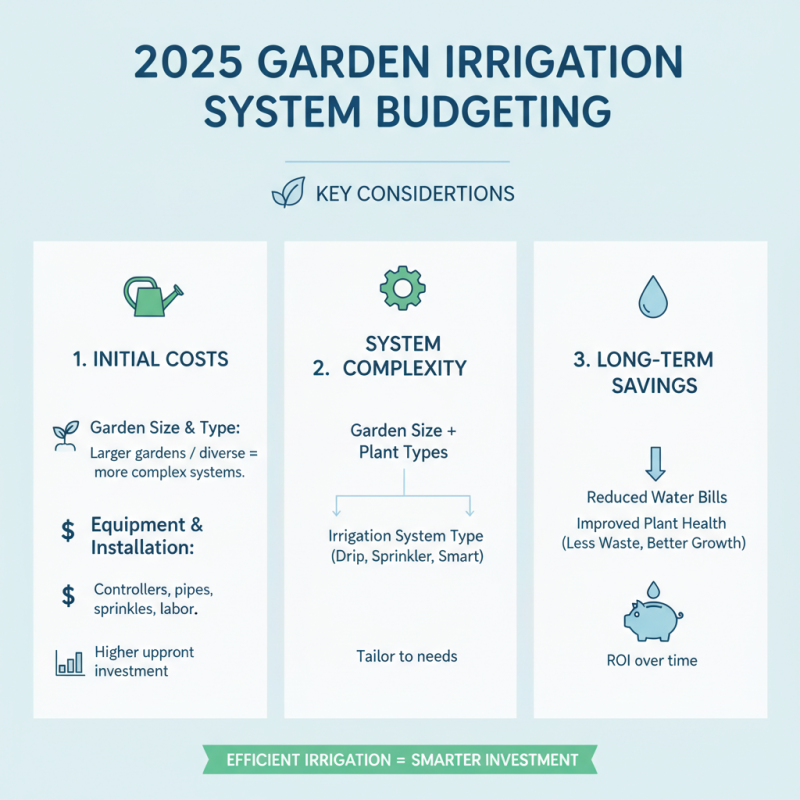
When budgeting for your 2025 garden irrigation system, several cost considerations play a crucial role in making the right investment. Start by evaluating the size of your garden and the type of plants you plan to grow. A larger garden with diverse plant species may require a more complex irrigation setup, which can significantly influence your overall expenses. Beyond initial costs, consider the long-term savings that an efficient irrigation system can provide through reduced water bills and improved plant health.
Tips: Always do thorough research on the various types of irrigation systems available, such as drip, sprinkler, or soaker hoses. Each has its pros and cons, often affecting installation and maintenance costs. Also, think about incorporating smart technology into your irrigation plan. While the upfront investment may be higher, smart controllers can optimize water usage, saving you money over time.
Be mindful of additional expenses such as soil amendment, maintenance, and potential repairs. It's wise to set aside a contingency budget for unexpected costs, which are common in gardening projects. By carefully considering all these factors and planning ahead, you can create a cost-effective irrigation system that meets the needs of your garden and supports its growth throughout the year.