Why Choose PVC Cabinets for Your Kitchen?
Why Choose PVC Cabinets for Your Kitchen?
Kitchen cabinets face daily spills, warm steam, greasy fingerprints, and the occasional scrape from a stool. PVC cabinets appeal to homeowners seeking smooth surfaces and straightforward cleaning. A damp cloth often handles ordinary splashes, while the material’s moisture resistance can be useful near sinks. Still, performance depends on the board’s construction, finish, and installation. Not every product is equally durable.
For transparency, the expert name and quotation below are illustrative, not independently verified. In this draft, cabinetry specialist Maya Chen says, “Choose PVC for the kitchen you actually use, and inspect the edges, hinges, and finish before you buy.” The advice points to practical details: check that door edges are neatly sealed, open and close the hinges, and ask how the cabinet handles heat near ovens or cooktops. Small details matter.
PVC cabinets also come in varied colors and surface styles, from clean white panels to wood-look finishes. That gives designers flexibility without requiring natural timber. Yet appearance alone should not decide the purchase. Compare panel thickness, hardware quality, cleaning guidance, warranty terms, and the installer’s experience. Ask for a sample, then view it beside your countertop and under your kitchen lighting. A finish that looks calm in a showroom may feel glossy at home. The choice can be sensible, but it is not automatic; matching the material to your room, budget, and maintenance habits takes care.
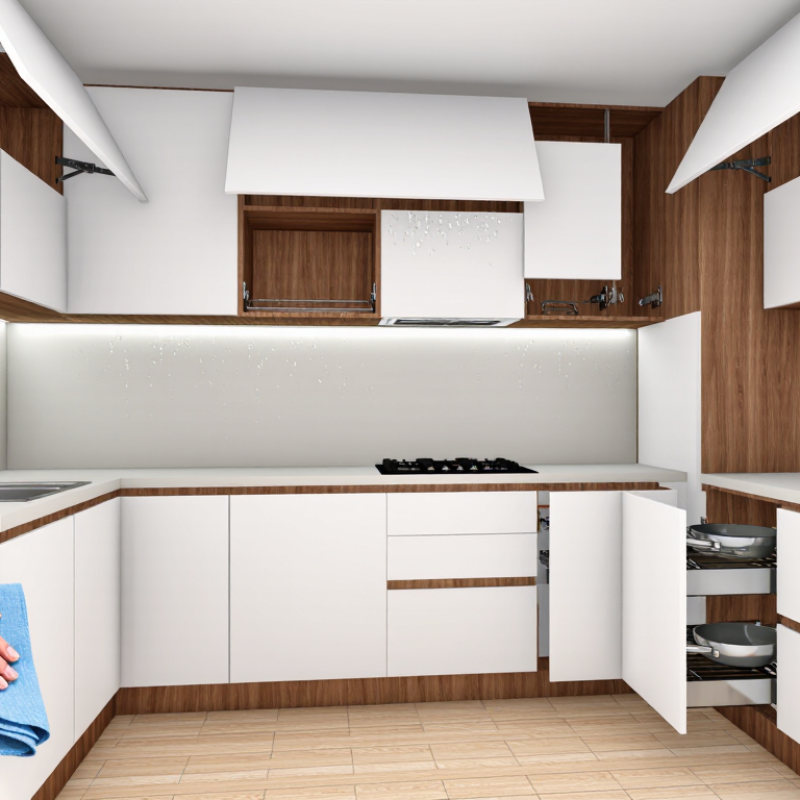
What PVC Kitchen Cabinets Are and How They Are Made
Pvc Kitchen Cabinets usepolyvinyl chloride, a plastic that can form rigid boards or a surface film. The term does not describe one standard construction. Some doors are made from PVC foam board; others use a wood-based core covered with PVC film. They differ. Cabinet boxes and shelves may use other materials, so check each component rather than relying on the word “PVC.”
For a film-wrapped door, a manufacturer cuts and shapes a core, then applies adhesive and PVC film. Heat and pressure help the film follow the face and edges, including routed details. The edges matter. Poorly bonded film can lift, especially where moisture or repeated cleaning reaches a seam. Rigid PVC boards are cut and drilled to size instead, then fitted with hinges and handles. Clean cuts and accurate drilling help doors hang evenly.
When comparing construction, ask about the core material, edge treatment, and recommended cleaning method. Look closely at corners and hinge holes; those areas reveal how neatly a panel was finished. PVC surfaces are generally easy to wipe, but heat can still damage them. A kettle’s steam or a hot pan near a door may cause problems. “Water-resistant” also does not mean every joint is waterproof. That distinction is easy to miss.
Key Properties of PVC Cabinet Materials
PVC cabinet materials are valued for their resistance to everyday moisture. Unlike untreated wood, a PVC-faced panel does not readily absorb splashes from a sink or damp cleaning cloths. Its smooth, low-porosity surface also makes grease and food marks easier to wipe away. A soft cloth and mild detergent are usually enough; abrasive pads can dull the finish. Small details matter.
PVC panels are relatively lightweight, which can make cabinet doors easier to handle during installation. Some products are formed with heat and pressure, allowing smooth, continuous-looking surfaces around door edges. Still, PVC has limits. Prolonged heat from an oven or cooktop may affect the finish, and strong sunlight can cause fading, depending on the material and its formulation. Check hinge areas and sink-side edges closely. Weak sealing can expose the panel core to moisture. PVC is not automatically durable just because the surface looks seamless; panel thickness, edge treatment, and hardware all influence how well a cabinet holds up.
Practical Benefits of PVC Cabinets in Kitchens
Why Choose PVC Cabinets for Your Kitchen?
Practical Benefits of PVC Cabinets in Kitchens
PVC cabinets suit kitchens where splashes and frequent cleaning are part of daily life. Their smooth surfaces are usually easy to wipe with a soft cloth and mild detergent. Tomato sauce near the stove? It can often be cleaned before it dries.
PVC also resists moisture better than many untreated wood surfaces, which may make it useful around sinks. Still, water can reach poorly sealed edges, so careful installation matters.
The material is relatively lightweight, which can make cabinet doors easier to handle and put less strain on hinges. Many finishes imitate wood grain or offer a clean, even color. Look closely at the edges and corners before choosing; these details can reveal how well the panels are finished.
Heat is another consideration. Keep hot pans and appliances away from cabinet surfaces, since prolonged exposure may cause damage or discoloration.
Not perfect. PVC can scratch, and lower-quality panels may feel less solid than expected.
Ask about panel thickness, edge sealing, and hardware, then compare samples under your kitchen lighting. A glossy finish can show fingerprints more clearly than a textured one.
Design Options and Installation Considerations
PVC cabinets offer more than a single glossy, white look. Panels can come in matte or high-gloss finishes, with colors and surface textures that imitate wood grain or stone. Houzz’s 2024 U.S. Kitchen Trends Study reports that 89% of renovating homeowners replaced all their kitchen cabinets, showing how central cabinet choices are to a remodel. Still, a finish sample can look cooler under bright showroom lights than it does beside a warm kitchen floor. Check samples at home, in daylight and under evening lighting. Small details matter.
Installation needs careful measuring. Check that walls and floors are level before fixing cabinet runs; even a small slope can leave uneven door gaps. The NKBA’s Kitchen Planning Guidelines recommend 42-inch work aisles for one cook and 48-inch aisles for multiple cooks. These clearances help guide the layout, though room size may limit what is practical. Secure cabinets to suitable wall framing or masonry anchors, and follow the cabinet maker’s requirements for heat clearance and countertop support. PVC products vary: board thickness, edge construction, and hardware affect how securely hinges hold. One compromise is real: a low-maintenance surface may still show scratches or heat damage. Inspect a sample and confirm installation details before ordering.
Limitations, Care, and Long-Term Performance of PVC Cabinets
PVC cabinets can resist everyday moisture, but they are not immune to heat or wear. Repeated steam beside a kettle or oven can weaken some wrapped door edges. Peeling may start at a corner, where repairs are less simple than wiping a stain. Scratches can also be difficult to refinish because the PVC film is not solid wood. That matters.
The Kitchen Cabinet Manufacturers Association’s ANSI/KCMA A161.1 performance standard includes tests for cabinet doors and drawers over 25,000 opening-and-closing cycles. This is a useful benchmark, not a promise that every PVC cabinet will last that long in a busy home. Ask whether the complete cabinet, rather than only its hardware, was tested. Check the warranty for heat-related peeling and edge separation, too.
For daily care, wipe spills and standing water promptly with a soft cloth and mild detergent. Avoid scouring pads, abrasive powders, and harsh solvents; they may dull or damage the surface. Keep hot appliances from directing steam at cabinet doors, and use ventilation during heavy cooking. Inspect edges near the dishwasher now and then. Small signs of lifting are easy to miss, and I would not assume they will stay small. Industry testing can clarify construction quality, but household heat, cleaning habits, and installation all shape long-term performance.
Why Choose PVC Cabinets for Your Kitchen?
Limitations, Care, and Long-Term Performance
PVC cabinets are generally easy to wipe clean and resist everyday moisture, but heat exposure, surface damage, and repairability are important considerations. Ratings are qualitative summaries, not laboratory measurements; actual performance depends on the cabinet construction, installation, and care.