

The articles and a verifiable expert quotation were not included. Please provide a source or expert name and quote so I can write the introduction without inventing an attribution.
How to Choose Crispy Bread Crumbs for Your Business in 2026?
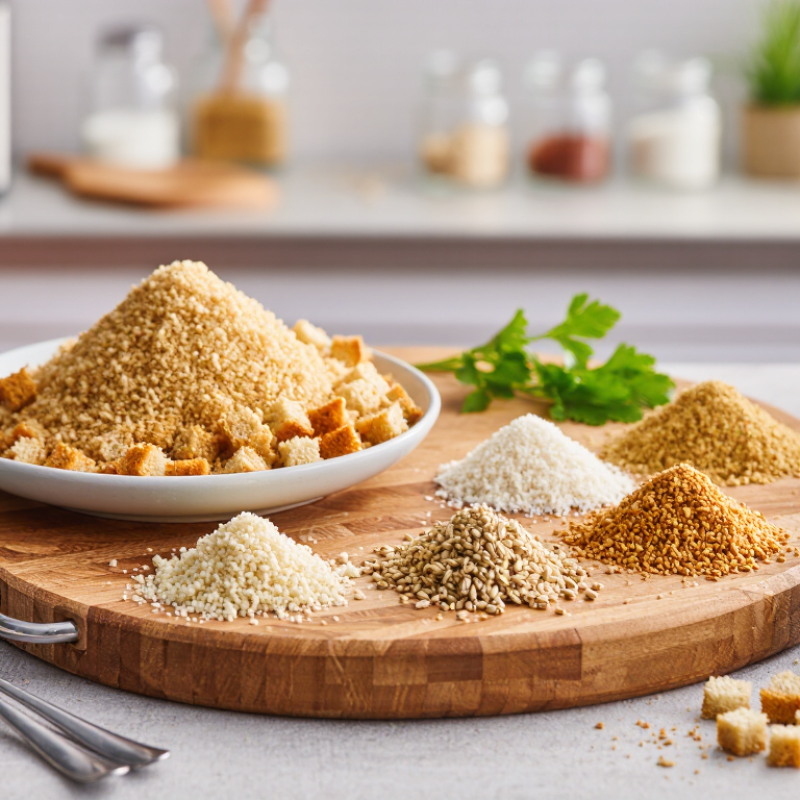
Choosing crispy bread crumbs starts with particle shape and size. Panko-style flakes are light and jagged, giving fried coatings a rough, airy crunch. Fine crumbs create a tighter, more even shell and suit patties or baked toppings. Medium crumbs sit between the two and can be easier to portion across mixed menus. Texture matters.
Check moisture, color, and ingredient consistency as well as crunch. Crumbs that feel damp may soften sooner, while uneven particle sizes can produce patchy browning. Compare plain and seasoned options, and review salt levels if recipes already include seasoning. For a fair test, coat the same food, then fry or bake it using your usual process. Record crispness after cooking and after a short hold. Results may differ between equipment; that is worth checking.
Tips: Request samples and test them in your actual recipes. Test both. Store opened bags sealed, away from heat and moisture, and check whether the crumbs stay free-flowing. A slightly cheaper option may not be better if it needs heavier use to achieve the same coating.

Typical particle-size ranges by crumb style (approximate, in millimeters)
Finer crumbs provide more even coverage, while coarser crumbs and panko create a more distinct crunchy coating. These ranges are indicative rather than standardized; check each supplier’s product specifications and test crumbs in your intended application.
A useful crumb standard begins with a repeatable texture test. Check particle size with a sieve, then coat the same food item using the same method. Fry a sample at a controlled temperature and time. The coating should turn crisp without becoming hard or shedding heavily during handling. Listen for a light crunch, too. Small flakes can soften quickly in humid storage, while oversized pieces may brown unevenly. A test batch reveals more than a specification sheet.
Flavor should support the product, not mask it. Taste crumbs plain and after cooking; note saltiness, toasted notes, and any stale or bitter finish. Keep samples in sealed containers and compare them regularly. Appearance matters at the shelf and on the plate. Look for an even color, consistent particle distribution, and minimal dark specks. Check several bags, not just one. Natural variation happens, and our first visual judgment can be wrong. Record findings with photos and simple scoring scales, then review results across batches. Standards are useful, but they need adjustment when the recipe, coating process, or storage conditions change.
Choosing crispy bread crumbs in 2026 means comparing the ingredient list, supplier controls, and food-safety records—not just price. Check particle size, moisture, color, and whether the crumb contains wheat, sesame, or other allergens relevant to your products. Ask for a current specification, allergen statement, and batch-level certificate of analysis. Then test the crumb on your own line: frying time, oil uptake, and crunch after holding can differ from a supplier’s sample. Samples can mislead.
Supplier credentials need verification. Review audit scope, expiration dates, corrective-action records, traceability procedures, and the facility that actually makes the crumbs. A certificate alone does not show how quickly a supplier can trace a batch or report a process change. The World Health Organization’s 2015 report, Estimates of the Global Burden of Foodborne Diseases, estimated 600 million foodborne illnesses and 420,000 deaths annually worldwide. That scale makes documented hygiene and contamination controls practical purchasing criteria, not paperwork. Check whether the supplier’s controls align with Codex’s General Principles of Food Hygiene, and ask how they manage foreign-material risks and allergen cross-contact. One weakness: audits offer only a snapshot. Recheck documents regularly, and keep a small retained sample from each lot for comparison when texture shifts unexpectedly.
How to Choose Crispy Bread Crumbs for Your Business in 2026?
Evaluate Cost, Packaging, and Supply Reliability
Compare suppliers by landed cost per usable kilogram, not carton price alone. Include freight, minimum orders, storage losses, and any fees for smaller deliveries. The FAO’s 2024 Cereal Supply and Demand Brief reported that its cereal price index averaged 113.5, down 13.3% from 2023. Grain prices matter, but they do not explain every quote: processing, seasoning, and transport also affect cost. A low quote can be misleading.
Packaging protects crispness and controls handling costs. Check that liners resist moisture, seals stay intact, and pack sizes fit your storage space. Ask for a sample after normal warehouse storage, not only straight from production. Then review recent delivery records. Track on-time, complete orders and actual lead-time variation across several shipments. One perfect delivery proves little. I would also question a supplier’s promise of steady supply if it depends on a single production site; that risk is easy to overlook.
Tips: Compare three delivered quotes. Test a full pack, record breakage, and check texture after opening. Ask how shortages are handled, and agree on a backup delivery window before placing a large order.
Use this comparison as an initial procurement guide. Costs and lead times are indicative planning estimates in USD for commercial purchasing, not live quotations; request current specifications, samples, and delivered-price quotes from prospective suppliers.
| Breadcrumb Type | Indicative Bulk Cost | Typical Commercial Packaging | Indicative Minimum Order | Typical Lead Time | Supply Reliability Profile | Best Fit and Checks Before Buying |
|---|---|---|---|---|---|---|
| Standard wheat breadcrumbs | $1.20–$2.50 per kg | 10–25 kg multiwall paper sacks with moisture-resistant liners; larger bulk formats may be available | Approximately 250–1,000 kg, depending on pack format and supplier | About 1–3 weeks for domestic stock orders | Generally high where multiple regional mills or distributors are available; confirm stock levels and backup production capacity | Suitable for high-volume coating and foodservice. Check crumb size, color, ingredient statement, allergen controls, and performance after frying. |
| Panko-style wheat crumbs | $1.80–$3.80 per kg | 10–20 kg lined sacks; some suppliers offer larger cartons or pallet quantities | Approximately 500–2,000 kg; imported orders may require larger commitments | About 2–5 weeks domestically; 6–12 weeks for imported orders | Moderate to high for domestic stock; imported supply can be more exposed to shipping delays and longer replenishment cycles | Useful when a light, coarse, crisp coating is desired. Confirm particle-size range, breakage during handling, moisture specification, and frying results. |
| Whole-wheat breadcrumbs | $1.60–$3.20 per kg | 10–20 kg lined sacks; pack availability may be narrower than for standard crumbs | Approximately 250–1,000 kg | About 2–5 weeks, subject to mill production schedules | Moderate; availability can depend on regional whole-grain processing capacity and seasonal ingredient sourcing | Consider for whole-grain product positioning. Verify whole-grain content, color consistency, flavor, and any applicable labeling requirements. |
| Gluten-free rice- or corn-based crumbs | $3.00–$7.00 per kg | 5–15 kg sealed bags or lined cartons; smaller pack sizes are common | Approximately 100–500 kg, though specialty production may require more | About 3–8 weeks, depending on stock and production scheduling | Moderate; fewer qualified producers and dedicated allergen controls can limit readily available alternatives | For gluten-free applications, verify certification or testing documentation, cross-contact controls, ingredient specifications, and finished-product texture. |
| Organic wheat breadcrumbs | $2.50–$5.50 per kg | 10–20 kg certified-product sacks with moisture-resistant liners | Approximately 250–1,000 kg | About 2–6 weeks; certification and ingredient availability may affect scheduling | Moderate; confirm current certification, traceability documents, and availability of the required production volume | Suitable where organic sourcing is a product requirement. Check certification scope, ingredient status, lot traceability, and renewal documentation. |
Procurement tip: Compare total delivered cost per usable kilogram, not just the quoted product price. Ask for pack weights, pallet configuration, shelf-life and storage guidance, moisture and particle-size specifications, sample approval, and written lead-time or substitution terms. Reliability descriptions are general sourcing considerations, not ratings of specific suppliers.
Start with samples. Test each crumb on the food you actually sell, not just on a tray. Compare particle size, color, coverage, and crunch after frying or baking. Record the cooking temperature and time, then check texture after five and fifteen minutes. A coating that looks crisp straight from the fryer may soften in a delivery box. Small details matter: uneven crumbs can leave pale patches, while very fine particles may create a dense shell. Check the crumbs. Run the same test with chilled and frozen products if they appear on your menu.
The International Food Information Council’s 2024 Food & Health Survey surveyed 3,000 U.S. adults; 85% said taste influences food choices, while 76% cited price. Those figures make both eating quality and portion cost worth measuring during trials. Weigh coating pickup per serving, then calculate the cost across a full production batch. Also compare how easily staff can apply each sample during a busy shift. One limitation: a single kitchen trial can miss changes between operators or equipment. Repeat the test on another day, and keep notes on breakage and holding time. The best choice may not be the crunchiest sample; it should deliver dependable texture at a cost your operation can sustain.
Sign up today to keep up with the newest information from one of the Southeast’s leading suppliers of fluid handling equipment!