

Choosing Elegant Bridal Gowns in 2026 is less about following a single trend and more about finding a dress that feels right in real life. Carolina Herrera has said, “A wedding dress is both an intimate and personal for a woman—it must reflect the personality and style of the bride.” That idea is a useful starting point. A gown may look striking beneath boutique lighting, yet feel different after hours of walking, sitting, and dancing.
Consider the details you can test: how the bodice feels when you breathe, whether the hem works with your shoes, and how silk, lace, or crepe moves in daylight. A long train can create a dramatic aisle moment. It can also need bustling before the reception. The venue, season, and ceremony setting matter, but so do your comfort and budget. Small alterations can change a fit; they cannot make every fabric or silhouette feel like you.
This guide explores how to compare silhouettes, fabrics, construction, and current design details without treating trends as rules. Ask about alteration timelines and care instructions, and try sitting down in each gown. It sounds obvious. It is easy to forget. No checklist can predict exactly how you will feel on the day, so leave room for a little uncertainty—and choose with both your eyes and your experience.
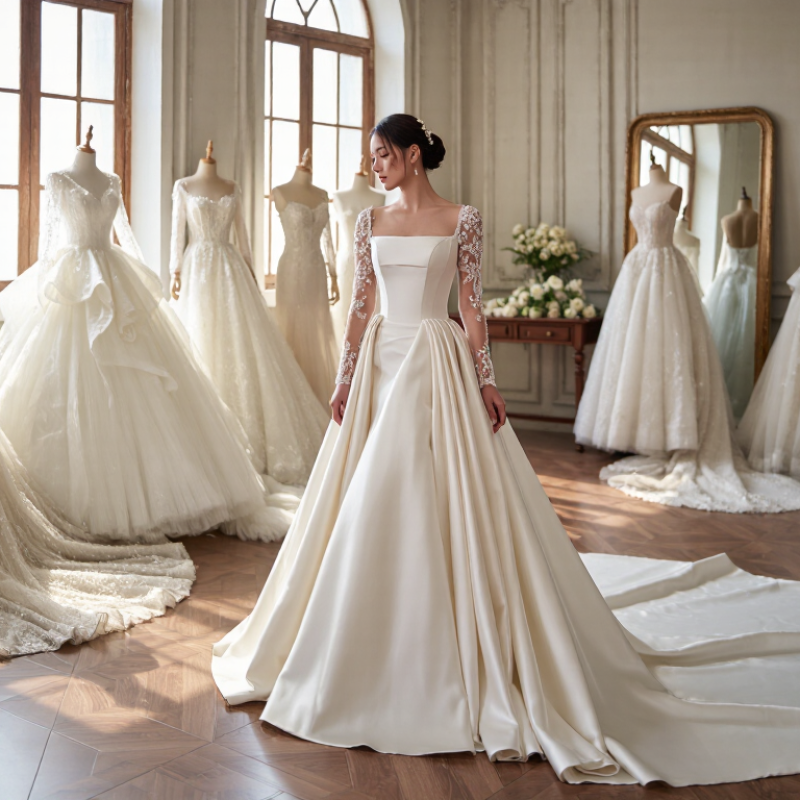
An elegant gown should feel like an extension of your personal style, not a costume chosen for photographs. Notice what you reach for in everyday life: clean lines, soft movement, delicate texture, or a little drama. Then decide how much of that belongs in your wedding look. A structured bodice can feel polished, while a flowing skirt brings ease. Neither choice is automatically more elegant.
Let the setting guide practical details. For a garden ceremony, consider breathable fabric and a hem that clears grass or uneven paths. A historic hall may suit fuller skirts, but check doorways, stairs, and seating before committing. Beach celebrations often call for lighter layers and secure straps, especially when wind is possible.
Small details matter. Try sitting, walking, and lifting your arms during fittings; a gown can look perfect on a hanger and feel restrictive after an hour.
Your venue should inform the dress, not dictate it. A formal setting does not require a heavy gown, and an outdoor wedding can still feel refined. Be honest about your priorities: comfort, movement, photographs, or a particular silhouette may matter most. Sometimes the first choice needs revisiting. That is useful, not a failure. Bring fabric swatches or venue photos to appointments, and ask how the gown may behave in the actual light and weather.

Set a total bridalwear budget before saving gown photos. Include alterations, shoes, undergarments, cleaning, and any rush fees. These costs can change the price considerably. Keep a small reserve for fittings or adjustments; even a well-planned budget can miss something. That happens. Decide what matters most, such as fabric, fit, or a detailed train, and spend accordingly.
Explore several gown options in 2026, not just one silhouette. Try an A-line gown, a fitted shape, and a simpler column style to see how each feels when you sit, walk, and raise your arms. Compare fabrics in natural light: satin may look smooth and structured, while chiffon feels lighter and moves easily. Ask the salon what alterations are realistic for your timeline and budget. Take photos from the front and side, if permitted, and note the sample size. It may fit differently from your usual clothes. Comfort matters. A gown can look elegant on a hanger yet feel restrictive after an hour. Leave room to reconsider; your first favorite might not be your final choice.
Set your budget first, then compare gown options by their typical U.S. price ranges.
Price bands are broad planning estimates in U.S. dollars, not fixed quotes. Alterations, taxes, accessories, designer, and location can change the final cost. Confirm current prices with sellers and leave room in your budget for alterations.
Choose a silhouette, fabric, and details that feel like you. A gown should work with your proportions and the way you move, not just a fitting-room pose. A-line skirts offer room through the hips, while fitted shapes can highlight the waist. Try sitting, walking, and lifting your arms. A beautiful dress that restricts every step may not feel beautiful for long.
Fabric changes both comfort and mood. Satin gives a smooth, structured finish; chiffon feels lighter and moves softly. Lace can add texture, but heavy layers may feel warm under bright lights. The Knot’s 2024 Real Weddings Study reported average U.S. wedding-dress spending of about $2,000. Treat that as a reference, not a rule. A gown can look perfect standing still and feel wrong after ten minutes seated.
Tips: Wear shoes close to your wedding-day height, and bring the undergarments you plan to use. Check seams, closures, and how the fabric feels against your skin. Keep details intentional: one striking neckline or a few delicate buttons may be enough. Fit matters most. If you are torn between two styles, take photos and review them later; your first reaction is not always your clearest one.
An elegant bridal gown should feel secure without restricting your breathing or movement. During a fitting, wear the shoes and undergarments you expect to use on the wedding day. These details can change the gown’s length and how its bodice sits. Look for pressure at the ribs, slipping straps, or fabric that pulls when you walk.
Move beyond the mirror. Walk, sit, raise your arms, and take a full breath. Comfort matters. A gown may look flawless while you stand still, yet feel tiring after an hour. Ask the seamstress which adjustments are realistic for the fabric and construction. Hemming, strap changes, and modest bodice adjustments may be straightforward, but extensive reshaping can be more complicated.
Bring your shoes to each fitting, and keep notes about any pinching or shifting. A trusted fitter can explain how alterations may affect support and drape; ask for a clear timeline and another fitting after major changes. Leave room in your schedule for refinements. It is easy to assume discomfort will disappear once the dress is worn in, but that may not happen. A small fit issue can become distracting during a long day.
Compare your finalists in the same shoes and undergarments, under indoor and natural light. Walk, sit, and lift your arms; a gown that looks beautiful on a hanger may feel restrictive after an hour. Check seams, closures, fabric weight, and how the train moves. And, honestly, a perfect photo can mislead. Add alterations, delivery, and any preservation costs before comparing prices. The Knot’s 2024 Real Weddings Study reported an average wedding-dress spend of $2,000 among surveyed U.S. couples. Treat that figure as a benchmark, not a required budget.
Ask each salon for its current production and delivery estimate, then work backward from your fitting and wedding dates. Many gowns need several months for ordering, with extra time for alterations; confirm both timelines in writing. Leave a buffer for a delayed shipment or a second fitting. Small changes can take time. Avoid buying based only on a sample’s fit, since samples may be pinned or altered. I would also reconsider any choice that needs extensive changes to feel comfortable.
Tips: Keep a one-page comparison: total cost, delivery date, alteration estimate, comfort, and care instructions. Take clear photos, but note how each gown feels after sitting for ten minutes. Set a decision date, and leave room for a change of heart.
Sign up today to keep up with the newest information from one of the Southeast’s leading suppliers of fluid handling equipment!