How to Choose the Best Electric Marine Toilet?
A marine toilet is tested in close quarters: a quiet berth, a low battery, and a holding tank nearing capacity. Choosing an Electric Marine Toilet is not simply a matter of flush strength. Installation space, water use, discharge setup, electrical draw, and access for maintenance all shape how it performs aboard.
The National Marine Manufacturers Association’s 2023 Recreational Boating Economic Impact Study estimated that recreational boating generated $230.3 billion in annual U.S. economic impact and supported 812,000 jobs. That report does not measure toilet sales, but it reflects the scale of the boating sector in which marine systems must work reliably. Small failures matter. A blocked hose or inaccessible pump can turn a convenient upgrade into an unpleasant job underway.
Marine systems author Nigel Calder is known for emphasizing practical maintenance in boat systems. A useful test for any model is: “Can you inspect and service it at sea?” This guide compares flush mechanisms, freshwater and seawater options, power demands, installation constraints, and routine care. It also considers a detail buyers can overlook: the toilet must suit the boat’s plumbing, not just its brochure. No single model fits every vessel. The right choice balances comfort with dependable service access.
Understanding How Electric Marine Toilets Work
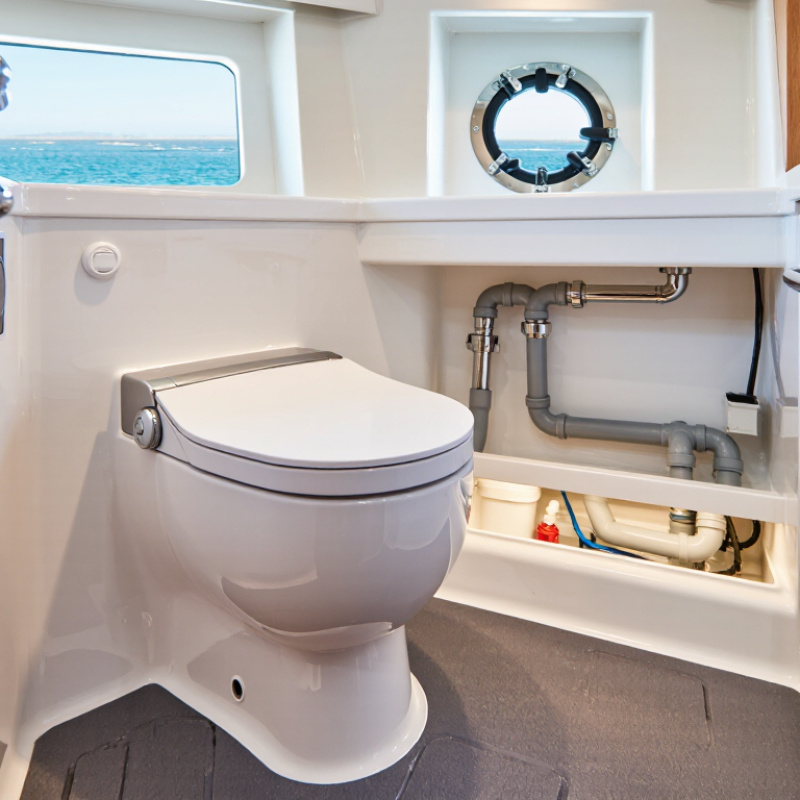
An electric marine toilet uses a powered pump to move flush water and waste through the plumbing. Pressing the switch starts a cycle; depending on the design, a macerator breaks down solids before pumping them onward. Waste usually travels to a holding tank, while the flush water comes from the boat’s freshwater supply or a seawater intake. The exact sequence varies, so consult the toilet’s operating and installation guide.
A freshwater system draws from the boat’s supply, while a seawater system preserves that water for other uses. However, stagnant water in an intake line can cause unpleasant odors. Sound hose routing, a clear tank vent, and suitable electrical protection help prevent leaks, clogs, and shutdowns. Sometimes the toilet is not the problem. A weak battery or blocked vent can produce similar symptoms.
Tips: Before flushing, check that the power is on and the valves match your boat’s plumbing setup. Use only toilet-safe paper; never flush wipes. If pumping slows or sounds strained, investigate early, before water rises in the bowl.
Assessing Boat Space, Plumbing, and Power Requirements
Measure the installation space before comparing toilets. Record the available footprint, seat height, knee clearance, and room to open the lid. Leave access to the pump and hose connections; cramped servicing gets frustrating quickly. On a small boat, a unit may fit neatly but block a locker or interfere with a cabin door. Check the space with the door fully open.
Plumbing needs depend on the toilet design and the boat’s existing layout. Trace the inlet and discharge hoses, then note their diameter, length, and bends. Check how far waste must travel to the holding tank, and whether the required venting and anti-siphon arrangements can fit. Follow the installation manual, because water-supply requirements vary. A tight bend can look harmless during a quick inspection. It may not be.
Power deserves equal attention. Confirm the boat’s system voltage and compare it with the toilet’s specifications. Electric motors can draw more current during a flush than their normal operating figure suggests. Consider cable length, wire sizing, fuse protection, and battery condition; use the manufacturer’s guidance for each. That detail is easy to miss. I would recheck the measurements before ordering, especially where access is awkward. A paper sketch can help, though it rarely captures every obstruction.
Comparing Bowl Types, Flush Systems, and Waste Options
Choosing an electric marine toilet starts with the bowl, not the flush button. Full-size bowls feel more familiar during longer trips, but they need more floor space. Compact bowls suit narrow heads and may leave room for a towel rail or storage. Porcelain feels solid and cleans easily; lighter materials can reduce weight. Sit in the space if possible. A showroom impression can mislead.
Flush systems differ in water source and upkeep. Raw-water models draw from outside the hull, so check the intake, strainer, and plumbing access. Salt and debris can add maintenance. Freshwater models use the boat’s supply, which can feel cleaner, but they consume stored water. Both need reliable power and correctly sized wiring. Noise matters too. A brief test run can reveal more than a brochure.
Waste arrangements shape daily use. A holding tank offers control over when waste is removed, but capacity, venting, and pump-out access matter. An onboard treatment unit may reduce storage needs, yet it brings extra components to inspect and service. Check what is suitable for your vessel and intended waters. I would not choose by bowl comfort alone; maintenance access is easy to overlook, and I have seen that choice become an awkward one.
How to Choose the Best Electric Marine Toilet?
Flush-system water use and the number of flushes from a 40 L water reserve
How to read this: The chart uses three illustrative flush-volume scenarios: 0.5 L, 1 L, and 2 L per flush. Dividing a 40 L reserve by each scenario gives 80, 40, and 20 flushes, respectively. Actual consumption depends on the toilet and its flush settings. Bowl shape affects fit and comfort; waste is typically routed to a holding tank or discharged only where regulations permit.
Evaluating Durability, Noise, Water Use, and Maintenance
Durability begins with the parts you cannot see easily. Check whether the bowl, mounting hardware, and exposed fittings resist corrosion and repeated vibration. A sturdy housing matters, but seals and hose connections often decide how long the system stays trouble-free. Look for clear instructions on inspecting them. Access matters too: a pump that sits behind a cramped panel can turn a small repair into an afternoon job. Ask how routine parts are reached before installation.
Noise is easier to judge in person than on a specification sheet. Listen during a full flush, not just a brief motor test. Listen at the dock. A low hum may be acceptable; a sharp rattle can travel through a small cabin.
Water use should match your onboard supply and holding-tank capacity. Compare the stated flush volume, then consider how often guests may use the toilet. Less water is not always better if it leaves residue or requires extra flushing.
Maintenance deserves equal attention. Can you inspect the intake strainer, clear a blockage, and replace a seal without special tools? Keep the service schedule realistic. I would still expect some trial and error, especially when balancing quiet operation with a thorough flush. Small details matter.
Matching Features and Budget to Your Boating Needs
Choosing an electric marine toilet means matching its features to your real boating routine, not buying the most elaborate model. The National Marine Manufacturers Association estimates that about 100 million Americans go boating each year. Its 2023 Economic Impact Study reports $230.3 billion in annual U.S. recreational-boating economic impact. These figures describe a broad, varied boating community—not toilet demand—so your own trip length and crew size matter more.
For a compact day boat, compare bowl dimensions, flush-water use, and electrical draw. A smaller unit may suit occasional use, while longer trips often benefit from a larger holding tank and easier service access. Check your battery capacity and wiring before choosing; pump start-up can strain an undersized system. Fit matters more. Ask how the toilet handles routine cleaning and whether you can reach hoses and connections without dismantling nearby cabinetry.
For a weekend cruiser, price the full installation, not just the toilet: tank, hoses, fittings, wiring, and labor can change the budget. Confirm the system suits your vessel’s existing sanitation setup and operating area. Industry participation figures cannot tell you how much maintenance your crew will tolerate. That part is personal. I’d give access for repairs more weight than a quieter flush, though it is easy to overlook that when comparing feature lists.