Top 5 Tips for Choosing the Best Lidar Sensor for Your Business?
As the demand for precision and automation increases, businesses are increasingly turning to Lidar Sensors. According to a recent industry report, the global Lidar market is expected to reach $3.7 billion by 2026, growing at a CAGR of 14.7%. This growth highlights the necessity for companies to select the right Lidar technology to stay competitive.
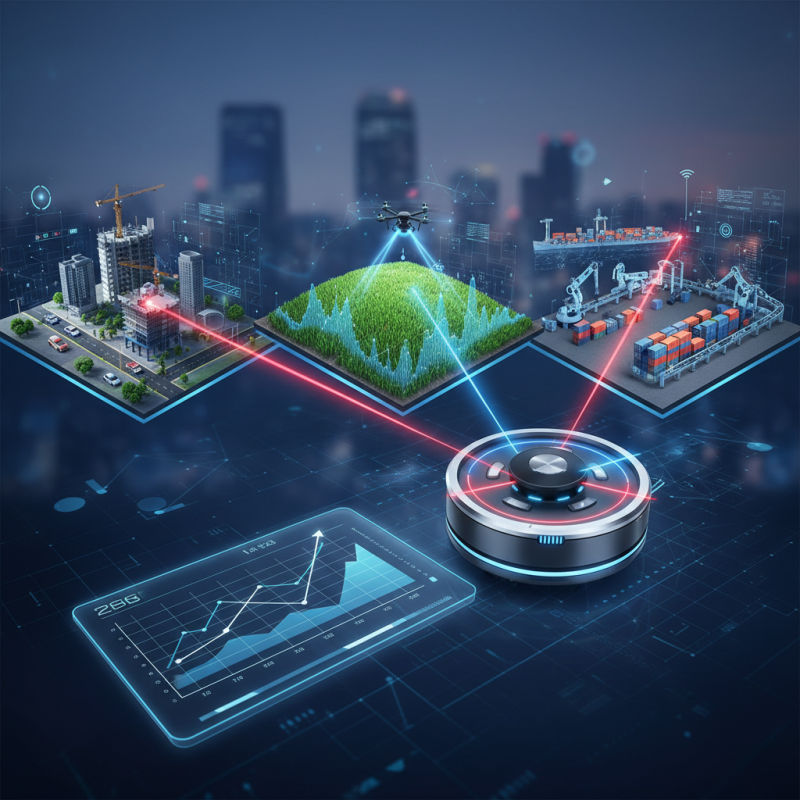
Choosing a Lidar Sensor is not a trivial task. Various factors influence performance and application suitability. Different industries have unique requirements. For instance, transportation and construction leverage Lidar for mapping and analysis, while agriculture uses it for crop monitoring. Understanding these distinctions is essential to avoid costly mistakes.
However, many businesses struggle with the selection process. Some may overlook crucial features, such as range, accuracy, or integration capabilities. With various options in the market, informed decision-making becomes paramount. Evaluating your specific needs clearly can dictate the success of your investment in Lidar Sensor technology.
Understanding Different Types of Lidar Sensors and Their Applications
When selecting a Lidar sensor, it's crucial to understand the different types available. Lidar technology can be generally categorized into airborne, terrestrial, and mobile systems. Airborne Lidar is often used for large-scale mapping projects, providing detailed topographical data from above. Terrestrial Lidar offers high-resolution data for specific sites, ideal for construction or forestry. Mobile Lidar is suitable for capturing data while in motion, making it perfect for road and infrastructure assessments.
Different Lidar sensors come with various specifications. Some offer better range, while others provide higher accuracy. Choose the one that matches your project needs. For instance, if you require data collection in urban environments, consider a sensor that excels in dense areas. Reflect on how environmental conditions might impact performance.
This knowledge shapes your decision-making and ultimately ensures you select the right sensor for your goals. Always evaluate the intended application to guarantee functionality and reliability in real-world scenarios.
Evaluating Specifications: Range, Accuracy, and Resolution of Lidar Sensors
When selecting a Lidar sensor for your business, evaluating specifications such as range, accuracy, and resolution is crucial. Range defines how far the sensor can detect. A longer range allows for surveying large areas without needing to move the sensor frequently. It's vital to consider the specific requirements of your application. Certain industries might prioritize longer ranges, while others may need shorter but more precise readings.
Accuracy ensures reliable data capture. A sensor with high precision minimizes errors in mapping and analysis. However, higher accuracy often comes with increased costs. Balancing budget constraints with data needs is essential. Additionally, resolution indicates the level of detail the sensor can capture. Low-resolution sensors may overlook smaller features. In contrast, high-resolution sensors generate dense data, leading to more detailed insights.
Choosing the right specifications can appear overwhelming. It's easy to focus solely on high-end features without understanding real-world needs. Assessing how these factors resonate with actual use cases is important. Engaging with industry experts can provide valuable insights into these specifications. It’s crucial to reflect on past experiences and gather feedback. This leads to more informed decisions in selecting the right Lidar sensor.
Assessing Environmental Compatibility and Operating Conditions
When selecting a lidar sensor, environmental compatibility is crucial. Different sensors perform variably under diverse conditions. For instance, temperature extremes can significantly affect sensor accuracy. A recent report by ResearchAndMarkets indicates that around 80% of lidar systems operate optimally within specified temperature ranges. Understanding your operating conditions is, therefore, essential.
Consider how humidity affects data collection. High humidity can scatter laser signals, leading to inconsistent data quality. According to a study from the International Lidar Mapping Forum, over 25% of lidar applications fail due to unexpected environmental factors. Users must evaluate the sensor’s calibration and its potential to adapt to such conditions.
Soil types and vegetation density also impact lidar effectiveness. Dense forests can obstruct signals, resulting in lower accuracy in data capturing. Reports show that lidar performance drops by over 30% in heavily wooded areas. Users must assess terrain and plan accordingly to ensure reliable data. Make sure to weigh these factors carefully when choosing a lidar sensor for your business needs.
Top 5 Tips for Choosing the Best Lidar Sensor for Your Business
| Tip | Description | Environmental Compatibility | Operating Conditions |
| 1. Assess Sensor Range | Choose a Lidar sensor that meets the necessary range for your specific applications. | Ensure the sensor can operate effectively in the environmental conditions (e.g., temperature, humidity). | Check if it functions in varying light conditions and terrains. |
| 2. Evaluate Data Accuracy | Look for specifications on the accuracy and precision of the data collected. | Determine if the sensor can handle the local geographic conditions. | Test in your specific operational scenarios. |
| 3. Consider Integration Compatibility | Ensure compatibility with existing hardware and software systems for ease of integration. | Evaluate if the sensor is suitable for outdoor and indoor use. | Assess common connection interfaces. |
| 4. Examine Cost and Budget | Compare costs against the features offered to ensure a good investment. | Look for sensors designed for extreme weather conditions for durability. | Consider the total cost of ownership over time. |
| 5. Research Support and Resources | Investigate the available support including documentation and user communities. | Evaluate manufacturer support for different climates. | Check for training options for operational conditions. |
Budget Considerations: Cost vs. Performance in Lidar Technology
When selecting a lidar sensor, budget considerations are crucial. Businesses often face the dilemma of choosing between cost-effective options and high-performance models. A cheaper lidar sensor might seem appealing at first. However, it could lack essential features or resolution. This can lead to poor data quality and ultimately, inefficient operations.
Performance must also match your specific needs. For instance, if you require high-resolution data for precise mapping, investing more may be necessary. Think about the long-term costs. A lower-priced sensor might save money upfront, but frequent replacements can add up. In contrast, a reliable, higher-performance sensor may yield better results and longevity.
Reflecting on your requirements is essential. Consider the types of projects you will undertake. Will you need data in various environments? Keeping this in mind helps align your budget with performance. Remember, the goal is not just to buy a sensor but to enhance operational efficiency and data accuracy for your business.
Vendor Reliability: Importance of Support and Service in Lidar Selection
When selecting a lidar sensor, vendor reliability plays a crucial role. A dependable vendor ensures you receive consistent support and service. In the world of technology, challenges can arise without warning. Having a responsive support team can make the difference between smooth operation and costly downtime. It’s essential to evaluate a vendor's track record in addressing customer concerns. Look for reviews or case studies highlighting their response times and effectiveness.
Another aspect to consider is ongoing service and maintenance. A good vendor will offer training, updates, and troubleshooting assistance. They should proactively reach out to check in as well. It’s important to ask about the availability of replacement parts or repairs. Relying on a vendor that communicates clearly saves frustration later. You should also assess their understanding of your specific needs. A personalized approach often indicates a vendor that values your business.
If your lidar vendor lacks a clear support structure, it can lead to setbacks. Deadlines can easily be missed due to unresolved issues. Assessing support offers insight into how they prioritize customer relationships. This aspect should never be overlooked in the selection process. In the competitive world of lidar technology, choosing wisely can set your business apart.