

How to Choose the Best Waterproof Decking?

Choosing Waterproof Decking is about more than keeping rain off the boards. The right system should handle standing water, wet shoes, summer heat, and years of foot traffic without becoming slippery or difficult to maintain. A deck can look flawless in a product photo. Real weather is less forgiving.

Start by checking what “waterproof” means for the product. Some boards resist moisture, while others rely on a fully sealed surface or drainage beneath the deck. Those differences affect installation, upkeep, and performance around doors, stairs, and railings. Ask for test data, warranty terms, and clear installation instructions. Look closely at seams and edges; water often finds the weak point there.

I can’t verify an industry expert’s name or quotation from the material provided, so I won’t invent one. A useful principle for this guide is: “Choose the system that manages water at the joints, edges, and structure—not just on the board surface.” Treat it as editorial guidance, not a sourced expert quote.

This guide compares common materials, drainage designs, slip resistance, maintenance needs, and total cost. It also explains which questions to ask an installer before work begins. Small details matter: a slight slope, a clean drainage channel, or a properly finished threshold can change how the whole deck performs. Product labels alone are not enough. Check the details, and be willing to question attractive claims when the evidence is thin.
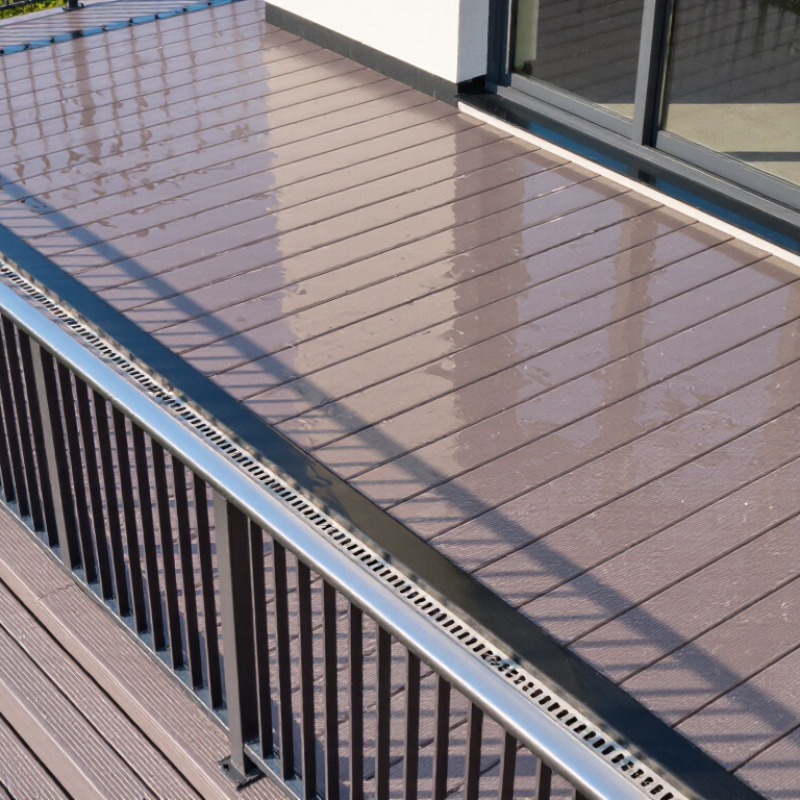
How to Choose the Best Waterproof Decking?

Understand Waterproof Decking Types and Materials

Waterproof decking is not one material. Cellular PVC contains no wood fibers, so it resists water absorption and suits damp, shaded areas. Capped composite combines wood fibers with a protective polymer shell; its cut edges and gaps still need careful detailing. Pressure-treated or naturally durable wood can work outdoors, but it needs regular sealing and maintenance. No deck is truly waterproof if water can pool beneath boards or enter poorly sealed joints.

Material movement matters. The USDA Forest Products Laboratory’s Wood Handbook reports typical total shrinkage of about 6–12% tangentially and 3–6% radially as wood dries from green to oven-dry conditions. These figures vary by species, but they show why tight board spacing can cause trouble. Check the manufacturer’s installation guidance for drainage gaps, fasteners, and temperature-related expansion. A smooth sample may look convincing indoors; outdoors, sun, standing water, and grit tell a different story.

Tips: Ask for a sample and inspect its cut edge. Confirm whether the system sheds water between boards or needs a separate waterproof membrane. Keep a small drainage gap. It may look less seamless, but trapped water is worse.


Assess Your Climate, Site Conditions, and Intended Use

Start with exposure, not a product label.

A coastal deck faces salt spray, wind-driven rain, and persistent dampness. NOAA’s Climate Change Indicators report tracks very heavy precipitation. Across the contiguous United States, the amount rose 55% from 1958 to 2022. That national figure is a warning, not a local forecast.

Check local rainfall, freeze-thaw cycles, and whether water drains away from the house. Measure after rain. Puddles near posts or slow-drying corners can reveal trouble a showroom sample cannot.

Then match the surface to how people use it.

EPA’s Heat Island Effect guidance notes that sunlit urban surfaces can reach 50–90°F above air temperature; this is context, not a deck-specific measurement. Dark, exposed boards may feel harsh under bare feet. Shade, nearby trees, and afternoon sun matter.

For dining, allow room for chairs and consider grip when the surface is wet. For a poolside deck, prioritize drainage and a surface that stays comfortable underfoot.

I would not assume one rainy season tells the whole story; inspect the site through wet and dry spells, and weigh maintenance honestly.

Compare Water Resistance, Durability, and Maintenance Needs

A wet deck needs more than a water-resistant surface; drainage and the frame beneath it matter too. Compare materials by checking how they handle standing water, repeated wetting, and damp conditions around fasteners. Capped composite boards resist moisture at the surface, but cut ends and gaps still need proper installation. PVC boards absorb very little water, though they can feel different underfoot and may move with temperature changes. Pressure-treated wood can work in damp settings, but it needs regular sealing and careful inspection. Small details count. Look for clear guidance on drainage, ventilation, and suitable fasteners.

Durability depends on more than the board itself. Ask how the material performs through freeze-thaw cycles, heavy foot traffic, and years of sun exposure. A sample left in a puddle overnight can show surface effects, but it cannot predict long-term performance. Maintenance needs vary, too. Some surfaces need only occasional washing; wood may require cleaning, drying, and renewed protective coating. A quick rinse helps. Avoid assuming that “waterproof” means maintenance-free, especially where leaves collect between boards or water sits beside posts. I would compare the full upkeep schedule and the substructure requirements, not just the product label. That distinction is easy to miss.

How to Choose the Best Waterproof Decking? — Compare Water Resistance, Durability, and Maintenance Needs

Decking Material Water Resistance Durability Considerations Maintenance Needs Best Suited For Important Limitations
Cellular PVC Does not absorb water like wood-based decking, so it resists swelling and rot from moisture. Resists rot and insect damage. Surface scratching, heat-related movement, and fading can vary by product and exposure. Wash periodically with water and a suitable cleaner; promptly remove dirt and spills. Follow the maker’s guidance for stains and repairs. Wet climates, poolside areas, and homeowners prioritizing low moisture absorption. Not every PVC board has the same construction or performance. It can become hot in direct sun, and the substructure and installation still need proper drainage.
Capped Composite A protective polymer cap helps limit water absorption at the exposed surface. Cut ends, gaps, and damaged areas may be less protected. Generally resists rot and splintering better than untreated wood. Surface stains, scratches, and mold or mildew on accumulated dirt remain possible. Clean periodically with water and a product-approved cleaner; clear debris from gaps and keep the surface draining freely. People seeking a wood-like appearance with less routine coating than wood usually requires. The composite core is not necessarily waterproof. Performance depends on the cap, board design, installation, and care instructions.
Uncapped Composite Can absorb more moisture than capped composite; absorption and dimensional changes depend on its composition and exposure. Does not need protection from rot in the same way as wood, but moisture cycling, staining, and surface wear can affect appearance over time. Regularly sweep and wash; remove leaves and standing debris. Check the product instructions before using cleaners or pressure washing. Projects where composite decking is desired and the specific product’s water-absorption characteristics are acceptable. It is not waterproof. Compare product-specific technical information rather than assuming all composite boards perform alike.
Pressure-Treated Wood Preservative treatment helps protect against decay, but the wood can still absorb water and may swell, shrink, or crack as it dries. Can provide long service with suitable installation and care. Splits, splinters, loose fasteners, and surface wear may develop. Clean as needed; allow new wood to dry as directed, then apply a suitable water-repellent sealer or stain when appropriate. Inspect regularly. Cost-conscious projects where natural wood is preferred and periodic upkeep is acceptable. Treatment does not make the boards waterproof. Moisture retention, poor airflow, and neglected coatings can shorten service life.
Naturally Durable Hardwood Some dense hardwood species resist moisture and decay well, but they still take up water and are not waterproof. Durability varies by species and grade. Dense boards can be hard to cut and fasten; weathering and checking may occur. Clean periodically. An exterior oil may help maintain color where recommended, but many species weather to a gray patina without it. Those who prefer natural wood and are willing to select a suitable species and follow its installation guidance. Species, sourcing, and installation matter. Natural weathering is normal; check fastener and substructure requirements before installation.

Selection tip: “Water-resistant” does not mean the entire deck assembly is waterproof. Compare product-specific technical data, and plan for drainage, ventilation, correct gaps, and suitable framing.

Review Installation Requirements and Long-Term Costs

Before choosing waterproof decking, inspect the frame beneath it. Look for soft spots, loose fasteners, and signs of trapped moisture. The surface cannot solve structural problems. Check the system’s required joist spacing, slope, and ventilation; these vary by design. A small level can reveal flat areas where water may collect. That detail matters.

Installation rules affect both performance and labor costs. Some systems need sealed seams, edge flashing, or careful treatment around posts and stairs. Ask for these tasks in the written quote, not as vague “finishing work.” Confirm how installers handle door thresholds and drainage outlets. Those spots are easy to overlook. Keep the instructions for future repairs, too. I would not assume one waterproofing layer suits every deck; exposure, framing, and climate change the details.

Compare the full cost, not just the price per square foot. Include demolition, frame repairs, underlayment, trim, fasteners, and disposal. A low quote may leave out difficult corners or water management. Request a maintenance schedule and ask what cleaning products are safe. Regular checks may catch lifted edges before water reaches the frame. Long-term costs are hard to predict exactly, and that uncertainty deserves attention. Even a well-installed deck needs periodic inspection.

How to Choose the Best Waterproof Decking?

Installation Requirements and Long-Term Costs

PVC and aluminum decking are highly water-resistant, while composite boards resist moisture but still depend on proper drainage and installation. Pressure-treated wood is not waterproof and needs regular sealing. The chart shows broad U.S. installed-cost estimates per square foot; actual prices vary by location, deck design, labor, and whether framing or drainage work is required. Compare expected service life, maintenance, and installation needs—not just upfront cost.

Check Product Specifications and Choose the Best Fit

Choosing waterproof decking starts with the product specification sheet, not the color sample. Check whether the system sheds water across the walking surface or relies on a separate membrane beneath the boards. Confirm required slope, drainage gaps, flashing details, and compatible fasteners. A small mismatch at a wall or stair can let water reach the framing.

Look for test methods, not vague claims. ASTM D7032 sets performance-rating procedures for plastic and wood-plastic composite deck boards, stairs, guards, and handrails; it is not, by itself, proof that an entire deck assembly is waterproof. Ask for wet-slip test results, UV and freeze-thaw data, and the limits of any warranty. The USDA Forest Products Laboratory’s Wood Handbook treats wood moisture above roughly 20 percent as a warning condition for decay. That makes substrate ventilation and drainage worth checking, even with waterproof surface boards.

Fit the product to the site. A shaded, rain-prone balcony needs different drainage planning than a sunny, dry patio. Compare tested span limits with joist spacing, and confirm the chosen board permits the planned installation. A spec sheet can still leave gaps. Request written details for edges, penetrations, and transitions before ordering; those awkward corners often decide whether the system stays dry.

Stay Connected

Sign up today to keep up with the newest information from one of the Southeast’s leading suppliers of fluid handling equipment!