
How to Choose Alkali Resistant Fiberglass Mesh

Alkali Resistant Fiberglass Mesh helps reinforce plaster, render, and other cement-based finishes. But the label alone does not prove that a mesh will perform well. Cement is highly alkaline, and weak or poorly protected fibers can lose strength over time. The right choice depends on the application, product specifications, and evidence behind the claims.

Look closely at the mesh’s coating, weight, opening size, and tensile-strength data. Ask whether the reported strength is measured before and after alkali exposure, and request test reports tied to the product you are buying. A mesh that looks sturdy under bright warehouse lights may still be unsuitable for a demanding exterior wall. Details matter.

The installation matters, too. Confirm that the mesh suits the specified base coat and can be embedded without folds or exposed edges. Check batch identification and technical documentation; keep those records with the project file. Small checks help.

A named expert quotation would add useful perspective, but no verifiable source was provided here. I won’t invent an expert’s name or words. That is a limitation worth acknowledging: product claims and industry opinions should be traceable, not merely persuasive. This guide therefore focuses on practical selection checks, so readers can compare Alkali Resistant Fiberglass Mesh products with clearer questions and fewer assumptions. Some specifications may still be difficult to compare across suppliers. That deserves a closer look, not a guess.
How to Choose Alkali Resistant Fiberglass Mesh

What Alkali-Resistant Fiberglass Mesh Is and How It Works

How to Choose Alkali Resistant Fiberglass Mesh
What Alkali-Resistant Fiberglass Mesh Is and How It Works

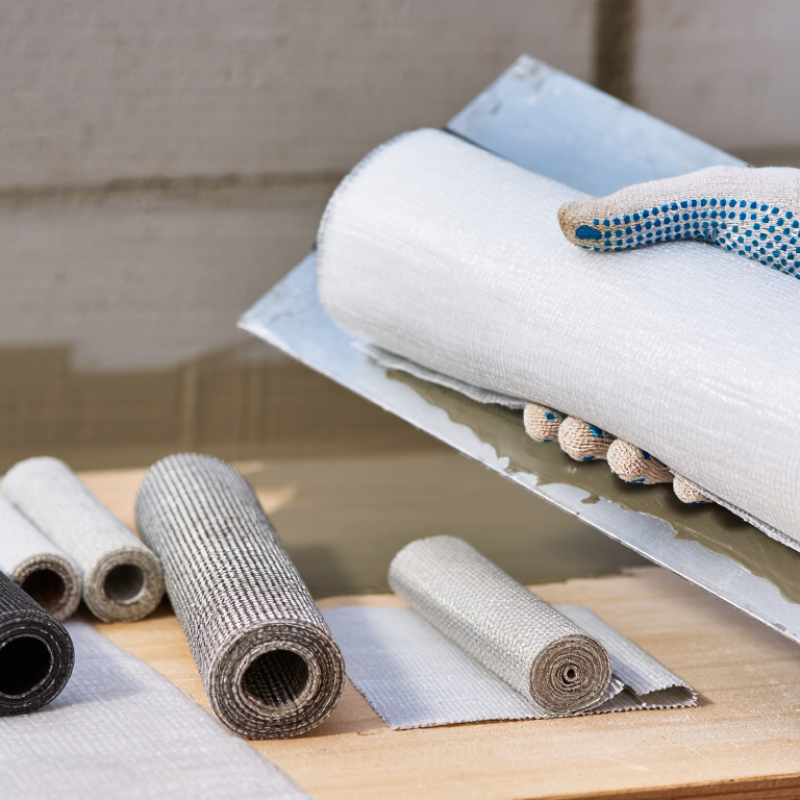
Alkali-resistant fiberglass mesh is a woven grid of glass-fiber strands treated to withstand the high-pH conditions found in cement-based plaster and mortar. Ordinary glass can gradually weaken in alkaline environments. AR fibers use a more durable glass composition, often with a protective coating, to slow that deterioration. The mesh is lightweight, but it has a practical job.

When embedded in a wet base coat, the grid helps spread small stresses across a wider area. This can reduce surface cracking around corners, window openings, and transitions between different materials. It does not make a wall crack-proof. Movement, poor curing, or an uneven substrate can still cause damage. That distinction matters.

For example, a mesh layer placed flat within the base coat can reinforce a render surface; mesh left exposed may not be protected as intended. Installers typically overlap adjoining sheets and follow the specifications for the chosen wall system. Check the mesh’s alkali-resistance data, weight, and opening size against the application. Heavier is not always better. A detail that seems minor, such as a loose overlap, can become a weak point, so installation deserves as much attention as the material itself.

How to Choose Alkali-Resistant Fiberglass Mesh

What Alkali-Resistant Fiberglass Mesh Is and How It Works

Cement pore solutions are strongly alkaline, typically around pH 12.5–13.5, while neutral water is about pH 7. Alkali-resistant mesh uses specially formulated glass fibers to better withstand this environment. When selecting mesh, check its alkali-resistance test results, tensile strength, mesh size, and suitability for the intended render or reinforcement system.

How to Match Mesh Type to Your Project

Matching alkali resistant fiberglass mesh to a project starts with the layer it must reinforce. For exterior insulation and finish systems, a compatible mesh helps spread stress through the base coat and reduce cracking. Cement render over masonry may need a sturdier mesh, especially around entrances or exposed corners. For interior wall repairs, a lighter mesh can be easier to embed without adding unnecessary thickness.

Check more than the mesh weight. Confirm that its coating is designed to withstand alkaline cement-based materials; ordinary untreated fiberglass can weaken in that environment. Then consider the opening size, required coverage, and expected impact. A fine weave may suit a smooth finish, while heavier-duty areas may call for stronger reinforcement. Weight alone can mislead. Project specifications matter.

A common site mistake is choosing one mesh for every wall. Corners, window openings, and transitions often need extra reinforcement or separate detailing. Follow the coating system’s installation instructions, including the specified overlap, and keep the mesh fully embedded rather than resting against the substrate. Not always easy. Dust, uneven mortar, or rushed troweling can leave visible ridges or weak spots. When the exposure or substrate is unusual, check the product’s technical data and ask a qualified installer to confirm compatibility before work begins.

Which Technical Specifications to Compare

How to Choose Alkali Resistant Fiberglass Mesh

Which Technical Specifications to Compare

Compare tensile strength before and after alkali conditioning, not just the mesh’s stated weight. EOTA’s ETAG 004 assessment guideline sets a benchmark for glass mesh in external insulation systems: after ageing, tensile strength should reach at least 20 N/mm, with at least 50% strength retention. These values apply to that system context, not every mesh application. Ask for test results in both warp and weft directions, and check the conditioning method. A number without its test method is hard to judge.

Check the mesh opening and areal mass against the render or adhesive thickness. A 4 mm opening may suit one coating, while another system needs a different pattern. Heavier is not automatically stronger. Look for tensile testing under EN 13496, plus coating information, roll width, and batch-level traceability. The coating helps protect glass yarns in alkaline cement, but a datasheet should state measurable performance, not simply call the product alkali resistant. Compare elongation too: excessive stretch can leave visible movement around a window corner. Small detail. Request a current test report from an independent laboratory, and confirm that its sample matches the mesh being supplied. I would still verify compatibility on site; specifications cannot predict every substrate or installation error.

How to Choose Alkali Resistant Fiberglass Mesh - Which Technical Specifications to Compare

Specification Typical options or values What to compare Practical selection guidance
Mesh weight About 145–160 g/m² for many general-purpose reinforcing meshes; heavier products may be around 160–200 g/m². Compare the declared mass per square metre and the permitted production tolerance. Match the weight to the specified render or insulation system. A higher weight alone does not prove better alkali resistance or tensile performance.
Mesh opening Common openings include approximately 4 × 4 mm and 5 × 5 mm. Check the opening size in both directions and confirm that it suits the system’s base coat and installation requirements. Use the opening specified for the intended system; overly small or large openings may affect embedment and compatibility.
Tensile strength before aging Reported values vary by product and test method; results are commonly stated separately for warp and weft directions. Compare the minimum declared strength in both directions, the specimen width, and the test method—not just a single peak value. Confirm that both directions meet the project or system requirements. The reported unit and test procedure should be consistent when comparing products.
Tensile strength after alkali aging Usually reported as residual tensile strength after exposure to an alkaline conditioning procedure; some specifications also state percentage retention. Check the aged strength and retention, along with the solution, exposure time, temperature, and test method used. Compare results only when conditioning and test procedures are equivalent. Follow the governing project specification or system approval; there is no single universal acceptance value for every application.
Coating and alkali resistance Fiberglass mesh is commonly coated with a polymer finish intended to protect the glass strands and improve compatibility with cement-based materials. Ask for documented alkali-aging test results and details of the test procedure, rather than relying only on terms such as “alkali resistant.” Choose mesh specifically documented for the alkaline environment of the intended cementitious base coat or render.
Weave and construction Open woven or leno-style constructions are used, depending on the product and application. Check that the mesh is dimensionally stable, has consistent openings, and does not readily unravel or distort during handling. Look for a construction that can be fully embedded in the base coat and installed without excessive distortion.
Roll dimensions Widths around 1 m are common; roll lengths vary by product and supplier. Compare declared width and length with the project layout, overlap requirements, and handling constraints. Allow for specified overlaps and detailing when estimating quantities; do not calculate coverage from nominal roll area alone.
Documentation and compatibility Technical data sheets may state mass, opening size, tensile results, aging procedure, and intended use. Check that test reports identify the tested mesh and include units, directions, conditioning, and methods. Confirm compatibility with the specified render or insulation system. Use current, traceable documentation and follow the system manufacturer’s installation instructions and applicable project requirements.

Comparison note: Values shown are representative ranges, not universal pass/fail limits. Compare products using the same test methods and verify the required specifications for the intended application.

How to Assess Coating, Weave, and Product Quality

When assessing alkali-resistant fiberglass mesh, separate the glass composition from its surface coating. EN 15422:2008 specifies at least 16% zirconia for alkali-resistant glass. That figure supports alkali resistance, but it does not prove the finished mesh will perform well in mortar. Check the technical sheet for coating type, mass, and test results. On a cut edge, look for loose strands, bare patches, or coating that flakes when gently bent. Small details matter.

Weave affects how the mesh handles and spreads stress. Look for square openings, consistent yarn spacing, and firm intersections. Compare several areas, not just the clean sample shown in a brochure. For ETICS reinforcement, EAD 040016-00-0404 gives useful benchmarks: at least 40 N/mm tensile strength as supplied, and at least 20 N/mm after ageing, with at least 50% strength retention. Confirm that results cover both warp and weft directions. A single number can hide a weak direction.

Ask for the test method, ageing conditions, and batch traceability alongside the figures. Check that the mesh sits flat in a sample mortar layer without bunching or showing through. I would treat one laboratory result as a clue, not a verdict; installation quality and system compatibility still matter. And paper claims can look better than the roll.

How to Verify Standards and Choose a Reliable Supplier

How to Choose Alkali Resistant Fiberglass Mesh

Verify the test method before comparing price. EN 13496:2013 describes tensile testing for glass-fibre mesh used in external insulation systems. Ask for a recent, batch-specific report showing both warp and weft results, mesh weight, and strength after alkali ageing. ETAG 004 gives a commonly cited benchmark of 20 N/mm tensile strength after ageing and 50% residual strength. Treat these figures as a reference, not a universal pass mark; confirm the project’s applicable system requirements. Check that the report names the tested mesh, not merely the raw fibre. Small detail, big difference.

A reliable supplier should provide traceable production records, test dates, and the laboratory’s name. Ask how the mesh is coated and how coating weight is controlled. Then compare a sample: measure the roll width, inspect the weave under bright light, and look for broken strands or uneven coating. ISO 9001 certification can indicate a quality-management process, but it does not prove a mesh meets performance requirements. Certificates can look convincing. Read the test scope. If results are old, incomplete, or unrelated to the offered batch, request clarification before ordering. I would not rely on a tidy brochure alone; even careful checks leave some uncertainty, so keep the report and sample linked to the delivered lot.

Stay Connected

Sign up today to keep up with the newest information from one of the Southeast’s leading suppliers of fluid handling equipment!