

A Kids Stool can help a child reach the bathroom sink, pull on shoes, or join a grown-up at the kitchen counter. Those ordinary moments matter. The right stool can make daily routines feel easier, while a poor fit may wobble, slide, or sit too high. Small details matter.
Start with the child’s height and the task at hand. A stool for handwashing should let the child reach the faucet without stretching or leaning far forward. Check the platform’s height, width, and weight limit against the manufacturer’s guidance. A stable base, grippy feet, and a textured top can help reduce slipping on smooth floors. They do not remove every risk. Close supervision still matters, especially with younger children.
Materials shape how a stool feels and how much care it needs. Plastic is often light and easy to wipe, while wood may feel sturdier but can be heavier. Look for smooth edges, secure joints, and surfaces that are simple to clean. If possible, place the stool on the floor where it will be used and test for rocking before letting your child climb on. Not every design suits every home. A compact stool may store neatly, but offer less room for small feet. That trade-off is easy to miss in product photos.
This guide explains the features worth comparing, from size and stability to storage and upkeep. No single choice is perfect. Your child’s comfort, your space, and the stool’s intended use should guide the decision.
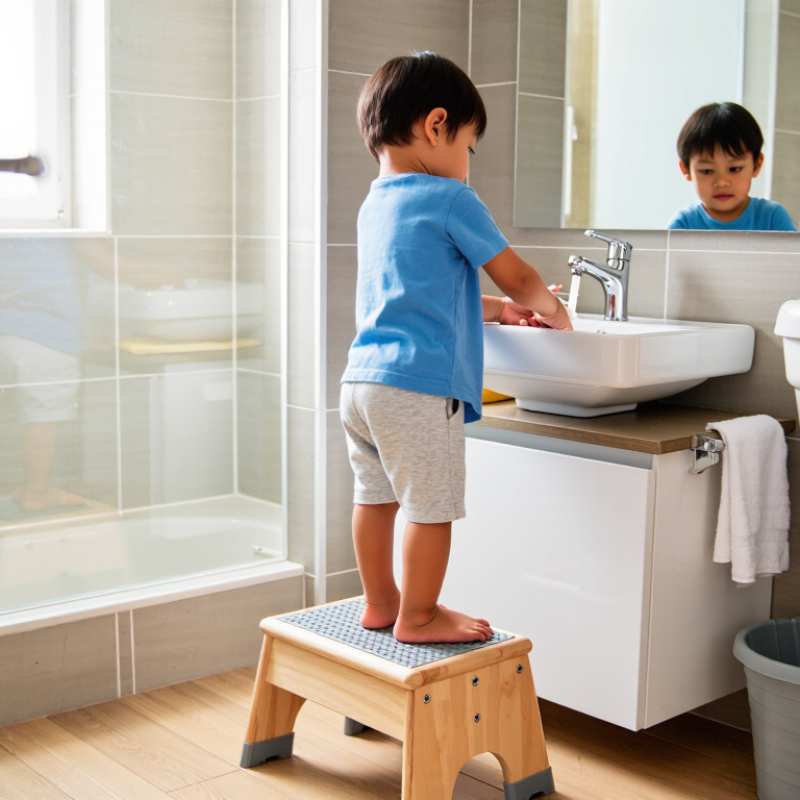
Before choosing a kids stool, think about what your child will use it for. Reaching the bathroom sink calls for a different height than helping stir pancake batter at the kitchen counter. Measure the gap between the floor and the surface, then consider whether your child can step up without stretching or leaning. A stool that is too tall may feel awkward; one that is too short may not help much. Small details matter.
Look for a broad, steady base and feet that grip your floor type. Tile, wood, and bath mats can behave differently, so check the stool where it will actually be used. A textured top can help prevent slipping, but it does not replace adult supervision. Check the maker’s age and weight guidance, and see whether the stool is easy to move and store. Test it gently. Ask your child to stand still and step down, while you stay close. Their confidence, balance, and ability to follow directions matter as much as their height. I’ve found that children sometimes outgrow a stool sooner than expected, or prefer not to use one at all. Reassess the fit as their routines change.

A stool that is too tall can leave a child’s feet swinging; one that is too low may crowd the knees. Measure the child’s lower leg from the floor to the knee crease while seated. Choose a seat slightly below that point, so both feet rest flat and the knees bend comfortably. Fit beats age. Kids grow unevenly, and age labels can miss that.
The NCHS report Anthropometric Reference Data for Children and Adults: United States, 2015–2018 presents children’s stature by age, sex, and percentile. Its percentile tables show why two children of the same age may need different-sized seating. Measure your child, then check the fit again after a growth spurt. A quick test: sit them down and look for supported feet, relaxed shoulders, and room behind the knees.
For a counter-height stool, check the counter-to-seat gap and whether the footrest supports the child’s feet. A child stretching for a surface may lean or climb, so supervise use and keep the stool on a stable, level floor. ASTM F2613 covers safety requirements and test methods for children’s chairs and stools, but it cannot determine an individual child’s ideal height. I’ve found that a small mismatch can be easy to overlook at first. Check again later.
When choosing a kids stool, check how firmly it sits on the floor. A wide base and evenly spaced legs can help prevent tipping. Place it on a hard, level surface and press gently on each edge. No rocking. Look for secure joints, smooth edges, and feet that grip the floor. A stool can still slide on wet tile, so keep the standing area dry.
Check the stated weight capacity, not just your child’s current weight. Allow for clothing, a backpack, or other items your child might carry. Never exceed the maker’s limit, and confirm the stool is designed for standing or sitting as intended. A quick wobble test is useful, but it cannot replace checking the joints regularly. If a leg loosens or the stool cracks, stop using it until it is repaired or replaced. It is easy to overlook small wear.
Tips: Ask your child to climb on and off slowly while you watch. Keep the stool away from counters, windows, and other tempting climbing spots. Recheck stability after moving it.
A kids’ stool should match your child’s height, habits, and room—not just its color. Solid wood usually feels firm and resists everyday knocks, but it can be heavy to move. Molded plastic is lighter and wipes clean quickly, though thin legs may flex. Check joints, edges, and the underside; a smooth finish matters when small hands grip the seat. Feel the difference.
Design is as important as material. A broad base, non-slip feet, and a low step can help reduce wobbling on tile or hardwood. ASTM F2613 covers safety requirements for children’s chairs and stools; look for clear evidence that a product was tested to the applicable standard. The U.S. Consumer Product Safety Commission estimated 22,500 emergency-room-treated injuries involving tip-overs of TVs, furniture, and appliances in 2022. That figure is not stool-specific, but it underlines why stability deserves attention. Useful details include a handhold, rounded corners, and a footrest that does not obstruct climbing.
Tips: Place the stool on a level surface and check for rocking before use. Ask your child to climb down slowly. A stool that is easy to carry can also be easy to move unexpectedly, so supervision still matters. No design removes every risk.
| Stool Type / Material | Typical Design | Useful Features | Care and Durability | Things to Check | May Suit |
|---|---|---|---|---|---|
| Solid wood | Often has a simple seat, rounded edges, and a natural finish. Some designs have a wide base or handholds. | A sturdy feel and a seat that can work in bedrooms, play areas, or at a child-sized table. | Wipe with a lightly damp cloth and dry promptly. The finish may need extra care if scratched or exposed to moisture. | Look for smooth, splinter-free surfaces, stable legs, secure joints, and a finish suitable for the intended use. | Families who prefer a traditional look and are prepared to keep the stool dry and in good condition. |
| Molded plastic | Commonly lightweight, with rounded shapes and a one-piece or few-piece construction. | Easy to move and generally simple to wipe clean; some models are designed for indoor or outdoor use. | Routine cleaning is usually straightforward. Plastic can scratch, and prolonged sun exposure may affect some products. | Check that the base does not rock, the feet grip the floor, and the plastic has no cracks or sharp edges. | Children who need a stool that is easy to carry or clean, including for supervised bathroom or playroom use. |
| Metal frame with a plastic or wood seat | Usually has a rigid frame with separate feet and a seat panel; folding versions are also available. | A compact or foldable design can be convenient for storage. Rubber or non-slip feet may help reduce sliding. | Wipe the frame and seat clean, then dry them. Inspect moving parts and fasteners periodically, especially on folding models. | Check for pinch points, exposed sharp edges, secure locks on folding designs, and a clearly stated weight limit. | Older children who can use the stool safely and families who need a compact option. |
| Upholstered stool | Often has a padded seat over a wood or engineered-wood frame, sometimes with fabric or faux-leather covering. | A cushioned seat may feel comfortable for sitting at a desk or dressing area. | Cleaning depends on the covering; fabric can hold spills, while wipe-clean coverings may be easier to maintain. | Confirm that the seat is firmly attached and the base is stable. Padding does not make a stool suitable for climbing. | Children who need a seat for quiet activities rather than a step-up task. |
| Step stool with a broad platform | Designed to raise a child’s reach, often with a wide standing surface and non-slip details. | A textured platform and grippy feet can help provide traction on a suitable, dry floor. | Keep the platform clean and check feet or grip surfaces for wear, dirt, or looseness. | Use only for its intended purpose. Check the product’s age guidance and weight limit; supervise children near counters, sinks, and other hazards. | Children who need help reaching a sink or counter, with an adult nearby and the stool placed on a level surface. |
Choosing safely: Features and weight limits vary by product. Check the manufacturer’s instructions, choose a stool that fits the child and task, place it on a firm, level surface, and supervise young children. A stool is not a substitute for a ladder or a safety device.
How to Choose the Best Kids Stool for Your Child
Assessing Cleaning, Durability, and Long-Term Value
A good kids’ stool must handle more than occasional step-ups. Check whether its surface wipes clean without trapping crumbs in seams or textured grooves. Smooth, sealed materials are often easier to maintain than porous finishes. Still, no surface stays spotless. That is normal. Look for sturdy construction, rounded edges, and feet that grip the floor. Check the maker’s weight limit and follow its care instructions.
Tips: Wipe spills promptly with a soft cloth and mild soap, unless the care label advises otherwise. Skip harsh cleaners that may damage the finish. Inspect the feet, joints, and top regularly for looseness, cracks, or peeling. Do this monthly. A quick check takes little time, but it can reveal wear before the stool feels unstable.
For long-term value, consider how the stool will fit your child as they grow. A height that works at the sink today may not suit every task later. Adjustable models can offer more flexibility, though extra parts may need attention. A low price can be tempting, but replacement costs matter too. Compare the warranty, repair options, and expected wear—not just the shelf price. If you can, let your child try standing on it while you stay close. One detail I might overlook is storage: a bulky stool can become a hallway obstacle. A dependable choice balances easy cleaning, stable support, and a size your family will actually use.
Compare common stool materials for cleaning, durability, and long-term value.
Ratings are general material-level guidance on a 1–5 scale, not standardized test results. Actual performance depends on construction, finish, and care. For long-term value, consider whether the stool is easy to clean, sturdy, and repairable.
Sign up today to keep up with the newest information from one of the Southeast’s leading suppliers of fluid handling equipment!