How to Choose the Best Shower Head in 2026?
The right Shower Head should suit your water pressure, shower space, and daily routine. That sounds simple. Yet a sleek finish or a long feature list can hide practical trade-offs. A handheld model may make rinsing easier, while a fixed head can keep the setup uncluttered. Neither is best for everyone. In 2026, shoppers can compare rain-style, multi-spray, and handheld designs, but product labels do not tell the whole story. A wide spray may feel relaxing, for example, yet it can be less satisfying if your home has weak pressure. Small details matter.
This guide explains how to weigh comfort, performance, installation, and upkeep before choosing. Start by checking your existing connection and the manufacturer’s compatibility details. Compare spray settings, stated flow information, and cleaning instructions rather than relying on appearance alone. If possible, note how your current shower performs at different times of day. That observation may reveal pressure changes you had not noticed. Consider whether controls are easy to reach, especially in a compact stall. Check the warranty and replacement-part availability, too. A polished product page can make every option sound ideal. It rarely can. The goal is not to find a universally perfect fixture, but one that fits your bathroom and expectations. Even a careful choice may involve compromise; identifying that compromise early can prevent an expensive disappointment.
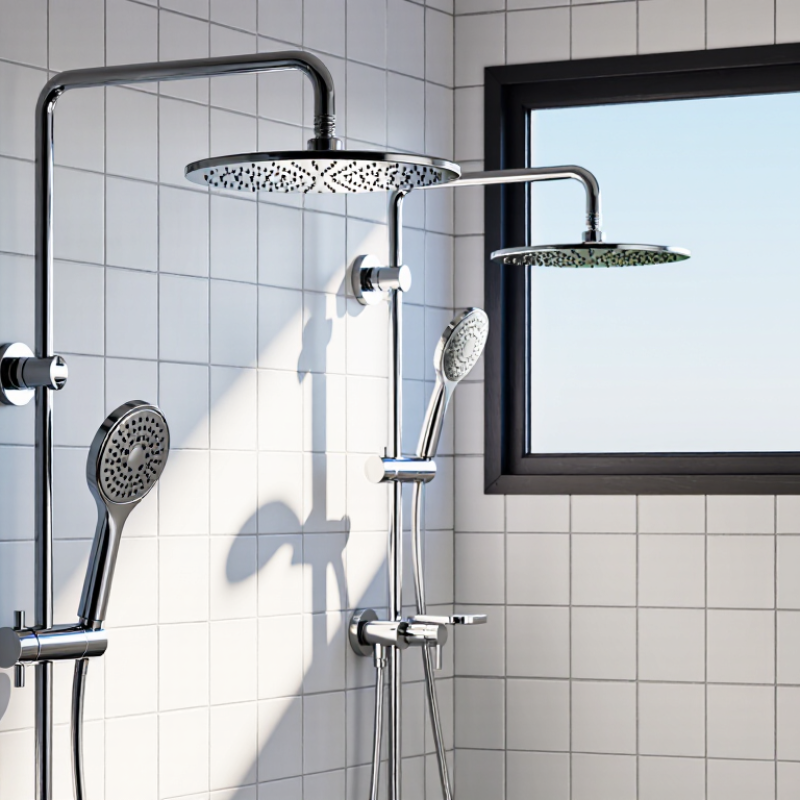
Assess Your Shower Setup, Water Pressure, and Daily Needs
Before comparing spray patterns, inspect the shower you already have. Note the arm’s height, connection size, and whether a handheld hose would reach the tub or help with cleaning. Turn on the shower and check whether pressure stays steady when another tap runs. A weak spray may point to a plumbing or pressure issue, not a poor showerhead choice.
The U.S. EPA’s WaterSense showerhead specification sets a maximum flow of 2.0 gallons per minute, compared with the federal standard of 2.5 gallons per minute. EPA says certified models use at least 20% less water while meeting spray-performance requirements. Treat that as a useful benchmark, not a guarantee that every model will feel equally strong. Your home’s water pressure and pipe condition still matter. One easy-to-miss detail: hard-water deposits can clog small spray openings over time.
Match features to daily routines. A fixed head may suit a simple, consistent rinse; a handheld model can make rinsing children, pets, or a tiled shower easier. If you share the bathroom, consider whether everyone can reach and adjust the controls comfortably.
Tips: Check the existing flow before shopping. If possible, use a simple flow-rate test: time how long a container takes to fill. Keep the result; it gives you a practical comparison point.
Compare Shower Head Types and Spray Patterns
How to Choose the Best Shower Head in 2026?
Compare Shower Head Types and Spray Patterns
A fixed shower head keeps the setup simple and often suits a compact shower. A handheld model makes rinsing shampoo or cleaning the tub easier. Rain-style heads spread water over a wider area, but may feel less forceful. Combo models offer both options, though extra parts can mean more upkeep. There is no perfect fit for every bathroom.
Spray patterns matter just as much. Full-body sprays feel balanced; focused massage jets target a small area. Mist can feel gentle, but may take longer to rinse thick hair. Check the flow rate, too. The U.S. EPA’s WaterSense specification sets a maximum of 2.0 gallons per minute for labeled shower heads—20% below the federal 2.5-gpm maximum—and requires performance testing. A lower flow rate is useful, but comfort still depends on household water pressure and the spray design.
Tips: If possible, test the pattern in a showroom. At home, note whether the spray reaches your shoulders and rinses soap away without repeated passes. Small details count.
Check Flow Rate, Efficiency, and Local Requirements
Before choosing a showerhead, check its flow rate in gallons per minute (gpm), not just its spray pattern. The U.S. EPA’s WaterSense specification limits labeled showerheads to 2.0 gpm, compared with the federal maximum of 2.5 gpm. The EPA estimates that an average family can save about 2,700 gallons of water annually with a WaterSense-labeled showerhead. Lower flow can also reduce the energy used to heat water. Check the rating on the package or technical sheet. A comfortable spray matters, too; water pressure and plumbing condition can change how it feels. I learned that the hard way.
Check local requirements before ordering. City or state rules may set stricter limits, particularly for new construction or renovations. Verify current requirements with your local water utility or building department; an online listing may not apply where you live. You can also test your existing shower using a one-gallon container and a timer. At 2.0 gpm, it should fill in about 30 seconds. This quick test is imperfect because household pressure can fluctuate, but it may reveal a mismatch. Check whether the product meets recognized efficiency criteria and suits your home’s water pressure. Keep the spec sheet. It helps when comparing claims later.
Evaluate Materials, Installation, and Maintenance Needs
How to Choose the Best Shower Head in 2026?
Materials affect durability, cleaning, and how a shower head looks over time. Stainless steel and solid brass are sturdy options, while plastic models are usually lighter and easier to handle. Check the finish closely: polished surfaces can show water spots, and textured finishes may collect mineral residue in small grooves. No finish stays spotless. Consider how often you want to clean it.
Installation should fit your existing shower arm and your comfort with basic tools. Read the product instructions and check whether washers or adapters are included. Before buying, compare the connection size and confirm that your water pressure suits the shower head’s requirements. If the fittings are corroded, or you are unsure how to prevent leaks, ask a qualified plumber. A small drip can be easy to miss at first. It is worth checking again after the first few showers.
Tips: Choose a finish you can wipe clean with a soft cloth. Remove and rinse the spray face as directed, especially if mineral deposits build up. Avoid harsh cleaners unless the care instructions allow them. Keep the instructions; you may need them later.
Choose Features and a Price Range That Fit Your Priorities
Choose a shower head by matching its features to your daily routine, not by counting settings. If you rinse long hair or clean the shower often, a handheld model can make those tasks easier. A wide spray may feel more relaxing, but it can use more water. Check the product’s flow rate and compare it with your household’s needs. Small details matter.
Think about water pressure, too. A low-pressure bathroom may not deliver the strong spray shown in a product photo. Look for clear specifications and a return policy, and check whether the fitting matches your existing shower arm. You may not need many spray modes. Two useful settings can beat eight confusing ones.
Set a price range before browsing. A basic head may cover everyday use, while a pricier option could add a flexible hose, sturdier materials, or easier-to-clean nozzles. Compare those features with the cost, including any tools or adapters you might need. Don’t assume a higher price guarantees a better fit. I’d rather have a simple, comfortable spray than a feature I rarely touch. Still, it is easy to overlook installation details when a design looks appealing.