
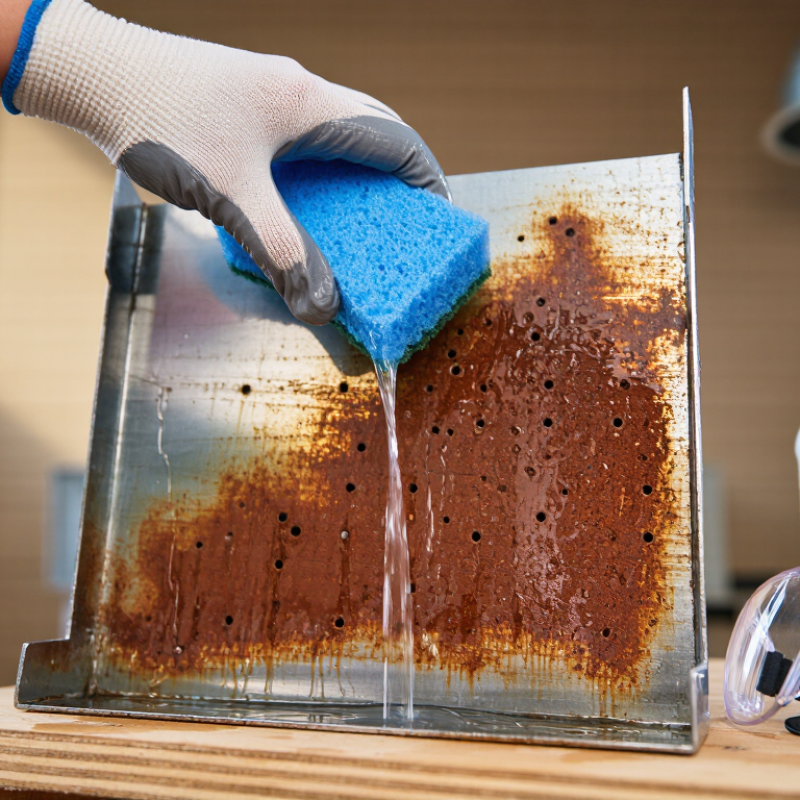
Rust is not one thing. Red-brown surface rust on carbon steel usually responds differently from deep, layered corrosion. Before applying liquid rust remover, scrape a small area with a plastic tool. Loose flakes, pitting, and black residue reveal the corrosion stage.
Test first. Apply one drop to an unseen section, then wait for the stated reaction time. Watch for bubbling, discoloration, heat, or a softened surface.
Metal compatibility matters more than speed. Steel may tolerate an acidic formulation, while aluminum, zinc, copper, and plated surfaces can stain or etch. Stainless steel also needs caution, especially around welds and crevices.
Read the safety data sheet and technical data sheet, not only the front label.
The ISO 12944 corrosion-protection standard stresses that preparation and environmental exposure influence coating performance. That principle applies here: salt, moisture, and trapped residue can undermine treatment even after visible rust disappears.
The NACE IMPACT study estimated global corrosion costs at about 2.5 trillion dollars annually, equal to roughly 3.4% of global GDP.
Careful identification can reduce repeat repairs and unnecessary metal loss. Use ventilation, chemical-resistant gloves, eye protection, and a controlled rinse. Never mix removers with other chemicals.
I have found that “clean” metal may still hold acidic residue in seams. A pH check helps, although it is not perfect. Dry the surface quickly, inspect under bright light, and stop if the base metal changes color or texture.