

China Top 10 Outdoor Cooking Station Manufacturers?
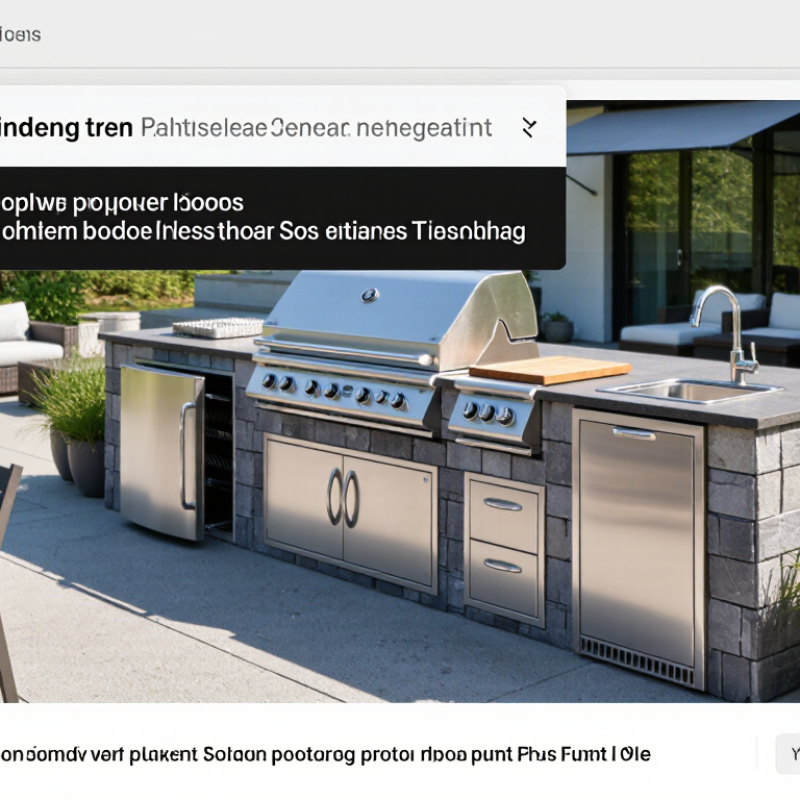
Outdoor cooking is moving beyond a basic grill and folding table. In many homes, it now includes built-in burners, stainless-steel storage, sinks, refrigerators, and weather-resistant worktops. The outdoor cooking station has become a practical extension of indoor living, especially where families entertain throughout the year.
Grand View Research valued the global outdoor kitchen market at approximately USD 20.46 billion in 2023. Its 2024–2030 analysis also forecasts strong annual growth. These figures indicate meaningful demand, but market reports do not explain every purchasing decision. Climate, housing design, installation costs, and local cooking habits still matter. China’s manufacturing sector adds another important layer. Its mature metalworking, appliance, stone-processing, and export supply chains can support varied configurations and price levels.
Steven Raichlen, a respected barbecue author and live-fire cooking educator, has described the grill as “the fireplace of the 21st century.” His observation helps explain why heat performance, gathering space, and visual design must work together. A reliable outdoor cooking station should handle high temperatures, grease, rain, and repeated cleaning. Small details matter. Doors should close evenly. Drawers should resist corrosion. Countertops should leave enough room for a cutting board and a hot tray.
This guide examines China’s top 10 outdoor cooking station manufacturers through product range, material quality, customization, manufacturing experience, certifications, export capability, and after-sales support. No ranking is flawless. Factory scale alone cannot guarantee dependable performance. Buyers should verify samples, testing documents, lead times, and installation guidance before choosing a supplier. Practical evidence matters more than polished catalog photography.
What Defines a Leading Outdoor Cooking Station Manufacturer in China
China Top 10 Outdoor Cooking Station Manufacturers?
A leading outdoor cooking station manufacturer is defined by evidence, not catalog size. Grand View Research estimates the global outdoor kitchen market reached about USD 20 billion in 2023, with strong growth expected through 2030. This demand raises the standard for Chinese suppliers. Serious manufacturers should show stable stainless-steel sourcing, repeatable welding quality, and documented burner testing. Food-contact surfaces usually require corrosion-resistant materials, while outdoor cabinets need controlled drainage and weather protection. Small details matter. Water trapped behind a panel can ruin an attractive station within one season.
Factory capability also deserves direct inspection. Production records, incoming-material checks, sample approvals, and batch traceability reveal more than polished photographs. A dependable supplier can provide test documents for gas safety, electrical components, and relevant export requirements. Intertek and TÜV-style third-party testing may support credibility, but certificates must match the exact model. In practice, a “top ten” ranking can be imperfect. Capacity figures may change, subcontracting may be hidden, and a low price can reflect thinner steel or weaker after-sales support. That uncertainty deserves honest review.
Tips: Request a video factory tour, material certificates, and a pilot order. Check hinge alignment, burner ignition, heat distribution, and packaging damage. Ask how replacement parts are stored. A leading manufacturer should answer clearly, measure defects, and improve after complaints. Its engineering team should also adapt ventilation, voltage, gas configuration, and climate protection for the target market.
China Top 10 Outdoor Cooking Station Manufacturers? - What Defines a Leading Outdoor Cooking Station Manufacturer in China
| No. | Evaluation Dimension | Benchmark of a Leading Manufacturer | Verifiable Evidence | Why It Matters |
|---|---|---|---|---|
| 1 | Product Engineering | Develops modular outdoor kitchens, grill carts, cabinets, sinks, worktops, and integrated storage systems. | 2D/3D drawings, bill of materials, prototype records, design-change control, and product testing reports. | Strong engineering reduces installation errors and makes product customization more reliable. |
| 2 | Material Selection | Uses corrosion-resistant stainless steel, commonly 304 for general outdoor applications and 316 where chloride exposure is higher. | Material certificates, grade identification, thickness records, and salt-spray or corrosion-test documentation. | Correct material selection affects service life, appearance, and resistance to coastal or humid environments. |
| 3 | Manufacturing Capability | Controls laser cutting, bending, welding, grinding, polishing, coating, assembly, and final inspection in a coordinated process. | Factory-process flow, equipment list, capacity records, inspection checkpoints, and production samples. | Integrated production improves dimensional consistency and reduces dependence on uncontrolled subcontracting. |
| 4 | Cooking Performance | Offers stable heat distribution, controllable burners or heating elements, practical cooking zones, and easy-to-clean grease management. | Heat-distribution tests, burner or element specifications, temperature-control records, and grease-tray inspection. | Consistent thermal performance directly influences cooking results and user safety. |
| 5 | Safety and Compliance | Designs products around the destination market’s gas, electrical, food-contact, and general product-safety requirements. | Applicable test reports, declarations of conformity, traceable components, warning labels, and installation instructions. | Compliance documentation supports legal market entry and lowers product-liability risk. |
| 6 | Quality Management | Operates a documented quality system covering incoming materials, in-process checks, finished goods, corrective actions, and traceability. | Quality manual, inspection plans, nonconformity records, calibration certificates, and ISO 9001 certification when applicable. | A repeatable quality system is more important than a single successful sample. |
| 7 | Customization | Supports private-label specifications, dimensions, finishes, cut-outs, packaging, accessories, and regional configuration requirements. | Approved drawings, sample sign-off process, engineering-change records, and documented customization limits. | Flexible customization helps distributors and hospitality projects meet different site and market needs. |
| 8 | Supply-Chain Reliability | Maintains stable sources for stainless steel, burners, valves, wheels, hardware, electronics, packaging, and replacement parts. | Approved-supplier list, component traceability, safety-stock policy, lead-time history, and contingency planning. | Reliable sourcing reduces delays caused by material shortages or discontinued components. |
| 9 | Export and Packaging Readiness | Provides export-ready packaging, multilingual manuals, shipping marks, palletization, and documentation suited to the destination country. | Packaging drop-test records, carton specifications, loading plans, export documents, and installation manuals. | Well-designed packaging limits transit damage and improves the receiving and installation experience. |
| 10 | After-Sales Support | Provides spare-parts identification, troubleshooting guidance, warranty procedures, technical support, and installer assistance. | Parts catalogue, warranty terms, response procedure, service contacts, failure-analysis reports, and replacement-part availability. | Effective support protects the buyer’s reputation and reduces the total cost of ownership. |
| Note: This table presents an anonymized, evidence-based evaluation framework rather than a verified ranking of named companies. Actual manufacturer performance should be confirmed through factory audits, current certificates, product samples, inspection records, and customer references. | ||||
Related Posts
-
Ultimate Showdown of Best Outdoor Kitchens for Your Backyard Oasis
-
2025 Trends in Smart BBQ Island Technologies and Their Impact on Outdoor Cooking Efficiency
-
The Ultimate Guide to Choosing the Best Built in BBQ for Your Outdoor Space
-
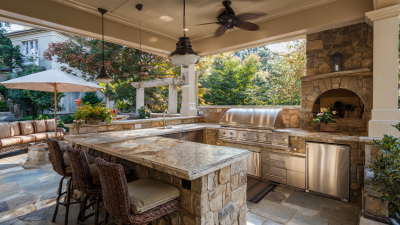
7 Best Outdoor Kitchen Designs That Increase Home Value by 15 Percent
-

Innovative Solutions for Your Dream Garden Fountain Design
-
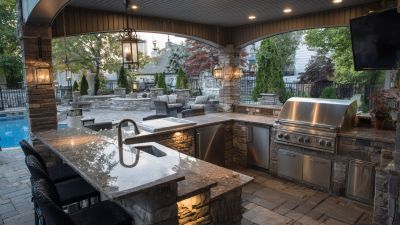
Transform Your Backyard: The Ultimate Guide to Designing an Outdoor BBQ Kitchen Paradise





Stay Connected
Sign up today to keep up with the newest information from one of the Southeast’s leading suppliers of fluid handling equipment!