
What Are the Top Animal Healthcare Syringe Types in 2026?
In 2026, choosing an Animal Healthcare Syringe is about matching the device to the animal, medication, and care setting. Veterinary teams may use disposable syringes for routine injections, reusable models for repeated procedures, and oral dosing syringes for liquid medicines. Insulin syringes can support precise measurement when a veterinarian recommends them. Automatic syringes may help with repeated dosing in suitable clinical or farm settings. Each type has practical limits. Fit matters.
The right choice depends on volume, measurement scale, needle compatibility, material, and ease of cleaning. A small graduation mark can make a meaningful difference when doses are tiny. A clear barrel helps staff check the contents, while a comfortable grip can steady a hand during a busy appointment. These details sound ordinary, but they shape daily use. The most advanced option is not always the most useful one.
This guide explores common syringe types and the features that matter when comparing them. It also considers how animal size, route of administration, and workflow affect selection. Product design continues to change, though availability and suitability vary by manufacturer and clinical need. No single syringe fits every patient. Veterinary guidance remains essential, and careful handling supports accurate dosing. Some choices still feel less straightforward than product labels suggest; that deserves a closer look.
How Animal Healthcare Syringes Are Classified
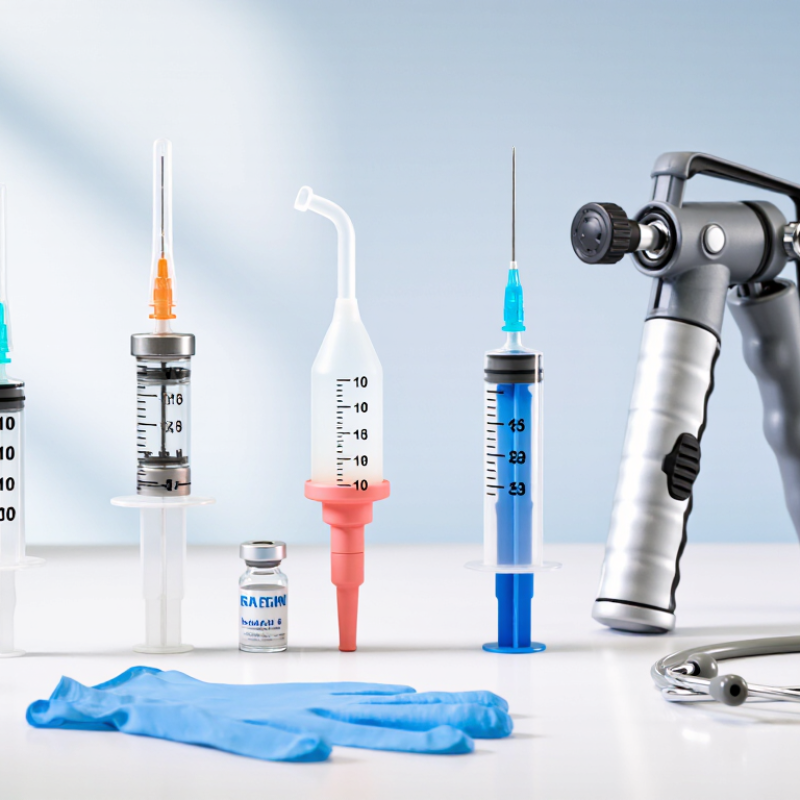
Animal healthcare syringes are commonly classified by their purpose, capacity, and design. Injection syringes deliver measured fluids through a needle, while oral dosing syringes have no needle and often feature a narrow nozzle. Larger-volume syringes may support fluid delivery or flushing when directed by a veterinary professional. The right category depends on the animal, the substance, and the prescribed route.
Capacity is one practical distinction. Small barrels allow finer measurement of low volumes; larger barrels hold more but may make tiny doses harder to read. Markings can differ in spacing and units, so check the scale before use. Small details matter. A clear barrel helps, though glare or thick fluid can still obscure the line.
Syringes also vary by tip and dosing mechanism. A slip tip pushes onto a compatible connection, while a threaded tip locks more securely; compatibility should be verified rather than assumed. Single-use syringes are discarded after use, whereas reusable designs require cleaning and handling according to their instructions. Some are manually operated; others deliver repeated, preset amounts. The categories overlap, and labels are not always consistent. That can be confusing in a busy clinic. Selection should follow the veterinarian’s directions, with attention to fit, measurement, and the animal’s comfort.
What Are the Top Animal Healthcare Syringe Types in 2026? - How Animal Healthcare Syringes Are Classified
| Syringe type | How it is classified | Common animal-care uses | Key selection considerations |
|---|---|---|---|
| Standard hypodermic syringe | Manual syringe with a plunger and needle connection; commonly supplied in disposable plastic and in a range of capacities. | Measuring and administering injectable medicines or vaccines when the product is intended for injection. | Choose a capacity and graduation that allow accurate measurement of the prescribed dose. Needle size and injection route must suit the medicine and animal. |
| Low-volume or fine-graduation syringe | A small-capacity syringe designed to make small liquid volumes easier to measure; tuberculin-style syringes commonly have a 1 mL capacity. | Accurate measurement of small doses when prescribed, including use in small animals or other situations requiring fine volume increments. | Check the scale units and graduation interval before drawing up medicine. A small-volume syringe is not automatically suitable for every drug or route. |
| Insulin syringe | A syringe calibrated for a specified insulin concentration, commonly U-100; U-40 syringes are also used with insulin labelled at that concentration. | Measuring insulin for animals when the syringe scale matches the concentration of the prescribed insulin. | Match the syringe calibration to the insulin concentration exactly. Do not interchange U-40 and U-100 syringes without veterinary direction. |
| Oral dosing syringe | A needle-free syringe, often with a graduated barrel and oral dosing tip. | Giving measured liquid medicines by mouth to animals that can safely receive them orally. | Use only for products intended for oral administration. Give the liquid slowly and follow veterinary instructions to reduce the risk of aspiration. |
| Automatic or multi-dose syringe | A reusable delivery device that dispenses a preset volume repeatedly, often drawing from a reservoir or attached medicine container. | Repeated dosing in settings such as livestock vaccination, when the product instructions and applicable regulations allow this method. | Verify the dose setting, maintain the device as directed, and follow medicine-specific hygiene and handling instructions. Do not use one device across animals if the instructions prohibit it. |
| Drench or livestock dosing syringe | A larger-volume, needle-free applicator designed to deliver measured liquid by mouth; some models have an adjustable dose setting. | Oral administration of suitable liquids to livestock, according to the product label and animal-care plan. | Confirm the dose setting and applicator fit. Use a technique appropriate for the species and never use an oral drench applicator for injection. |
| Catheter-tip or irrigation syringe | A needle-free syringe with a wider tip intended for delivery or flushing rather than injection. | Selected flushing, irrigation, or feeding procedures when specifically directed by a veterinary professional. | Use only for the intended procedure and compatible solution. It is not a substitute for a needle-equipped syringe when an injectable medicine is prescribed. |
| Reusable glass syringe | A syringe with a glass barrel, intended for reuse only when its design and instructions permit appropriate cleaning and sterilization. | Specialized veterinary or laboratory procedures where a reusable syringe is appropriate and validated cleaning procedures are available. | Inspect for damage and follow the manufacturer’s cleaning and sterilization instructions. Reuse is inappropriate if the device is labelled single-use. |
Selection note: Syringes are classified by their construction, delivery method, intended route, and measurement scale. Always follow the medicine label and veterinary instructions; the correct syringe depends on the prescribed dose, formulation, species, and route of administration.






Stay Connected
Sign up today to keep up with the newest information from one of the Southeast’s leading suppliers of fluid handling equipment!