What Are the Top China Surface Mounted Light Manufacturers?
Choosing the right China Surface Mounted Light manufacturer requires more than comparing catalog prices. Buyers must examine lighting performance, production experience, quality controls, and after-sales support. This guide explores manufacturers that serve residential, commercial, hospitality, and industrial projects. It focuses on practical evidence, not impressive claims.
The evaluation considers lumen output, color rendering, beam distribution, driver stability, and thermal design. A reliable Surface Mounted Light should maintain consistent brightness without excessive heat after extended use. Details matter. Inspect the aluminum housing, diffuser clarity, screw placement, and packaging protection. Sample testing can reveal problems that product photos hide.
Manufacturer capability also depends on certification records, factory audits, customization options, and communication quality. Buyers should request test reports, installation instructions, warranty terms, and realistic production timelines. A low quotation may become expensive when replacements, delays, or inconsistent color temperatures appear. That risk deserves attention.
There is no permanent ranking of China’s top manufacturers. Markets change, product lines improve, and service experiences differ by project. A supplier with strong export experience may still struggle with unusual dimensions or private-label requirements. This guide therefore compares manufacturers through transparent criteria rather than vague popularity. It also recognizes an important limitation: public information cannot fully prove factory reliability. Direct sampling, video inspections, and documented performance tests remain essential. The final choice should balance technical results, pricing, delivery confidence, and long-term cooperation.
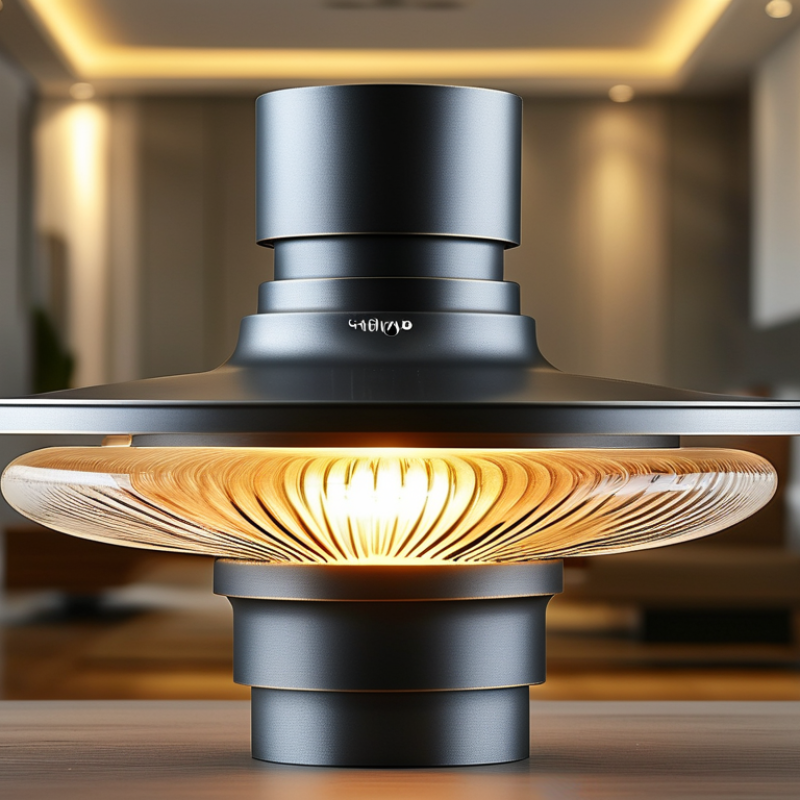
What Defines a Top China Surface-Mounted Light Manufacturer?
A top China surface-mounted light manufacturer is defined by measurable performance, not catalog size. The International Energy Agency reports that lighting uses about 10% of global electricity. This makes efficacy, heat control, and service life commercially important. A reliable factory should publish tested lumen output, power consumption, color consistency, and lifetime data. “High brightness” alone proves little.
Manufacturing discipline matters. Look for ISO 9001 quality systems, traceable LED batches, automated assembly, and documented aging tests. Independent photometric reports should include LM-79 results, while LM-80 and TM-21 evidence can support LED lifetime claims. IEC safety testing and market-specific certifications also reduce procurement risk. In practice, a well-designed aluminum housing should keep heat away from the driver, even after hours under a warm ceiling. Small details matter.
Market research from Grand View Research projects continued growth in global LED lighting through the decade, increasing pressure on suppliers to improve efficiency and customization. Yet reports often overlook installation failures and inconsistent color between production batches. That is where factory experience becomes visible. Strong manufacturers provide sample verification, IP testing where relevant, clear warranty terms, and replacement-part support. I would still question any supplier promising an extreme lifetime without test conditions. Numbers need context. A polished showroom is not enough.
Key Performance Metrics: ≥120 lm/W, CRI ≥80, and 50,000-Hour Lifespan
What Are the Top China Surface Mounted Light Manufacturers?
When evaluating surface mounted light manufacturers in China, performance data should guide the shortlist. A target of at least 120 lm/W indicates efficient use of electricity. However, confirm whether this figure describes the complete fixture or only the LED source. A catalog number is not proof.
CRI should reach 80 or higher for offices, retail areas, schools, and residential rooms. For color-sensitive spaces, a higher CRI may be more suitable. Request an independent photometric report, test conditions, and sample measurements. I have found that diffuser design can reduce actual output more than expected. Measure the real fixture.
A rated lifespan of 50,000 hours suggests long service, but operating temperature matters greatly. Ask manufacturers for LM-80 data, thermal testing, driver specifications, and warranty terms. Check performance at realistic ambient temperatures, not only in a controlled laboratory. Stable light output, low flicker, and consistent color also reveal engineering quality. Small details matter.
The strongest suppliers usually provide clear technical files, traceable quality checks, and repeatable production samples. Compare several samples before placing a large order. One weakness remains: many buyers focus on initial price and overlook maintenance access. That mistake can increase installation costs later. A reliable manufacturer should explain these limitations openly, even when they make the product look less attractive.
Leading Chinese Manufacturers: Opple, NVC, FSL, Midea, and TCL
China’s surface-mounted light sector is led by several large domestic groups serving homes, offices, retail spaces, and public projects. Their strengths differ: some prioritize affordable mass production, while others focus on smart controls, optical comfort, or commercial reliability. The China Association of Lighting Industry has repeatedly identified LED products as the industry’s central growth area. This matters because surface-mounted fixtures need stable thermal design, not only attractive housings.
Energy performance remains a practical selection point. The International Energy Agency reports that lighting represents roughly 15% of global electricity consumption. The U.S. Department of Energy also states that LED products can use at least 75% less energy than incandescent lighting and last up to 25 times longer. Leading Chinese factories commonly provide LM-80 and TM-21 data, IEC 60598 compliance, ISO 9001 systems, and, for smart projects, DALI-2 compatibility. Ask for test conditions. Marketing figures can be incomplete.
In factory audits, examine driver quality, soldering consistency, diffuser uniformity, and emergency lighting behavior. A thin ceiling panel may look excellent in a showroom but perform poorly above a hot production line. I would request samples from different batches. That step is often skipped.
No supplier is perfect. Some manufacturers still understate glare risks or publish limited lifetime assumptions. Buyers should compare UGR values, power-factor results, warranty terms, and replacement access before choosing a long-term partner.
Safety and Quality Standards: IEC, CE, RoHS, ISO 9001, and IP Ratings
Choosing among China’s top surface mounted light manufacturers requires more than comparing prices. The real test is documented safety, consistent production, and traceable quality control.
IEC standards guide electrical and photobiological safety testing. Ask for current test reports, not only copied certificate images. CE marking indicates conformity with applicable European requirements, but it is not a universal quality award. RoHS compliance limits restricted substances in materials, including solder and cable insulation. ISO 9001 shows a controlled quality management system. Check its scope and validity. It should cover the relevant factory and lighting products.
IP ratings deserve practical attention. IP44 may suit a dry indoor ceiling, while IP65 offers stronger protection against dust and water jets. The correct rating depends on the installation environment. During sample reviews, inspect the housing seal, terminal block, diffuser, and driver temperature. Request photometric data, insulation tests, aging results, and batch traceability records. Small details matter.
A polished certificate can still hide weak production discipline. Verify issuing bodies, report numbers, factory addresses, and product-model consistency. A manufacturer should explain failed tests without defensiveness. That response reveals maturity. I have seen specifications change between samples and mass production; it remains an easy risk to miss. Clear approval samples, controlled drawings, and pre-shipment inspection reduce that gap. Yet no document replaces physical verification.
How to Compare Pricing, Customization, Certifications, and Export Capacity
When comparing China surface mounted light manufacturers, start with total cost, not the unit quote. A low price may exclude drivers, testing, packaging, or replacement parts. Ask for a detailed bill of materials and a five-year warranty claim policy. The U.S. Department of Energy’s 2024 Solid-State Lighting R&D Opportunities report highlights efficacy, reliability, and controls as major lighting priorities. Therefore, compare lumens per watt, driver brand, thermal design, and measured lifetime. A 24-watt panel with poor heat dissipation can become an expensive choice.
Customization needs evidence. Request drawings, samples, photometric files, color-temperature options, and a clear mold-cost agreement. Certifications should match your destination market, not merely appear on a brochure. Check current test reports for electrical safety, electromagnetic compatibility, and restricted substances. The International Energy Agency continues to identify efficient lighting as an important energy-saving opportunity. This supports selecting verified LED performance, though advertised efficiency can be optimistic. I would still test samples independently.
Tips: Compare three written quotations using identical specifications. Review factory audit records, production capacity, lead times, and export references. Ask whether the supplier manages small pilot orders before mass production. Confirm carton dimensions and loading plans; shipping volume can change the final cost sharply. Look for stable documentation, not polished promises. A manufacturer with responsive engineers may outperform a cheaper supplier when revisions become necessary. Mistakes happen, but hidden changes should not.