

Top 10 Windsor Style Chairs for Every Home?

Windsor Style Chairs have lasted because they balance a distinctive silhouette with practical, everyday seating. Their familiar features—turned legs, a shaped wooden seat, and a fan of slender spindles—can suit a farmhouse kitchen, a compact dining nook, or a more contemporary room. Yet appearance alone is not enough. A chair may look inviting online and feel uncomfortable after a long meal.

The market offers plenty of choice. Grand View Research estimated the global furniture market at about $736.6 billion in 2023 and projected continued growth. That broad figure does not measure demand for Windsor chairs specifically, but it helps explain why shoppers face so many styles, materials, and price points. Details matter. A curved back, smooth spindle edges, stable leg joints, and a seat height that fits the table can change daily comfort. Solid wood may offer lasting repair options, while painted finishes bring color but can show chips over time.

This guide compares ten Windsor Style Chairs for different homes and budgets, focusing on design, construction details, comfort, and likely use. It also considers where each chair may work best, from breakfast tables to occasional seating. No ranking can fit every room. A small mismatch in scale can make even a beautiful chair feel awkward, and product descriptions do not always reveal how it sits. Use the comparisons as a starting point, then check dimensions and care requirements before choosing.
Top 10 Windsor Style Chairs for Every Home?

Define Windsor Chairs by Their Spindle Construction, Materials, and History

A Windsor chair is defined by how it is built, not just by its familiar silhouette. Turned legs and stretchers support a thick seat, while slender spindles connect the seat to a bow, hoop, or comb-shaped back. The spindles are fitted into drilled holes, creating a light-looking frame with useful flexibility. Traditional makers often chose different woods for different tasks: a sturdy seat, resilient spindles, and strong legs. Small details matter. A loose spindle can wobble; a tight fit can split the seat. The USDA Forest Products Laboratory’s Wood Handbook lists wood equilibrium moisture content near 7.7% at 70°F and 40% relative humidity. That figure helps explain why indoor humidity and careful wood seasoning matter.

Museum histories trace the chair’s development to early eighteenth-century England, before the form became popular in North America. Its name and exact origins are not perfectly tidy; surviving examples and regional styles complicate the story. “Windsor” describes a family of construction methods, not one fixed design. For broader market context, Grand View Research estimated the global furniture market at $736.6 billion in 2023, though that figure does not measure Windsor chairs specifically. The distinction is worth keeping clear. When comparing styles, look beneath the finish: count the spindles, inspect their seat joints, and notice whether the back feels springy or rigid. A beautiful curve alone tells only part of the story.


Compare 10 Windsor Forms, from Comb-Back to Continuous-Arm Designs

Top 10 Windsor Style Chairs for Every Home?

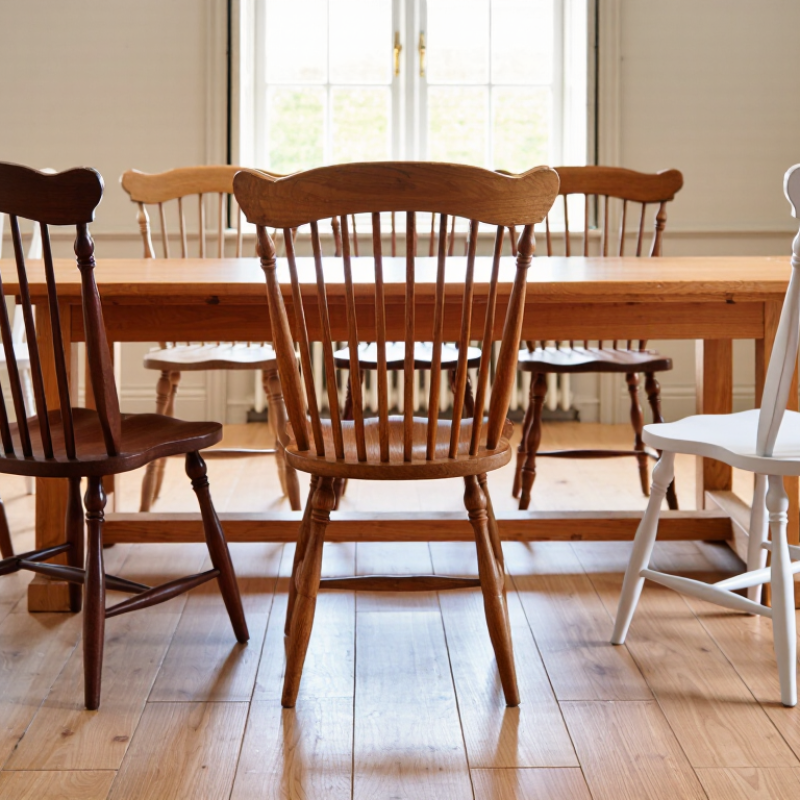
Windsor chairs vary in back shape, arm design, and the way they support the sitter. A comb-back has a tall, tooth-like crest and a clear, upright profile. Fan-back spindles spread outward, while bow-back spindles sit within a curved wooden rail. Hoop-back designs use a rounded frame; sack-back versions pair a broad, shaped back with arms. These forms can look similar in a shop, but their outlines feel quite different around a dining table.

Low-back and high-back Windsors change how much support reaches the shoulders. Rod-back designs use slim, straight spindles for a lighter look. Loop-back chairs curve the back rail into a continuous shape, while continuous-arm designs sweep the arms into the seat’s supporting structure. That joined silhouette feels enclosing, though it may not suit every table height or body. A chair can be beautiful and still feel wrong after ten minutes. Seat depth, arm clearance, and spindle spacing deserve a closer look.

Tips: Measure the table apron and chair seat before buying. Sit for a few minutes, if possible. Check that arms slide beneath the table, and don’t assume a taller back means better comfort.

Top 10 Windsor Style Chairs for Every Home? — Compare 10 Windsor Forms, from Comb-Back to Continuous-Arm Designs

Windsor Form Back and Arm Design Typical Use What Sets It Apart A Good Fit For
Comb-Back A row of upright spindles rises to a broad, horizontal crest rail, creating a comb-like outline. Common in both side chairs and armchairs. Dining rooms, kitchens, and occasional seating. The wide crest rail gives the back a clear horizontal emphasis; the arms, when present, are separate from the crest rail. Homes that need a recognizable traditional Windsor silhouette for everyday seating.
Bow-Back A curved bow-shaped back rail is supported by slender spindles; versions may have arms or be armless. Dining and general-purpose seating. The arcing rail creates a rounded outline. The term can overlap with “hoop-back” in furniture descriptions. Rooms where a softer, curved back profile works better than a wide, straight crest rail.
Fan-Back Spindles spread upward in a radiating pattern beneath an arched crest rail. Dining rooms, parlors, and decorative seating. The fan-like arrangement of the back spindles is its defining visual feature. Interiors that call for a more open, ornamental back design.
Sack-Back A tall, curved back typically combines a broad upper rail with radiating spindles; many examples have arms. Living rooms, parlors, and dining spaces. Its higher, fuller back gives it a more substantial profile than many compact Windsor forms. People who want a traditional armchair with a prominent back.
Continuous-Arm A single bent rail sweeps up from one side, across the back, and down to form the opposite arm, with spindles beneath it. Dining, reading, and general-purpose armchair seating. The continuous rail unites the arms and back in one flowing outline. Rooms that need an armchair with a distinctive, uninterrupted curved profile.
Loop-Back A rounded, loop-shaped back rail frames vertical spindles; some versions include arms. Dining areas and occasional seating. The back rail forms a clear loop around the upper back. Depending on the maker or period, this form may also be described as a bow- or hoop-back. Spaces that suit a compact, rounded back silhouette.
Low-Back A shorter backrest, usually made with a reduced-height rail and a smaller group of spindles. Dining rooms, kitchens, and rooms with limited visual space. The reduced back height creates a less imposing profile; the exact rail shape can vary. Smaller rooms or layouts where a high chair back would interrupt sightlines.
Writing-Arm An armchair form fitted with a small writing tablet, traditionally positioned to one side. Writing, reading, or occasional desk use. The attached tablet distinguishes it from a standard Windsor armchair; tablet placement and shape vary. Study corners or multipurpose rooms where a compact writing surface is useful.
Windsor Rocker A Windsor-style seat and spindle back mounted on curved rockers; the back and arms can follow several Windsor patterns. Relaxed seating in living rooms, bedrooms, and covered porches. The rocker base is the defining feature, rather than one particular back shape. People who want gentle rocking motion and a traditional turned-leg chair profile.
Child’s Windsor A smaller-scale Windsor chair with a solid seat, turned legs, and a spindle back; the back design can vary. Children’s rooms, supervised activities, and small-scale display. It is distinguished by its reduced proportions, not by one specific back pattern. Spaces needing a child-sized traditional chair; check seat height and stability for the intended age.

Note: Windsor names are not always used consistently, and several forms share features. Windsor chairs are commonly recognized by a solid seat with separately fitted legs and back spindles; details vary by period and region.

Examine Craftsmanship: Turned Legs, Bent Bows, and Spindle Joints

Windsor chairs are often recognized by their separate wooden parts, shaped to work together. Turned legs should look balanced, with smooth transitions from the seat to the floor. Check the feet, too: uneven contact can make a chair rock. Small details matter.

The bent bow forms the back’s outline, while slender spindles connect it to the seat. A well-shaped bow feels continuous rather than sharply kinked. Spindle joints deserve close inspection; snug, clean-fitting connections help limit looseness over time. Look closely. A glossy finish may catch the eye, but it cannot make a poorly fitted joint sound. Wood grain and slight variations in turning are normal, and sometimes a chair’s handmade irregularities are part of its appeal. Still, not every uneven detail is charming. That distinction takes judgment.

Tips: Run your fingers lightly along the bow and leg turnings to notice rough spots. Ask how the joints are secured, and test the chair on a level surface. If it creaks or shifts, pause before buying. A quick showroom check is useful, though it cannot predict years of daily wear.

Choose Chair Scale and Style for Different Rooms and Everyday Uses

Top 10 Windsor Style Chairs for Every Home?

Choose a Windsor chair by measuring the room and its everyday use, not just by admiring its spindle back. In a dining room, check the table height and leave roughly 10–12 inches between the seat and the table underside. A compact chair can make a small breakfast nook easier to move through. For long dinners, a shaped seat and supportive back matter more than a delicate profile. Small details count.

Houzz’s 2024 U.S. Kitchen Trends Study reports that 76% of renovating homeowners included an island. That makes it useful to distinguish dining chairs from island seating: standard Windsor chairs suit dining-height tables, while islands usually need counter-height seating. In a bedroom or entryway, one Windsor chair can hold a jacket or offer a place to tie shoes. Measure the chair’s full width, including the arms. A broad spindle back may look airy but still crowd a narrow corner. A perfect match on screen can feel stiff in a real room.

Tips: Mark the chair’s footprint with painter’s tape before buying. Pull it back as someone would during a meal, then check the walkway. If it feels tight, choose a narrower frame—not wishful thinking.

Check Durability Against EN 12520’s 110 kg Adult-Use Benchmark

EN 12520’s 110 kg adult-use benchmark is a useful starting point when comparing Windsor-style chairs, but it does not guarantee lifetime performance. The standard covers specified strength and durability tests for domestic seating, not every kind of use. Check whether the exact chair model was tested and which edition of the standard was used. A sturdy appearance can hide weak joints. If you can, inspect the chair in person: look at the spindle connections, press the seat gently, and listen for creaks.

When comparing ten chairs, consider construction as well as silhouette. Evenly finished wood, firmly seated spindles, and tight joints are useful signs, though visual checks cannot replace test results. Ask whether testing covered the production version; changes in timber or assembly can matter. Think about daily use, too. A chair dragged across tile may loosen sooner than one lifted. I would not treat 110 kg as a recommended user-weight limit; it is a test reference, so check the maker’s stated capacity. A showroom wobble test tells you only so much.

Stay Connected

Sign up today to keep up with the newest information from one of the Southeast’s leading suppliers of fluid handling equipment!