

7 Vegetable Cutter Buying Tips for Global Buyers?

A Vegetable Cutter can shape more than the appearance of a product. It affects preparation speed, cut consistency, labor needs, and the time staff spend cleaning equipment. The stakes are practical: the FAO’s 2019 report, The State of Food and Agriculture, estimated that 14% of food was lost between harvest and retail. That figure does not mean a cutter alone prevents food loss. It does show why careful handling and efficient preparation deserve attention.

For global buyers, a specification sheet is only the beginning. A machine that handles firm carrots may struggle with ripe tomatoes; a fast blade may still produce uneven cubes. Check real throughput, sample cuts, food-contact materials, cleaning access, spare-part availability, and local service support. UNEP’s Food Waste Index Report 2024 estimated 1.05 billion tonnes of food waste in 2022, across households, food service, and retail. The report is not a Vegetable Cutter performance study, but it underscores the value of sound operational decisions. This guide examines seven buying considerations, from blade design to supplier support. Small details matter. A hard-to-remove guard can slow a shift. One limitation: no verifiable, named Vegetable Cutter industry expert quotation was supplied, so this introduction avoids inventing one. Buyers should request references, test samples, and confirm claims before ordering. A little doubt is useful.
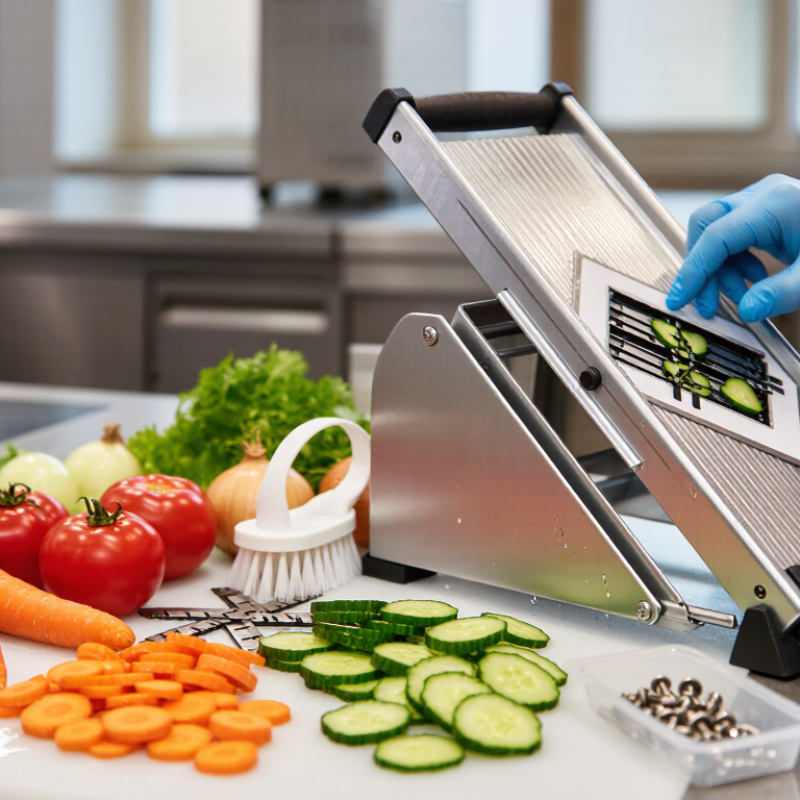
7 Vegetable Cutter Buying Tips for Global Buyers?

Identify Your Processing Needs and Target Vegetables

Before comparing cutters, map the work on an ordinary production day. Record kilograms processed per hour, peak batch size, shift length, and product changeovers. A small kitchen may value quick cleaning over high throughput. A central kitchen may need steady output during a two-hour lunch-prep window. Be specific. “Vegetables” is too broad.

List target vegetables by texture and shape: firm carrots, waxy potatoes, soft tomatoes, leafy cabbage, or long cucumbers. Note whether produce arrives whole, peeled, chilled, or unevenly sized. Carrots and cabbage behave differently. Define the required cuts, such as 3 mm shreds, 8 mm dice, slices, or wedges. Ask whether one machine can make these cuts without frequent blade changes. Test a sample batch, not just a demonstration with ideal produce.

Estimate daily volume, but leave room for busy periods and seasonal changes. Check cut consistency, cleaning access, and how long blade changes take. A tidy spreadsheet can still miss the mess of real prep. Your first estimate may be wrong. That happens. I would revisit the numbers after observing a full shift, especially if staff process several vegetables on the same machine. A short trial with your own produce can reveal uneven cuts or slow feeding before you choose a capacity.


Compare Cutter Types, Capacity, and Output Consistency

A vegetable cutter should match the shape of your ingredients and the pace of your kitchen. Manual models suit small batches and occasional prep, while powered disc cutters handle repeated slicing and shredding. Dicing attachments can save time, but they may need more cleaning between product changes. Check how quickly an operator can switch blades, not just how many cuts the machine offers.

Capacity figures need context. A quoted hourly output may assume evenly sized, firm vegetables and continuous feeding. Your real workload may include peeled potatoes, soft tomatoes, or frequent pauses. Ask suppliers how capacity was measured, and compare it with your expected batch size. A tidy spec sheet can still mislead. It happens.

Output consistency matters just as much as speed. Request sample cuts using vegetables similar to yours, then check thickness, edge quality, and the amount of damaged produce. Small differences can affect cooking time and portion appearance. Inspect several pieces, not only the best-looking one. Also consider feed pressure and blade sharpness; both influence results. A machine that cuts evenly at a modest pace may be more useful than a faster cutter that produces mixed sizes. There is no perfect fit for every kitchen, and that judgment can take a few trials.

Check Materials, Blade Design, and Operator Safety

When comparing vegetable cutters, ask for documented food-contact material specifications, not just “stainless steel” on a sales sheet. Confirm the grade, surface finish, and corrosion resistance, then inspect welds and joints for narrow gaps where moisture or food residue can collect. Removable parts should be practical to clean and reinstall correctly. Small details matter. WHO’s 2015 global estimates report 600 million foodborne illness cases and 420,000 deaths each year; cleanable equipment supports hygiene, though it cannot guarantee safe food on its own.

Blade design affects both cut quality and handling. Check whether blades suit the vegetables and cut sizes you process, and ask how they are sharpened, removed, and replaced. A blade that looks efficient may be awkward to clean. Test it with a real sample if possible. For operator safety, look for guards, stable feeding mechanisms, and interlocks that stop operation when access panels open. Check whether controls are reachable without placing hands near the cutting zone. Also consider grip, loading height, and cleaning procedures during a shift. These points are easy to overlook when buyers focus only on output per hour. Ask for operating and maintenance instructions, and have staff review them; the paperwork may not match every busy workday. (WHO, Estimates of the global burden of foodborne diseases, 2015.)

Verify Certifications, Voltage, and Import Requirements

Before placing a bulk order, request certificates for the exact vegetable cutter model, not just a general product sheet. Check the issuing body, test date, model number, and which parts the certificate covers. A document for the motor may not cover food-contact surfaces. Small detail, big difference. Ask for material declarations and test reports for blades, guards, and removable trays. Verify these against the rules in your destination market; certification marks and requirements vary by country. A polished PDF is not proof by itself, so confirm documents with the issuer or an accredited testing body when possible.

Match the machine’s nameplate to the buyer’s electrical supply. Check voltage, frequency, phase, plug type, and motor rating before shipment. A unit designed for 60 Hz may perform differently on a 50 Hz supply. Ask for a clear photo of the nameplate, not only a catalog specification. Import checks deserve equal care. Confirm the likely tariff classification with a customs broker, and ask which invoices, packing details, origin documents, labels, or food-contact records are required locally. Requirements can change, and I would not treat a supplier’s checklist as final. Small oversights can hold up a shipment.

Assess Supplier Reliability, Product Testing, and Total Cost

For global buyers, a vegetable cutter’s quoted price tells only part of the story. Check whether the supplier provides clear specifications, stable production details, and responsive answers. Ask for recent inspection records or a sample from the same production process. A polished sample is useful, but it does not prove every unit will perform alike. Small details matter.

Tip: Test the cutter with vegetables you actually process, such as firm carrots and soft tomatoes. Record slice thickness, cutting speed, and waste. Run repeated batches, then inspect blades, fasteners, and moving parts. Check how long cleaning takes, too. A test that lasts five minutes may miss problems that appear after regular use.

Compare the total cost, not just the unit price. Include freight, packaging, spare blades, maintenance, and expected replacement costs. Confirm lead times and how the supplier handles defects or delayed shipments. Request written answers; vague promises are hard to act on later. One limitation: buyers may not have time to test every scenario. Choose a practical sample and document what it cannot reveal.

7 Vegetable Cutter Buying Tips for Global Buyers

Suggested evaluation weights for comparing suppliers, product tests, and total cost

How to use this chart: These percentages are a proposed buyer scoring framework, not market survey results. Adjust the weights to fit your product requirements, destination-market regulations, and purchasing priorities. Compare suppliers using documented checks and repeatable product tests.

Stay Connected

Sign up today to keep up with the newest information from one of the Southeast’s leading suppliers of fluid handling equipment!