

Blueberry-Flavored Ice Cream Powder is a dry ingredient blend designed to bring blueberry taste, color, and aroma to ice cream and related desserts. Its exact composition varies by supplier. A formulation may combine fruit powder or flavoring with sweeteners, dairy ingredients, carriers, and color components. The label matters. So does the technical data sheet.
Market context helps explain the appeal. Grand View Research estimated the global ice cream market at USD 79.08 billion in 2023, reflecting strong demand for both familiar and distinctive flavors. That figure describes the broader category, not blueberry powder sales. It should not be treated as proof that one ingredient will succeed in every market.
In practice, the powder must work inside a cold, creamy base. Acidity can sharpen the fruit note, while excess moisture may affect texture or storage stability. A pale mix can also produce a muted shade, even when the aroma seems convincing. Small test batches reveal these issues before full-scale production. Check solubility, flavor strength, color stability, and performance after freezing and storage. Supplier specifications and ingredient declarations can clarify what the powder contains, but tasting remains essential. There is no universal recipe. That is worth remembering. Blueberry character varies by fruit source, processing method, and formulation, so “natural” or “fruit-based” alone does not guarantee a vivid flavor. A careful product description should distinguish flavoring from actual blueberry content.
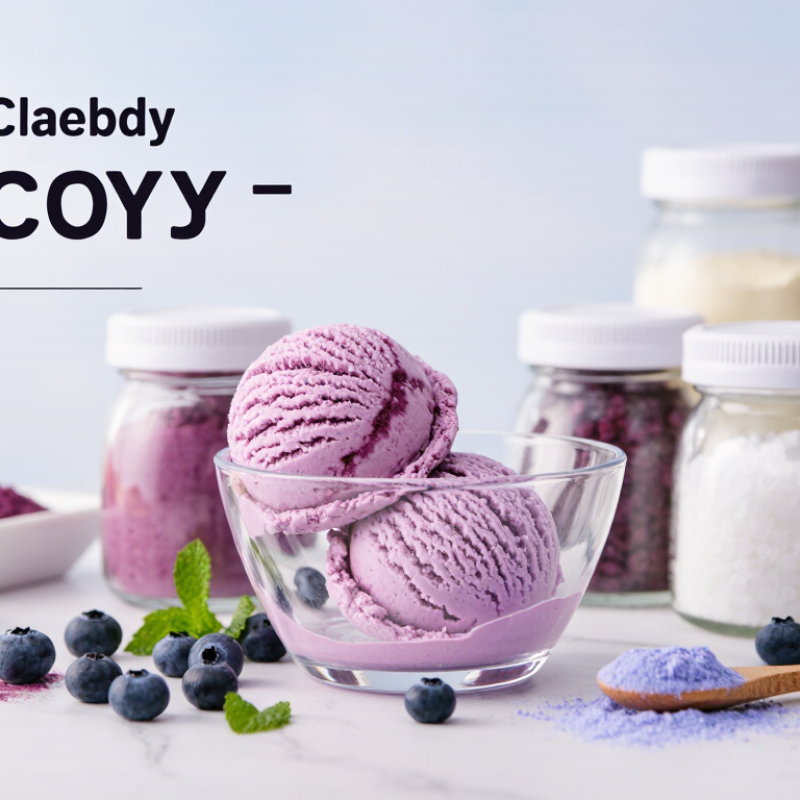
Blueberry-flavored ice cream powder is a dry mix used to add blueberry taste and, sometimes, color to a frozen dessert. It is usually blended with liquid ingredients before churning or freezing. It is not ice cream by itself. The powder’s exact composition varies by product and recipe.
A blend may contain sugar, milk solids, blueberry powder or flavoring, and ingredients that help create a smooth texture. Some mixes also use coloring to give the dessert a stronger purple or berry-pink appearance. The word “blueberry” can sound more literal than it is: it does not always mean the powder contains a large amount of actual fruit. Check the ingredient list for details.
In practical use, the powder should disperse evenly in the liquid. Clumps can leave pale streaks or small pockets of concentrated flavor. Follow the package directions, since water, milk, and cream can produce different richness and texture. Keep unused powder sealed and dry; moisture can make it cake. Small recipe changes matter. A little more liquid may soften the finished dessert, while too much powder can make the berry flavor taste overly sweet or artificial. That balance is easy to miss.

Blueberry-flavored ice cream powder may contain dried blueberry, sugar, milk solids, acidity regulators, and flavoring. The exact blend varies. Freeze-dried or spray-dried blueberry can contribute color, fruit solids, and a tart, jam-like note. USDA FoodData Central lists raw blueberries as approximately 84.2 grams of water per 100 grams. Removing that moisture concentrates the remaining fruit, but drying can also soften fresh-berry aromas.
Some formulations rely on blueberry juice or concentrate, while others use natural flavoring to create a more consistent taste. A powder’s ingredient list matters: “blueberry” may describe the flavor, not a large amount of actual fruit. Milk powder or whey solids help build a creamy base; sugar and carriers help the powder blend evenly. Small details matter. Check whether fruit powder appears near the beginning of the list, and whether added color comes from fruit or another ingredient. USDA’s FoodData Central is useful for comparing raw-fruit composition, but it does not establish how much blueberry a finished powder contains. That part can be easy to miss. The finished taste also depends on the ice-cream mix, since fat and sweetness can mute blueberry’s sharper notes.
Blueberry-flavored ice cream powder is usually a dry blend of sugar, milk solids, flavoring, and ingredients that help control texture. Some formulations include freeze-dried blueberry or spray-dried fruit solids. The exact recipe varies, so the powder’s color and fruit content can differ. A pale violet mix does not necessarily mean it contains more berries.
Making the powder starts with measuring and blending ingredients evenly. Liquid fruit ingredients, when used, may be concentrated and dried before blending to reduce moisture. Manufacturers then sift the mix to break up lumps and package it in moisture-resistant material. Small details matter. A damp spoon can make powder clump before it reaches the freezer.
At home, whisk the measured powder into cold milk or cream until no dry pockets remain. Let the mixture rest briefly so the milk solids and stabilizers can hydrate. Then chill it thoroughly and churn it according to the ice-cream maker’s instructions. The mixture should look smooth before churning. If it feels grainy, whisk again or give it more time; rushing this step can leave an uneven texture. The method is tidy on paper, but kitchens are less obedient. Blueberry flavor may also taste sharper or milder depending on the fruit ingredients and the dairy used.
Blueberry-flavored ice cream powder affects more than taste; it can change the finished dessert’s color and feel. Once dispersed in the dairy mix, fine particles help create an even flavor from scoop to scoop. Small crystals matter.
Goff and Hartel’s technical reference Ice Cream, 7th edition (2023), describes overrun levels of roughly 20–100% across different ice cream styles. More incorporated air generally makes the texture lighter, while lower overrun tends to feel denser. This range is a formulation reference, not a guarantee: fat content, stabilizers, and freezing conditions also shape the result.
Blueberry pigments can respond to acidity and heat, so a powder’s bright color may turn muted or purplish after processing. Taste has trade-offs, too. A higher powder dose may strengthen berry notes, but can also bring extra tartness or a cooked-fruit impression.
Compare measured doses in small batches, then inspect a cut scoop under neutral light after hardening. Keep the mix cold. Record aroma, sweetness, and color separately; visual intensity can mislead. ISO 13299:2016 sensory-analysis guidance supports using defined attributes and controlled conditions for repeatable comparisons.
Powder has limits. It may not capture the character of fresh berries.
Blueberry-flavored ice cream powder is a dry ingredient used to add berry flavor and color to frozen desserts. Depending on its formulation, it may contain flavoring, sweeteners, fruit solids, or coloring. Follow the supplier’s directions for the amount of powder and liquid; too much can make the base overly sweet or leave a powdery taste. Whisk it into the liquid gradually, then chill the mixture before churning. A small test batch helps. The first result may taste flatter than expected, so adjust carefully rather than adding a large amount at once.
Tips: Keep the powder in a tightly closed, food-safe container. Store it in a cool, dry place away from sunlight, steam, and strong odors. Use a clean, completely dry scoop. Moisture can cause clumps and may affect how evenly the powder blends.
Check the package for storage instructions, ingredient details, and any applicable allergen information, since recipes differ. Avoid leaving the container open beside a warm ice-cream machine or a sink. If clumps appear, do not assume they will dissolve during churning; sift the powder or mix it with a little liquid first. Clean utensils and preparation surfaces before use, especially when making several flavors. Labeling the container with its opening date can also help with stock rotation, though the package’s stated shelf life should guide use.
Sign up today to keep up with the newest information from one of the Southeast’s leading suppliers of fluid handling equipment!