
The umbrella manufacturer began as a small workshop focused on practical rain protection. Early production relied on manual cutting, basic stitching, and repeated fitting by hand. Workers tested each frame through opening cycles and outdoor use. These simple checks revealed weak ribs, loose handles, and fabric that leaked at the seams.
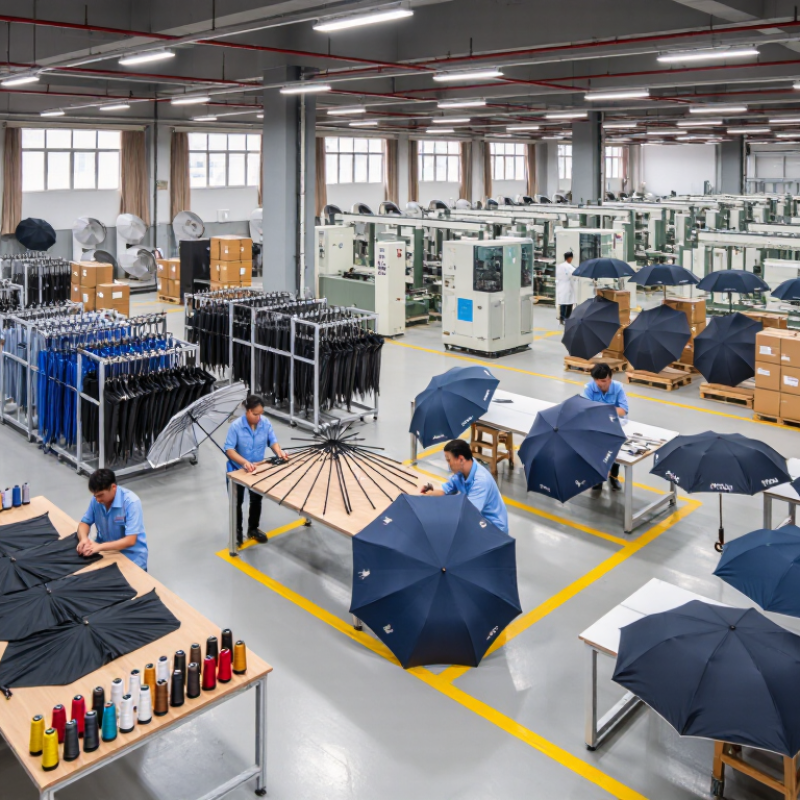
As demand increased, the company developed a more organized production system. It added material inspection, sample approval, and batch records for key components. Steel ribs were checked for alignment, while canopy fabric was examined under bright light for pinholes. Small changes followed customer feedback. A stronger runner improved opening control. A reinforced joint reduced breakage during windy weather.
Progress was not perfectly smooth. Some early designs looked attractive but felt heavy after several minutes. Others opened easily but lacked enough frame strength. These failures influenced later development. The manufacturer gradually balanced weight, durability, appearance, and production cost. Its technical team now evaluates umbrellas through repeated opening tests, water-resistance checks, and handle inspections. Suppliers are also reviewed for consistency, not only price.
The development history shows practical learning. It was built through adjustments. Yet one limitation deserves attention: laboratory tests cannot reproduce every storm or daily habit. Real users may carry umbrellas in crowded streets, leave them damp, or store them carelessly. Continued field feedback remains essential for responsible product improvement.