
China Top Fountain Pump Manufacturers Which One Is Best?
Choosing among China’s top fountain pump manufacturers is not a simple price comparison. A reliable fountain pump must match the project’s water volume, lift height, operating hours, and installation environment. A small garden feature needs different performance from a hotel entrance, shopping mall, or public plaza.
Industry consultant Elena Marquez offers a practical reminder: “The best pump is the one that delivers stable flow after installation, not the one with the biggest label.” This principle matters when comparing Chinese suppliers. Factory experience, motor efficiency, stainless-steel construction, seal quality, noise control, and production consistency deserve close attention. A polished catalog cannot replace technical evidence.
Real evaluation begins with details. Ask for flow-rate curves, head-height data, energy specifications, waterproofing information, and test reports. Check whether the manufacturer supports customized voltage, fountain nozzles, timers, and control systems. Warranty terms also reveal confidence. Responsive after-sales service can prevent a dry basin, overheated motor, or costly installation delay.
Several Chinese manufacturers have strong export experience and competitive production capabilities. Yet “top” does not mean identical. Some excel at compact submersible pumps. Others focus on large architectural water features or energy-saving systems. No ranking is flawless. Product quality may vary between models, batches, and distributors.
This guide compares leading fountain pump manufacturers through performance, reliability, customization, certifications, customer support, and value. The final choice should reflect the complete project, not a tempting unit price. A cheaper pump may become expensive when replacement requires draining an entire fountain.
What Makes a Fountain Pump Manufacturer Stand Out in China
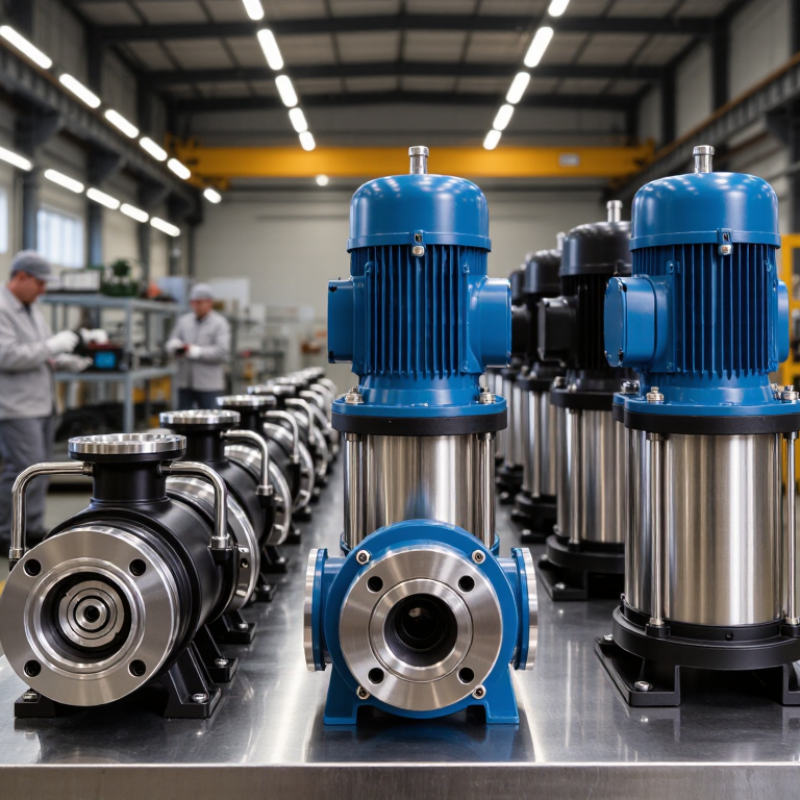
A standout fountain pump manufacturer in China offers more than a low quotation. It shows tested performance, stable production, and clear engineering records. Grand View Research estimates that the global water pumps market will grow at about 5.5% annually from 2024 to 2030. This growth increases competition, but not every supplier has equal technical depth.
Look for measured flow, lift, wattage, noise, and operating temperature. A reliable factory should provide test results from repeated production batches, not only a laboratory sample. It should also explain impeller materials, shaft sealing, insulation grade, and protection against dry running. Small details matter. A pump that loses flow after several months can damage an entire fountain design.
Energy use deserves close attention. The International Energy Agency reports that electric motor systems consume roughly half of global electricity. Therefore, efficient pump selection can reduce long-term operating costs. Ask for efficiency data at the exact working height, because catalog figures often show ideal conditions. Some manufacturers communicate well but document poorly. That weakness should not be ignored. ISO 9001 certification, traceable component records, and practical warranty terms can improve purchasing confidence, although certificates alone cannot prove field reliability.
Request a sample and operate it continuously with clean water before placing a large order. Check vibration, cable flexibility, restart behavior, and sound at one meter. A professional manufacturer welcomes these questions and explains limitations honestly. That response often reveals more than a polished brochure.
China Top Fountain Pump Manufacturers Which One Is Best? - What Makes a Fountain Pump Manufacturer Stand Out in China
An objective comparison framework based on measurable product specifications, recognized standards, manufacturing capability, and after-sales support. Company and brand names are intentionally omitted.
| Evaluation Dimension | Strong Industry Benchmark | Why It Matters for Fountain Projects | Recommended Verification Evidence |
|---|---|---|---|
| Flow Rate and Head Performance | Published performance curves showing flow rate at different head heights, rather than a single maximum-flow figure. | Actual fountain output depends on both water flow and vertical lift. A pump with a high free-flow rating may deliver considerably less water at the required operating height. | Request a technical datasheet, pump curve, operating point, test medium, rated voltage, and frequency. Confirm performance at the customer’s required head height. |
| Motor Efficiency | Efficient permanent-magnet or brushless motor designs with clearly stated input power and operating conditions. | Higher efficiency can reduce operating electricity costs and heat generation, especially when a decorative fountain operates for long periods. | Compare watts at the same flow and head. Request measured efficiency data or an independent test report instead of relying only on marketing claims. |
| Ingress Protection | An IP68 rating where the pump is designed for continuous submersion under the manufacturer’s specified conditions. | Submersible fountain pumps operate in wet environments. A suitable enclosure rating helps protect electrical parts from dust and water ingress. | Check the IP test report and the exact test conditions. IP68 does not define one universal immersion depth or time; those conditions must be specified by the manufacturer. |
| Electrical Safety | Design and testing aligned with applicable pump safety requirements, including IEC 60335-2-41 where relevant. | Proper insulation, grounding, sealing, thermal protection, and leakage-current control reduce electrical and operational risks. | Request electrical safety test records, insulation-class information, thermal-protection details, wiring diagrams, and applicable market conformity documentation. |
| Material Selection | Corrosion-resistant wetted parts, with material selection matched to fresh water, chlorinated water, salt exposure, and water chemistry. | Material compatibility affects service life, appearance, blockage risk, and resistance to corrosion. Stainless steel grades are not equally suitable for every environment. | Obtain a bill of materials for the impeller, shaft, housing, fasteners, seals, and cable. For chloride-rich environments, ask whether higher corrosion-resistant materials are required. |
| Continuous-Duty Capability | A stated continuous-duty rating supported by thermal testing at the intended ambient temperature and water conditions. | Decorative installations may run for many hours each day. Thermal overload can shorten motor, seal, and electronic-component life. | Verify duty classification, maximum ambient temperature, minimum water level, cooling requirements, dry-run protection, and automatic thermal reset behavior. |
| Noise and Vibration Control | Balanced rotating parts, stable bearings, vibration isolation, and a published noise target when acoustic performance is important. | Noise from a pump can be noticeable in hotels, gardens, retail spaces, restaurants, and residential installations. | Request noise and vibration test conditions. Confirm whether measurements were taken in water, in air, or as structure-borne vibration, because results are not directly interchangeable. |
| Debris and Maintenance Design | Removable intake screens, accessible impellers, replaceable wear parts, and clear cleaning instructions. | Leaves, algae, sand, and mineral deposits can reduce flow or cause blockage. Simple maintenance lowers downtime and service cost. | Review exploded drawings, spare-parts lists, cleaning procedures, minimum particle-size limits, and the availability of replacement impellers, seals, and covers. |
| Quality Management | Documented production controls, incoming-material inspection, process testing, and final functional testing for every production batch. | Consistent quality is more important than a strong prototype. Process control helps reduce leakage, electrical, flow-performance, and assembly defects. | Ask for the quality-management certificate, inspection plan, test records, defect-handling process, calibration records, and sample traceability. |
| Regulatory Compliance | Appropriate market-specific documentation, such as CE conformity for applicable European requirements and RoHS compliance where applicable. | Compliance documentation supports legal import, product registration, retailer requirements, and safer market deployment. | Verify the Declaration of Conformity, technical file references, test reports, product model numbers, and whether the documents match the exact pump version supplied. |
| Customization Capability | Engineering support for voltage, frequency, cable length, connectors, outlet fittings, control systems, packaging, and private-label requirements. | Fountain projects often require non-standard cable lengths, fittings, flow targets, timers, lighting integration, or regional electrical configurations. | Request drawings, engineering-change procedures, prototype samples, tooling terms, minimum order quantities, and written confirmation of all customized specifications. |
| Supply and Production Capacity | Stable component sourcing, defined production lead times, batch traceability, and capacity aligned with the buyer’s forecast. | Reliable supply reduces project delays and makes repeat orders more consistent across different production batches. | Conduct a factory audit or independent inspection. Review production equipment, test stations, capacity planning, lead-time history, and backup suppliers for critical components. |
| Warranty and Technical Support | Clearly written warranty terms, troubleshooting procedures, spare-parts support, and responsive engineering communication. | A fountain pump is a service component. Clear support terms help determine the total cost of ownership after installation. | Confirm warranty duration, exclusions, required installation conditions, response time, replacement policy, spare-parts pricing, and technical support channels. |
| Total Cost of Ownership | A balanced evaluation of purchase price, energy consumption, service life, maintenance, spare parts, and failure-related downtime. | The lowest initial quotation may not be the most economical option if the pump consumes more power or requires frequent replacement. | Compare lifecycle cost using the same flow, head, operating hours, electricity rate, expected service interval, warranty terms, and replacement-pump price. |
Note: Product ratings and test results should always be checked against the exact model, voltage, frequency, accessories, and intended installation conditions. A manufacturer stands out when its published specifications can be independently verified and consistently reproduced in production.
Related Posts
-

Unlocking the Secrets: How Fountain Pumps Transform Your Garden Oasis
-

How to Choose the Best Fountain Pump for Your Garden Pond
-

Best Garden Irrigation Systems for 2025 Top Tips and Recommendations
-

Ultimate Guide to the Best Outdoor Grill Station: 5 Key Specifications You Must Know
-

Exploring Unique Alternatives to the Best Outdoor BBQ Kitchen for Your Culinary Adventures
-
7 Secrets to Selecting the Best Sprinkler System Installation for Your Landscape





Stay Connected
Sign up today to keep up with the newest information from one of the Southeast’s leading suppliers of fluid handling equipment!