
Choosing a Beach Soccer Field can transform an ordinary sports project into a lively community destination. Sand creates a distinctive playing experience, supports quick movement, and reduces impact during falls. It also gives spectators a relaxed setting, with sunlight, music, and visible action close to the touchline.
FIFA’s Beach Soccer Laws of the Game define the sport’s technical requirements, including field dimensions, markings, playing surface, and safety considerations. These standards help designers plan a credible facility rather than simply spreading sand over unused land. FIFA’s Beach Soccer World Cup UAE 2024 reporting also showed the sport’s international reach, with elite matches attracting strong global attention. Meanwhile, the SFIA 2024 Topline Participation Report identifies soccer as a major participation sport in the United States. That wider demand supports investment in flexible soccer spaces, although it does not guarantee local success.
Angelo Schirinzi, a former Swiss beach soccer coach and recognized FIFA technical expert, has described beach soccer as “a sport where anything can happen.” That unpredictability is part of its appeal. It also demands careful planning. Sand depth, drainage, wind exposure, lighting, ball containment, and wheelchair access all affect daily usability. A poorly drained field can become heavy after rain. In hot climates, surface temperature may discourage afternoon bookings.
The best project combines sport, comfort, and maintenance discipline. Operators should study local participation data before construction. They should also budget for sand replacement and routine grooming. These details are easy to overlook. The field may look simple, but its performance depends on thoughtful engineering and honest post-occupancy review.
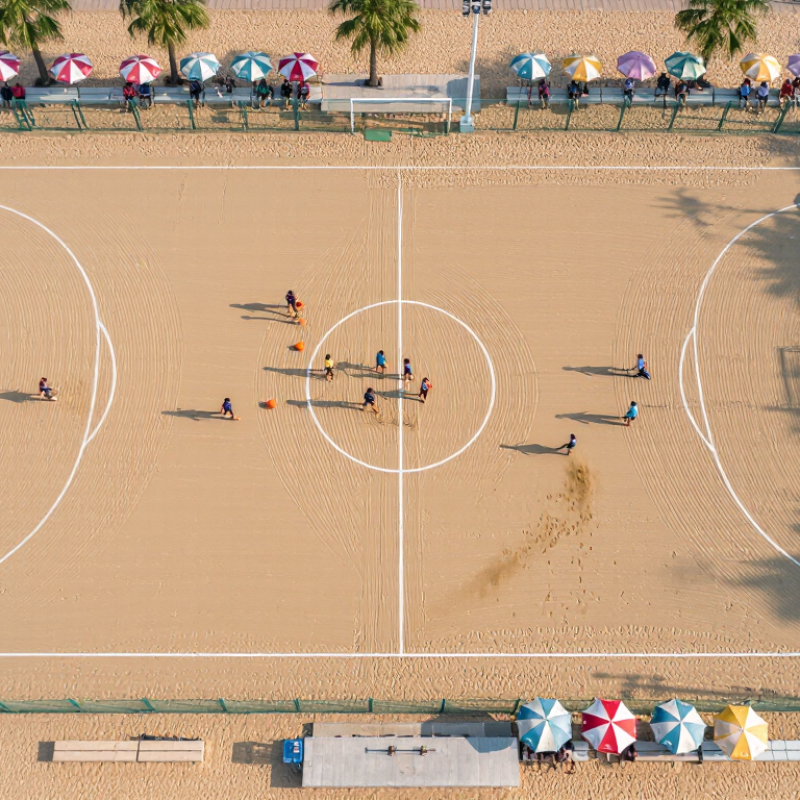
A beach soccer field is a marked playing area covered with clean, level sand. It is smaller than a traditional football field, allowing fast play and closer player interaction. The FIFA Beach Soccer Laws of the Game 2024–25 specify a field length of 35–37 metres and a width of 26–28 metres. The surface should contain at least 40 centimetres of fine sand, without stones, shells, or sharp debris.
These measurements make beach soccer practical for resorts, schools, community parks, and multi-use sports developments. A compact field requires less land, while the sand supports barefoot movement and reduces hard-impact contact. The same FIFA regulations set the goal size at 5.5 metres wide and 2.2 metres high. That proportion creates visible scoring chances from almost every area.
Demand also deserves attention. The 2024 SFIA Topline Participation Report recorded 242.4 million Americans participating in at least one sport or fitness activity during 2023. This figure suggests strong interest in accessible outdoor facilities, but it does not guarantee local demand. That assumption needs testing. Review climate, drainage, maintenance access, and nearby population patterns before construction. Sand can shift after heavy rain. Wind can also change the surface within hours. A field may look ready, yet fail during actual training. Experienced planners should test sand depth, compaction, drainage, and player comfort before approving the final design.

A beach soccer field can give a sports project a strong visual identity and flexible community value. Its open layout supports tournaments, training sessions, school activities, and casual play. Players also develop balance and leg strength because sand changes every movement. The surface feels demanding at first. That challenge can improve conditioning when training is planned carefully.
Good project planning begins with the ground beneath the sand. A stable base, suitable drainage, and clean, properly graded sand are essential. Deep, uneven sand may increase fatigue and cause avoidable injuries. Designers should review local weather, water flow, access routes, lighting, and maintenance needs before construction. A qualified sports-surface professional can test materials and confirm whether the design suits regular use.
The field can also reduce long-term landscape pressure when built on an appropriate site. Permeable sand manages light rain naturally, although heavy storms still require thoughtful drainage. Fencing, shaded seating, and nearby changing areas improve daily usability. These details often influence user satisfaction more than the playing surface itself. It is not a perfect choice for every project. Sand replacement, wind control, and frequent leveling require labor and budget. A practical plan should measure those costs honestly, rather than relying on the field’s attractive appearance alone.
Beach soccer demands more than an attractive layer of sand. FIFA’s Beach Soccer Laws of the Game 2024–25 specify a field length of 35–37 metres and a width of 26–28 metres. The same regulations require fine, level sand, free from stones and shells, with a minimum depth of 40 centimetres. These measurements influence excavation, material volume, drainage, and maintenance costs.
A reliable construction plan starts below the playing surface. Install a stable sub-base, separation geotextile, and drainage channels before placing washed sand. Water should leave the field quickly, but not erode the edges. Slightly raised borders can help, although poorly designed borders may create trip risks. Goals need secure anchoring, clear visibility, and safe clearance zones. Night facilities also require uniform lighting, because harsh shadows can affect player movement.
The World Health Organization’s Global Status Report on Physical Activity 2022 states that 31% of adults and 80% of adolescents do not meet recommended activity levels. A well-designed beach soccer field can support regular, accessible participation. It should include shaded seating, drinking-water points, accessible routes, and storage for maintenance tools. Small details matter.
I would not trust a drawing alone. On-site sand testing, drainage trials, and seasonal inspections can reveal problems early. A field may look perfect at opening, yet compacted sand and blocked drains can change play within months.
Why Choose a Beach Soccer Field for Your Sports Project?
Safety, Maintenance, and Operating Requirements
A beach soccer field can create an active, flexible sports environment, but its safety depends on careful planning. Use clean, compact sand with a consistent depth, usually around 30 to 40 centimeters. Uneven areas can twist ankles or hide sharp objects. Inspect the surface before every session. Remove stones, glass, litter, and damaged equipment immediately.
The field should have clear boundary lines, stable goal frames, and well-protected anchors. Goal posts must not shift when players collide with them. Provide shaded rest areas, drinking water, and visible first-aid supplies nearby. In hot weather, schedule demanding activities during cooler hours. Staff should monitor heat stress, especially among children and older participants.
Maintenance is simple only when it is regular. Rake high-use zones, refill displaced sand, and check drainage after heavy rain. Salt, moisture, and wind can weaken metal fittings over time. Keep inspection records, even for small repairs. They reveal repeated problems that memory often misses. Operating rules should cover footwear, player limits, weather closures, and equipment storage. In practice, plans are rarely perfect. A field may need seasonal adjustments after observing real player movement, sand loss, and local weather patterns.
Safety, maintenance, and operating requirements are easier to plan when the field is designed around recognized beach soccer specifications.
Key safety and operating considerations
The chart presents internationally recognized beach soccer field dimensions. Local building codes, safety regulations, weather conditions, and venue capacity should also be reviewed during project planning.
A successful beach soccer facility begins with a clear use plan, not a pile of imported sand. Decide whether the field will host training, tournaments, schools, or community sessions. Each purpose affects field size, seating, lighting, and storage. Visit the site at different times of day. Observe wind, shade, drainage, and nearby noise. These details often shape the real budget.
Choose clean, stable sand with enough depth for safe movement and controlled sliding. Poor sand can hide sharp debris, retain water, or become too compact. A slight foundation slope and reliable drainage help after heavy rain. Install strong perimeter netting, visible entry points, and padded goal areas.
Players need space beyond the touchlines. They also need shaded rest areas, drinking water, toilets, changing rooms, and basic first-aid supplies.
Plan lighting with glare control, especially if evening matches are expected. Keep light poles outside active playing zones and inspect them regularly. Test the surface before opening. Walk across it, check soft spots, and ask players for honest feedback. Our first layout might look efficient on paper, yet create crowded circulation near the benches. That mistake is useful. Revise the plan before construction hardens it. Set a maintenance schedule for raking, sand replacement, net repairs, waste removal, and drainage checks. Train staff to record small problems, because loose anchors and blocked drains rarely stay small. Consult qualified engineers and local safety officials before final approval.
Sign up today to keep up with the newest information from one of the Southeast’s leading suppliers of fluid handling equipment!