

Why Choose Spunlace Fabric for Global Sourcing?
Global sourcing demands more than a competitive price. It requires stable quality, clear documentation, and dependable communication. Spunlace Fabric offers a practical balance for manufacturers serving hygiene, medical, cleaning, and industrial markets. Its nonwoven structure is formed by entangling fibers with high-pressure water. This process can create a soft surface, useful strength, and comfortable handling. A well-made roll should unwind evenly, with consistent thickness across its width. Small variations can affect cutting, sealing, absorbency, and final product performance. I have seen buyers overlook these details when comparing quotations. The cheaper option was not always cheaper after production began. That lesson remains important.
Reliable suppliers should provide measurable specifications, including basis weight, width, fiber composition, tensile strength, and absorption data. Samples should be tested under conditions that reflect actual use. Ask how the factory controls moisture, dust, packaging, and batch identification. A clear inspection report builds confidence before shipment. Spunlace Fabric can also support different product designs through blending, embossing, perforation, or lotion application. These features require technical coordination, not simple price negotiation. Certifications may support purchasing decisions, but buyers should verify their scope and validity. Paperwork alone cannot replace factory evaluation.
Sourcing is rarely perfect. Forecasts change. Shipment schedules move. A dependable partner responds with evidence, not vague promises. Buyers should compare trial results, production capacity, communication speed, and corrective-action records. The best choice may not be the lowest offer. It is the supplier that can repeat the required performance, explain limitations honestly, and improve when problems appear.
What Is Spunlace Fabric and How Is It Made?
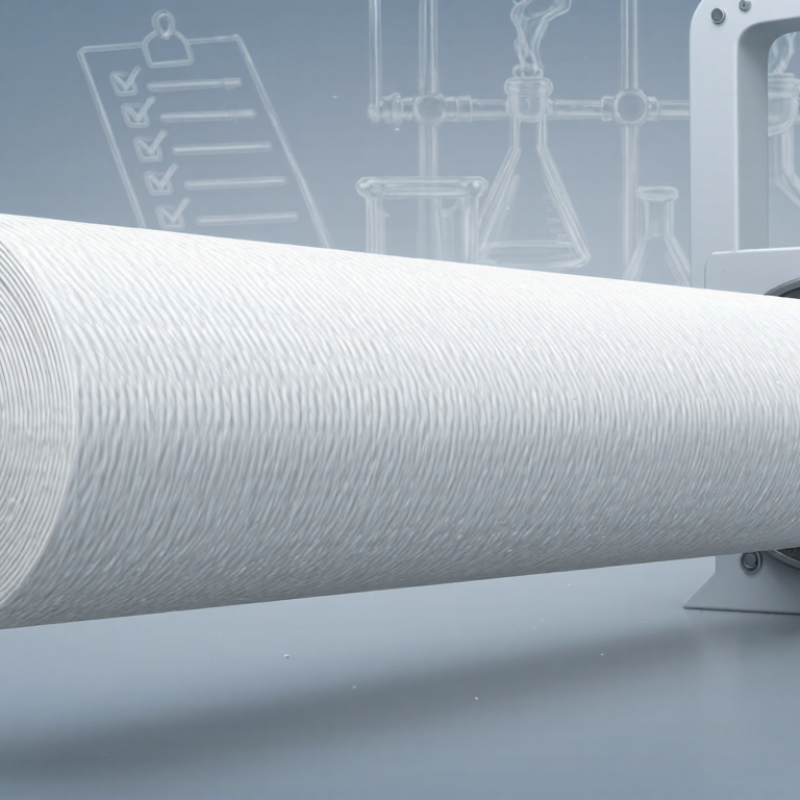
Spunlace fabric is a nonwoven material made by entangling loose fibers with high-pressure water jets. Unlike woven cloth, it does not rely on yarns crossing at right angles. The process begins with fiber preparation, often using viscose, polyester, cotton, or blended materials. Fibers are opened, mixed, and formed into a soft web. Then, fine water streams pass through the web repeatedly. The fibers twist around each other and create strength without traditional stitching.
After hydroentanglement, the fabric moves through dewatering and drying equipment. Some products receive embossing, lotion treatment, or antimicrobial finishing, depending on their intended use and regulatory requirements. Weight, thickness, absorbency, softness, and tensile strength must be tested carefully. A fabric may feel smooth but still show weak wet strength. That detail can change purchasing decisions.
For global sourcing, buyers should review fiber content, production consistency, test reports, and factory quality controls. I have found that small differences in water pressure can affect surface uniformity and lint levels. Sampling remains essential. A specification sheet cannot show every practical issue. Check roll edges, odor, moisture, and packaging before approving a larger order. Spunlace is efficient and versatile, but it is not automatically suitable for every application. Some blends improve durability, while others reduce softness. The right balance often requires several trials and a little honest reconsideration.
Why Choose Spunlace Fabric for Global Sourcing? - What Is Spunlace Fabric and How Is It Made?
| Data Dimension | Spunlace Fabric Data | Why It Matters for Global Sourcing |
|---|---|---|
| Basic Definition | A nonwoven fabric made by entangling fibers with high-pressure water jets rather than by weaving or knitting. | The process creates a textile-like sheet without yarn preparation, loom setup, or knitting operations. |
| Typical Fiber Inputs | Viscose or rayon, polyester, polypropylene, cotton, wood pulp, and blends of these fibers. | Fiber selection can be matched to absorbency, softness, strength, cost, compostability goals, and end-use requirements. |
| Manufacturing Stage 1: Fiber Preparation | Staple fibers are opened, blended, and carded. Pulp-based materials may be added through an airlaid or wetlaid forming process. | Consistent blending supports uniform color, basis weight, absorbency, and performance across production lots. |
| Manufacturing Stage 2: Web Formation | Fibers are arranged into a web, commonly by carding and cross-lapping. The web is held together temporarily before hydroentanglement. | Web formation affects thickness, tear behavior, tensile balance, and the final fabric’s uniformity. |
| Manufacturing Stage 3: Hydroentanglement | Fine water jets pass through the fiber web from one or both sides, causing the fibers to intertwine mechanically. Industrial systems commonly operate across a broad pressure range, approximately 30–200 bar, depending on the product. | Jet pressure, nozzle design, line speed, and number of passes influence softness, strength, aperturing, and surface texture. |
| Manufacturing Stage 4: Water Removal and Drying | The entangled web is dewatered, dried, and sometimes thermally treated or finished before winding. | Efficient water recovery and drying help control energy use, production speed, fabric moisture, and dimensional stability. |
| Common Basis-Weight Range | Approximately 20–250 g/m² is commonly encountered across wipes, hygiene materials, medical products, filtration media, and industrial applications. | Basis weight should be selected according to required absorbency, coverage, strength, drape, and shipping cost. |
| Bonding Method | Mechanical fiber entanglement; no adhesive binder is inherently required for the basic spunlace structure. | The absence of a mandatory chemical binder can support a soft hand feel and reduce binder-related formulation constraints. |
| Hand Feel and Drape | Generally soft, flexible, and textile-like; performance varies with fiber type, web structure, embossing, and finishing. | Suitable for products that contact skin or require conformability, including wipes, personal-care materials, and medical disposables. |
| Absorbency | High absorbency can be achieved with hydrophilic fibers such as viscose, rayon, cotton, or pulp. Polyester and polypropylene are naturally hydrophobic unless modified. | Fiber composition and surface treatment should be specified when liquid uptake, retention, or rapid wetting is critical. |
| Strength and Tear Behavior | Strength depends on fiber type, fiber length, basis weight, web orientation, jet energy, and finishing. Cross-lapped webs can provide balanced machine-direction and cross-direction performance. | Request machine-direction and cross-direction test results rather than relying only on an average tensile value. |
| Wet Strength | Can be good when synthetic fibers or suitable fiber blends are used. Cellulosic fibers may lose strength when wet unless the structure or finish is engineered for wet use. | Wet tensile and wet tear testing are essential for wipes, cleaning cloths, filtration products, and medical applications. |
| Surface Options | Smooth, embossed, perforated, apertured, printed, laminated, or chemically finished surfaces are available depending on the production line. | Surface design can improve cleaning efficiency, liquid distribution, appearance, grip, or filtration performance. |
| Sewing and Converting | Can be slit, laminated, perforated, die-cut, folded, or converted into rolls, sheets, pads, and shaped components. | A wide converting range helps reduce the need for additional textile processing steps in different markets. |
| Typical Applications | Wet wipes, dry wipes, cosmetic pads, medical gowns and drapes, wound-care materials, filtration media, hygiene components, automotive materials, and household cleaning products. | One material platform can serve multiple product categories when the fiber blend, basis weight, finish, and packaging format are adjusted. |
| Sustainability Considerations | The fabric itself is not automatically biodegradable or flushable. End-of-life behavior depends on fiber composition, additives, product construction, and local waste systems. | Specify recycled content, renewable fibers, biodegradability claims, wastewater management, and disposal instructions separately and verify each claim with testing. |
| Quality-Control Parameters | Basis weight, thickness, moisture content, tensile strength, elongation, tear strength, absorbency, lint, color, odor, roll width, and defect rate. | A clear specification sheet makes samples, production lots, and shipments easier to compare across regions. |
| Relevant Test Standards | Commonly used methods include ISO 9073 series and ASTM nonwoven-textile methods for mass per unit area, thickness, tensile properties, tear, absorbency, and related characteristics. | Using recognized methods improves comparability between laboratories, suppliers, and destination markets. |
| Global Sourcing Advantage | Spunlace can be engineered across a broad range of fiber blends, weights, textures, widths, and finishing options. | Buyers can source a product configured for local regulations, climate, application performance, packaging, and target cost without changing the basic bonding technology. |
| Note: The ranges and performance descriptions above are typical industry references, not universal specifications. Actual results vary with fiber type, blend ratio, web-forming method, hydroentanglement settings, finishing chemistry, and testing conditions. Final purchasing decisions should be based on an approved specification, representative samples, and third-party or in-house test reports. | ||





Stay Connected
Sign up today to keep up with the newest information from one of the Southeast’s leading suppliers of fluid handling equipment!