How to Choose the Right Fountain Pump?
Choosing the right fountain pump begins with the fountain itself, not the biggest number on a product label. A small ceramic bowl needs far less circulation than a tall, multi-tier feature. Yet both need enough flow to create the water pattern you want. Too little flow can leave the display weak. Too much can splash water over the basin and lower its level.
Start by checking the fountain’s recommended flow rate and the height water must travel. Pump capacity usually drops as lift height increases, so compare the manufacturer’s flow chart at your actual height. Measure from the water surface to the outlet, and account for bends or narrow tubing. Small details matter. A pump rated for high flow at zero lift may perform quite differently in your setup.
Then consider practical fit: pump dimensions, inlet size, debris handling, and whether the unit is suitable for its intended location. A washable intake screen can help when leaves or grit collect in the basin. A quiet pump helps. Check power needs and care instructions before buying, and make sure the pump can be reached for cleaning. There is no single perfect choice; real flow can vary with tubing, water level, and buildup. If possible, choose a model with adjustable flow, then test it and make small changes. This guide explains how to compare pump capacity, lift, fountain size, and maintenance needs so your choice is based on the whole setup, not one impressive specification.
Identify Your Fountain Type and Its Water Requirements
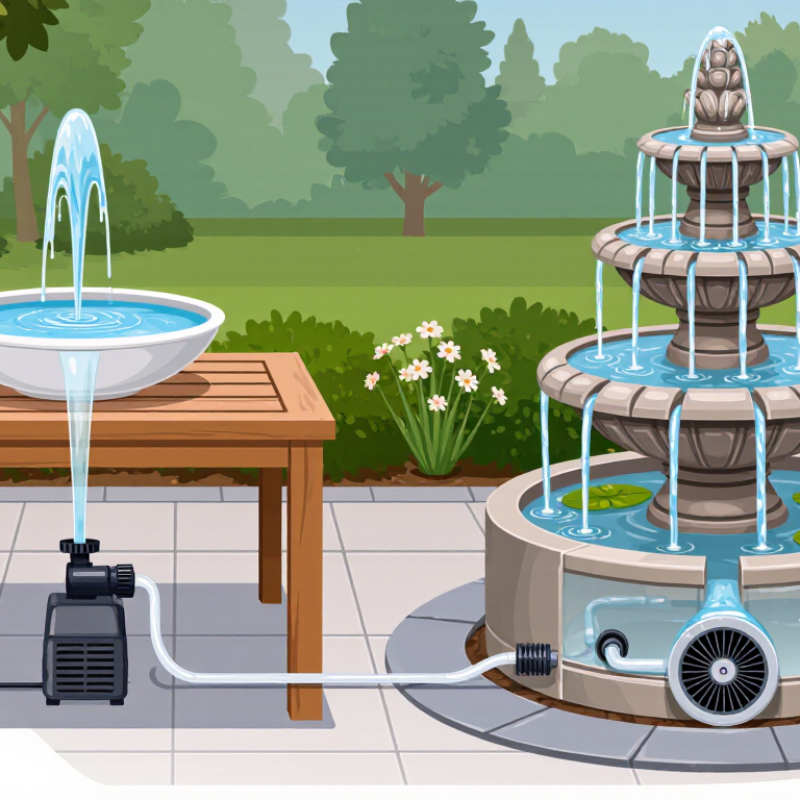
A compact birdbath fountain needs a different pump from a tall, tiered feature. Start by identifying how water moves: a gentle bubbling plume, a narrow upward jet, or a steady spill between bowls. Each pattern needs a different flow rate. A small basin can overflow or splash heavily if the pump pushes too much water. Small details matter.
Measure the vertical distance from the water surface to the outlet. This is the pump’s lift requirement, often called head height. Check the pump’s flow chart at that height, not just its maximum flow rate. Tubing length, narrow fittings, and bends can reduce the water reaching the fountain. A pump that looks powerful on paper may produce only a weak stream once installed.
Also consider the basin’s capacity and how quickly water evaporates or splashes out. Some fountains need a minimum water depth to keep the pump submerged; running it dry can cause damage. Match the pump’s intake and outlet to the available space, and choose a flow you can adjust if possible. Exact measurements help, but they are not perfect: real flow can differ after setup. Test the fountain, watch for uneven spilling, and make small adjustments before leaving it running unattended.
Calculate the Required Flow Rate and Lifting Height
Choosing a fountain pump starts with two measurements: required flow rate and lifting height.
Flow rate is the volume delivered per hour, usually shown in litres per hour or gallons per hour. Match it to the fountain’s outlet or nozzle, not just the pond’s size. A narrow spout may look lively with modest flow, while a wide spillway needs more water. If the nozzle guidance is unavailable, test the desired effect with a temporary hose and adjustable flow.
Next, measure lift height from the pump’s water surface to the highest point where water exits.
If the outlet sits 60 centimetres above the water, the pump must overcome at least that vertical distance. Add resistance from long tubing, narrow pipe, bends, and filters. These details matter. A pump rated for a high flow at zero lift may deliver much less at your actual height. Check its performance chart at the calculated lift, and select a model that still meets your target flow there.
A bucket test can help verify the setup:
time how long the outlet takes to fill a measured container, then convert that result to an hourly rate. For example, 10 litres in one minute equals about 600 litres per hour. This estimate is not exact; real plumbing can behave differently, and I would leave some adjustment room. A flow-control valve can reduce excess output, but it cannot make an undersized pump lift more water.
Check Energy Use, Materials, and Maintenance Needs
How to Choose the Right Fountain Pump?
Check Energy Use, Materials, and Maintenance Needs
A pump’s flow rate matters, but so does the height water must rise. Check its flow rating at your fountain’s actual lift height, not just the maximum listed on the package. A pump running for hours each day can add noticeably to energy use. Compare wattage, then consider how often you’ll operate it. Small details matter.
Choose materials suited to constant water contact and outdoor exposure. Corrosion-resistant components can help a pump last longer, especially where water contains minerals or the fountain faces changing weather. Match the pump to the basin, too: a small reservoir may need more frequent refilling as water circulates and evaporates. I’ve found that a technically powerful pump can still feel like the wrong choice if it splashes beyond the basin.
Maintenance should be realistic for your routine. Look for an accessible intake screen and a design you can lift out without dismantling the fountain. Clear leaves and algae regularly, and rinse the intake when flow weakens. Mineral deposits may need gentle cleaning, following the pump’s care instructions. I sometimes underestimate how quickly debris gathers outdoors; a quick weekly check is easier than troubleshooting a weak stream later.
Match the Pump to Your Budget and Installation Conditions
A fountain pump should fit the real installation, not just the price tag.
Measure the height from the water surface to the fountain outlet, then check the pump’s flow at that lift. A pump rated for high flow at zero lift may deliver much less through a tall spout or narrow tubing. Allow room in your budget for suitable tubing, a pre-filter, and replacement parts.
Installation conditions matter just as much.
In a shallow basin, confirm the pump’s minimum operating depth to avoid dry running. For a pond with leaves or grit, choose an accessible intake screen that can be cleaned without dismantling the whole setup. Check that the power connection can be placed safely and kept dry. Awkward access can turn a small cleaning task into a frustrating job.
Compare running costs, too.
A slightly more expensive, efficient pump may use less electricity over long daily operating hours, but the difference depends on its wattage and your use. A low-cost model can be reasonable for a small, occasional display. Still, the cheapest option is not always the best fit. I would leave some budget for a spare filter; it is easy to underestimate how quickly debris builds up. Start with the fountain’s actual lift and basin conditions before choosing a pump size.